

How to choose a rug for every room sounds simple until you stand in a shop with a hundred patterns and no idea what size you need. The truth is that most rug mistakes are size mistakes, not taste mistakes: a rug that is too small makes a room look cramped and unfinished, whatever the pattern. Get size right first, then material for the room’s real life, then placement — and almost any rug you love will work.
Size First: The Rules That Matter
In a living room, the rug should sit under the front legs of the sofa and chairs, with 15–20cm of rug visible beyond them. For most three-seater sofas that means at least 160x230cm, and often 200x290cm — bigger than most people expect. Measure your seating area, not the room, and tape the outline on the floor before you buy; the tape test prevents nearly every size regret. In a dining room, the rug must extend at least 60cm beyond the table on every side, so chairs stay on the rug when pulled out — a rug that chairs catch on is worse than no rug. In a bedroom, a rug that runs two-thirds under the bed and extends 60cm on each side (where your feet land) is the classic, comfortable choice; a pair of runners works for a narrow room.
Material for Real Life, Not the Showroom
Wool is the workhorse: naturally stain-resistant, durable, soft underfoot, and it recovers from furniture dents better than synthetics. It costs more and sheds at first, but a good wool rug lasts decades. Cotton rugs are lighter, washable, and ideal for kitchens and children’s rooms, but they wear faster and show stains. Jute and sisal bring texture and a natural look to hallways and living rooms, but they hate moisture — never put them in a bathroom or a damp porch. Synthetics (polypropylene and polyester) are the practical choice for high-traffic, pet-friendly and outdoor-adjacent spaces: they resist stains and fading, though they feel less luxurious. For a hallway runner, choose low-pile and durable; for a bedroom, pile height and softness matter most, because bare feet are the judge.
Placement and Pattern
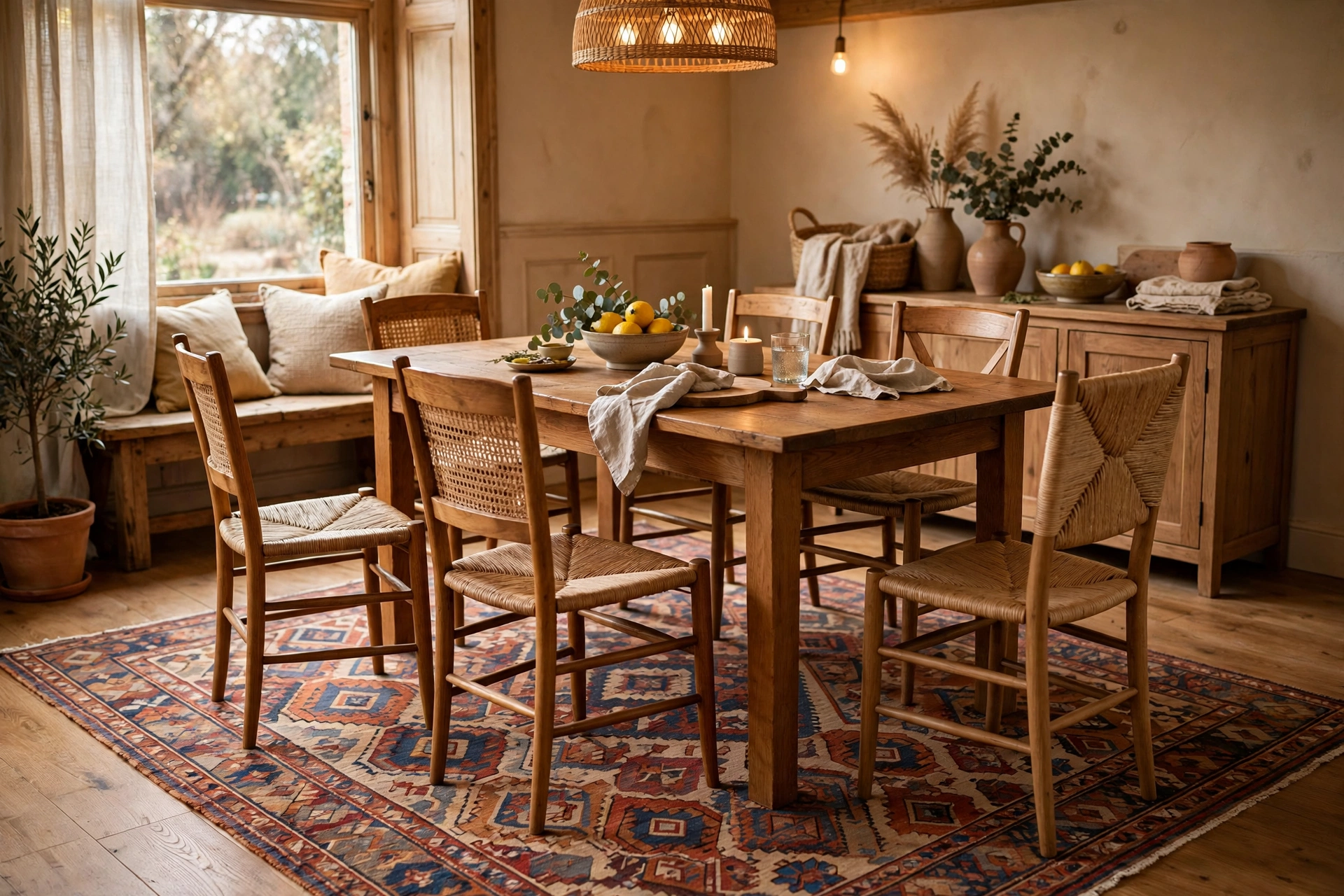
Placement rules are simple once size is settled. In living rooms, either all furniture legs on the rug (the luxurious option, needs a big rug) or just the front legs on it — never just the coffee table floating on a small rug. Leave 20–30cm of bare floor between the rug edge and the wall so the room breathes. Pattern is where personality comes in: a bold pattern hides stains and anchors a plain room, while a plain rug calms a room full of pattern. If your sofa and curtains are patterned, go plain; if they are plain, the rug can carry the pattern. And think about the room as a whole: a rug should talk to your wall art and your choose a sofa choices, not fight them — pick one star per room and let the rest support it.
Care, Budget and Common Mistakes
Budget honestly: a rug is furniture, not an accessory, and the cheapest option in the right size usually beats an expensive rug that is too small. Always use an underlay on hard floors — it stops slipping, adds cushioning, and doubles the rug’s life. Vacuum weekly (twice in high-traffic rooms), rotate the rug every few months so wear and sunlight even out, and blot spills immediately rather than rubbing them in. The commonest mistakes are all avoidable: buying before measuring, choosing a light colour for a hallway with muddy boots, and skipping the underlay. A rug that is the right size, in the right material, with an underlay, will look good for years with almost no effort.
Frequently Asked Questions
Can a rug go on top of carpet?
Yes, if the carpet is low-pile and you use a good underlay. On deep-pile carpet, rugs bunch and wrinkle, so choose a heavier rug and expect to straighten it often.
What is the best rug for a home with dogs?
A low-pile synthetic or indoor-outdoor rug in a mid-tone or pattern that hides hair. Avoid high-pile wool and looped jute, which trap hair and snag claws.
How do I clean a wool rug?
Vacuum regularly, blot spills with cold water and a clean cloth, and have it professionally cleaned every year or two. Never use bleach or harsh chemicals on wool.
Should the rug match the curtains?
It should coordinate, not match exactly. Pick up one colour from the rug in a cushion or throw, and let the curtains sit in a complementary tone — exact matching looks flat.


