
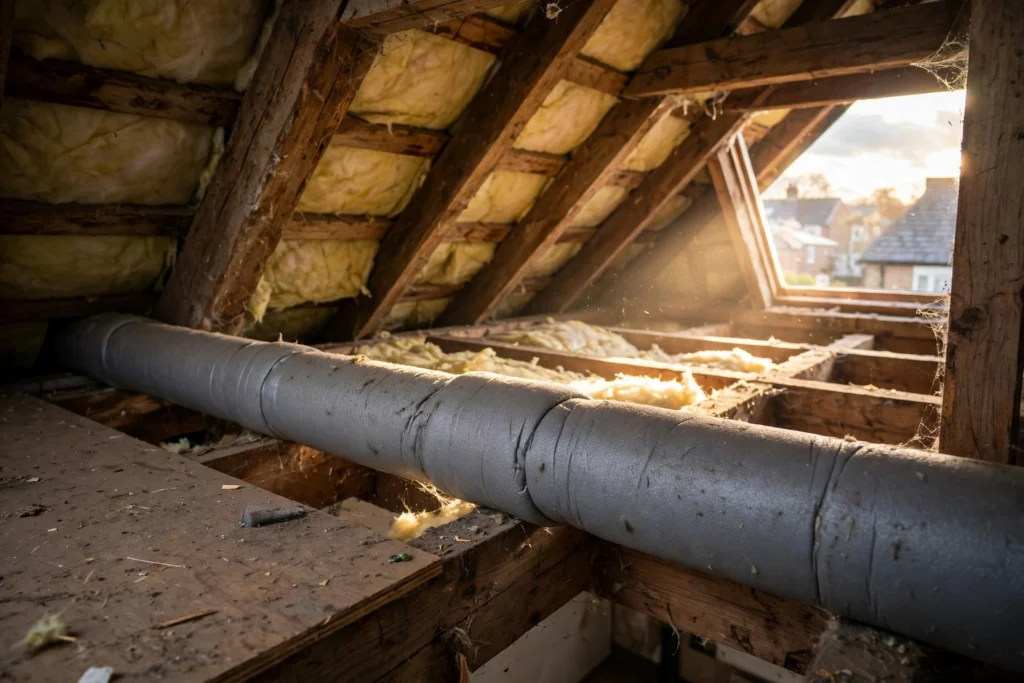
A burst pipe can flood a home in minutes, ruin floors and ceilings, and leave you with a repair bill running into thousands of pounds — yet most of the damage is preventable. Learning how to protect pipes from freezing in winter is one of the most useful jobs a homeowner can do before the cold weather arrives, and it costs far less than most people expect. A few metres of foam lagging, a little draught-proofing and a handful of good habits are usually all it takes to keep your water flowing when temperatures fall below zero.
Why Pipes Freeze — and Why They Burst
Water expands by about nine per cent when it turns to ice, and a pipe full of water has nowhere for that expansion to go. As the ice forms, pressure builds up and the weakest point — often a joint, a bend or a section of older pipework — gives way. The damage happens when the ice melts: water under mains pressure can pour out at many litres a minute, and a burst in a loft or behind a wall can go unnoticed for some time.
A pipe often bursts some distance from where the ice formed, because the ice blocks the pipe and pressure builds up between the blockage and a closed tap. That is why the best defence is to stop the water freezing in the first place — prevention is cheaper and far less disruptive than repair.
Which Pipes Are Most at Risk?
Not every pipe in your home faces the same danger. The ones most likely to freeze are those in cold, unheated spaces, or where they run along an outside wall. Start your protection work by finding these runs, and you will have covered most of the risk in an afternoon.
- Loft pipes: tanks, overflow pipes and pipework in the loft — rarely heated and often draughty.
- Garage and outbuilding pipes: supplies to garages, sheds and garden taps freeze quickly.
- Pipes in unheated rooms: utility rooms, conservatories, cellars and cold spare bedrooms.
- External pipes: garden taps, outside taps and pipework on external walls.
- Pipes in cupboards on outside walls: kitchen and bathroom pipes hidden in cold, shut cupboards.
- Condensate pipes: the plastic pipe from a condensing boiler can freeze and shut the boiler down.
Lagging Pipes: Your First Line of Defence
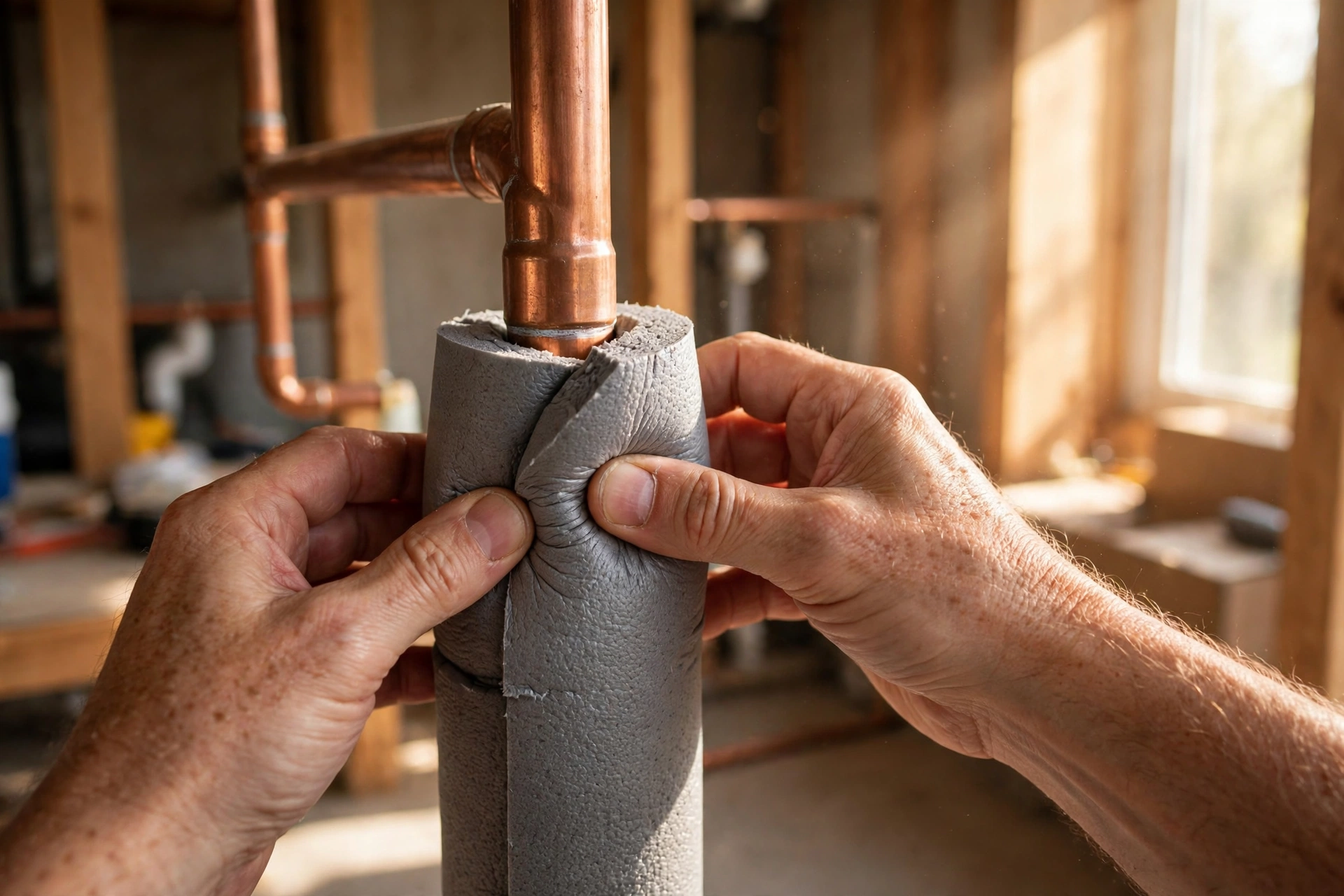
Pipe lagging — also called pipe insulation — is the single most effective thing you can do to protect pipes from freezing in winter, and it is a straightforward DIY job. Lagging is a tube of foam, usually grey, that slips over the pipe and slows heat loss so the water inside stays above freezing far longer. It costs only a few pounds, and one afternoon is enough for most homes.
Start with the loft, where the risk is greatest. Measure your pipes — most domestic water pipes are 15 mm or 22 mm — and buy lagging to match, in the thickest wall you can find. Slide each length over the pipe with no gaps, tape the joints, and take care at bends and joints, where lagging is hardest to fit and a pipe is most likely to split. Cut the foam at an angle to go around a bend.
Do not forget the less obvious runs: lag the cold-water tank in the loft too — a tank jacket or a few layers of old blankets will slow freezing — and lag the overflow pipe running outside. Fit outside taps with an insulated tap cover, and lag the exposed length of the boiler’s condensate pipe, which can otherwise freeze and shut the boiler down.
Keep the Heating On — Even When You Are Away
The simplest way to protect pipes from freezing in winter is to keep your home warm enough that the water in the pipes never gets close to freezing. In a cold snap, keep the heating on at a low, steady temperature rather than letting the house go cold and then blasting it hot. Most plumbers and insurers recommend a minimum of around 12–15°C indoors when it is below freezing outside.
Your thermostat’s frost setting is designed for this job: set it to around 10–12°C and the boiler will fire up automatically if the temperature falls that low. Without a frost setting, use the timer to keep a low background temperature overnight instead.
If you are going away over Christmas or for a winter holiday, do not turn the heating off entirely — leave it on low, or ask a neighbour to run the taps for a few minutes every couple of days, since moving water is much less likely to freeze. Never drain a system that also feeds a boiler you are leaving running.
Small Habits That Make a Big Difference
- Leave a tap dripping in a cold snap: a slow drip keeps water moving through the pipe, which makes freezing far less likely. If you think a particular pipe is at risk, a thin trickle from the tap it feeds is a sensible overnight precaution.
- Open cupboard doors: in very cold weather, leave the doors of kitchen and bathroom cupboards open so warm air from the room can reach pipes hidden inside, especially those on outside walls.
- Fix dripping taps before winter: a tap that drips constantly can freeze in the waste pipe or on the outside tap, and a slow leak can also be a sign of a worn washer worth replacing. Our guide to how to fix a dripping tap walks through the job step by step.
- Block draughts in the loft: cold air blowing through the loft chills pipes quickly. Draught-proof the loft hatch and seal obvious gaps, but do not block the ventilation that the roof itself needs.
- Know where your stopcock is: find it now, check that it turns, and make sure everyone in the household knows where it is.
- Insulate the loft properly: good loft insulation keeps the house warm, but remember that it also keeps the loft itself colder — so lag the pipes there even if the loft is well insulated.

How to Tell If a Pipe Has Frozen
A frozen pipe does not always announce itself loudly. The most common sign is a tap that produces only a trickle, or nothing at all — especially first thing in the morning after a cold night. If one tap works and another does not, the frozen section is almost certainly on the pipe feeding the tap that has stopped. Other signs include a toilet that will not refill, or frost or a bulge on a visible section of pipe.
If you suspect a pipe has frozen, act quickly but calmly. First, turn off the water at the stopcock if you can, so any flooding is limited if the pipe has already split. Then open the tap nearest the frozen section, which gives the melting water somewhere to go. Stay nearby and keep checking — a split may only show itself once the ice has melted.
Before you start thawing, check for signs of a leak — damp patches on ceilings or walls, or water stains in rooms below the suspected pipe. If you find a split, leave the water off and call a plumber. If you are unsure whether a pipe is frozen or simply blocked, our guide to low water pressure causes, checks and fixes will help you tell the difference.
Thawing a Frozen Pipe Safely
Thawing a frozen pipe is a job most homeowners can do themselves, provided they take it slowly and use gentle heat, working from the tap end back towards the frozen section so the melting water has somewhere to go. Never use a naked flame, a blowtorch or a heat gun on full power — the sudden heat can split the pipe or start a fire.
Start with the gentlest methods: wrap hot, damp towels around the frozen section and replace them as they cool, or hold a hairdryer on a low setting a few centimetres from the pipe, moving it slowly along the length. A hot water bottle works well too, as does warm — not boiling — water poured over a cloth wrapped around the pipe. Keep the tap open so you can see when the water flows again, and watch for leaks as it thaws.
If the frozen section is hidden behind a wall or under a floor, or if you cannot find it, call a plumber rather than guessing. The same applies if the frozen pipe feeds your boiler — a frozen condensate pipe is the most common cause of boilers cutting out in cold weather, and you should not open the boiler yourself.
What to Do If a Pipe Bursts
A burst pipe is an emergency, but the first minutes matter most. Stay calm and work through the steps in order: turn off the water at the stopcock immediately — the single most important action. Then turn off the electricity at the fuse box if water is anywhere near sockets or lights, and never touch electrical switches while standing in water. Open all the cold taps to drain the system, and flush the toilets to empty the cisterns.
Next, limit the damage: move furniture, rugs and electronics away from the water, and put buckets or towels under the leak. If water is coming through a ceiling, a small hole made with a screwdriver lets it drain into a bucket in a controlled way, rather than the ceiling collapsing under the weight. Take photographs of the damage as you go — your insurer will want them.
Once the water is off and the immediate danger has passed, call a plumber to repair the pipe, then call your insurer to start a claim. Most policies cover the damage burst pipes cause, though the pipe repair itself is often treated differently, so check what your policy says. Keep all receipts, and do not throw away damaged items until your insurer has seen them.

Before You Go Away This Winter
A few minutes of preparation before a winter trip can save you from coming home to a flooded house. Leave the heating on low, at around 12–15°C, and ask a neighbour to check the house every few days and run the taps briefly. Leave them your plumber’s number and tell them where the stopcock is.
If you will be away for more than a couple of weeks, consider turning off the water at the stopcock and draining the cold water system, which removes the risk almost entirely. Do this only if you understand your system — with a combi boiler, getting it wrong can cause damage — and when in doubt, ask a plumber to winterise the system before you leave.
Learning to protect pipes from freezing in winter is not a big job, and most of it needs doing only once. A weekend spent lagging the loft, checking the stopcock and setting the heating properly will protect your home all winter — far better than mopping up after a burst pipe in January.


