

Once your offer is accepted, the celebration is real but brief — because in England and Wales, an accepted offer is not legally binding on either side until contracts are exchanged. Between those two moments sits eight to twelve weeks, sometimes more, of legal checks, mortgage paperwork, surveys and searches. Here is what happens after acceptance, who does what, and where prompt replies genuinely speed things up.
Week One: Instruct, Apply and Prove
Your first job is to instruct a conveyancer or solicitor — ideally one you chose before you started viewing, not one picked in a panic on acceptance day. Tell the estate agent who is acting for you straight away, so the agent can issue the memorandum of sale to both solicitors confirming the price, the property and the parties. Your conveyancer will send you client-care paperwork, identity checks and a request for funds on account to cover searches; complete and return these the same day if you can, because nothing starts until they are done. At the same time, turn your mortgage agreement in principle into a full application. Your lender or broker will need payslips, bank statements, proof of deposit and identification, and the sooner the application is submitted, the sooner the lender’s valuation is booked.
Also in week one: tell your conveyancer about anything unusual — a gifted deposit, a related sale, a tight deadline such as a tenancy end date. Surprises raised in week eight cause delays; the same facts raised in week one are simply planned for. If you are buying a brand-new home, some steps differ, including developer deadlines, which our guide to buying a new-build home covers in detail.
Searches, Survey and the Mortgage Offer
Your conveyancer will order the standard searches once the draft contract arrives from the seller’s solicitor. The local authority search reveals planning history, building control sign-offs, road schemes and whether the road is adopted. The water and drainage search confirms connection to public sewers and water mains. An environmental search flags flood risk, contaminated land and ground stability issues. Searches typically take two to six weeks, which is why ordering and paying for them promptly matters.
In parallel, arrange your own survey. The lender’s valuation is for the lender, not for you; it may be a desktop exercise that never enters the house. A Level 2 homebuyer survey suits most modern or conventional homes in reasonable condition and reports on visible defects, damp and urgent repairs. A Level 3 building survey is the right choice for older, altered or unusual properties. If the survey finds serious issues, you have options: ask the seller to fix them, renegotiate the price with evidence, or walk away before exchange without legal penalty. Meanwhile, once the lender is satisfied with your application and its valuation, it issues the formal mortgage offer. Read it carefully — check the amount, rate, term and any special conditions — and send a copy to your conveyancer, who will also receive their own copy with instructions.
Enquiries, Chains and the Road to Exchange
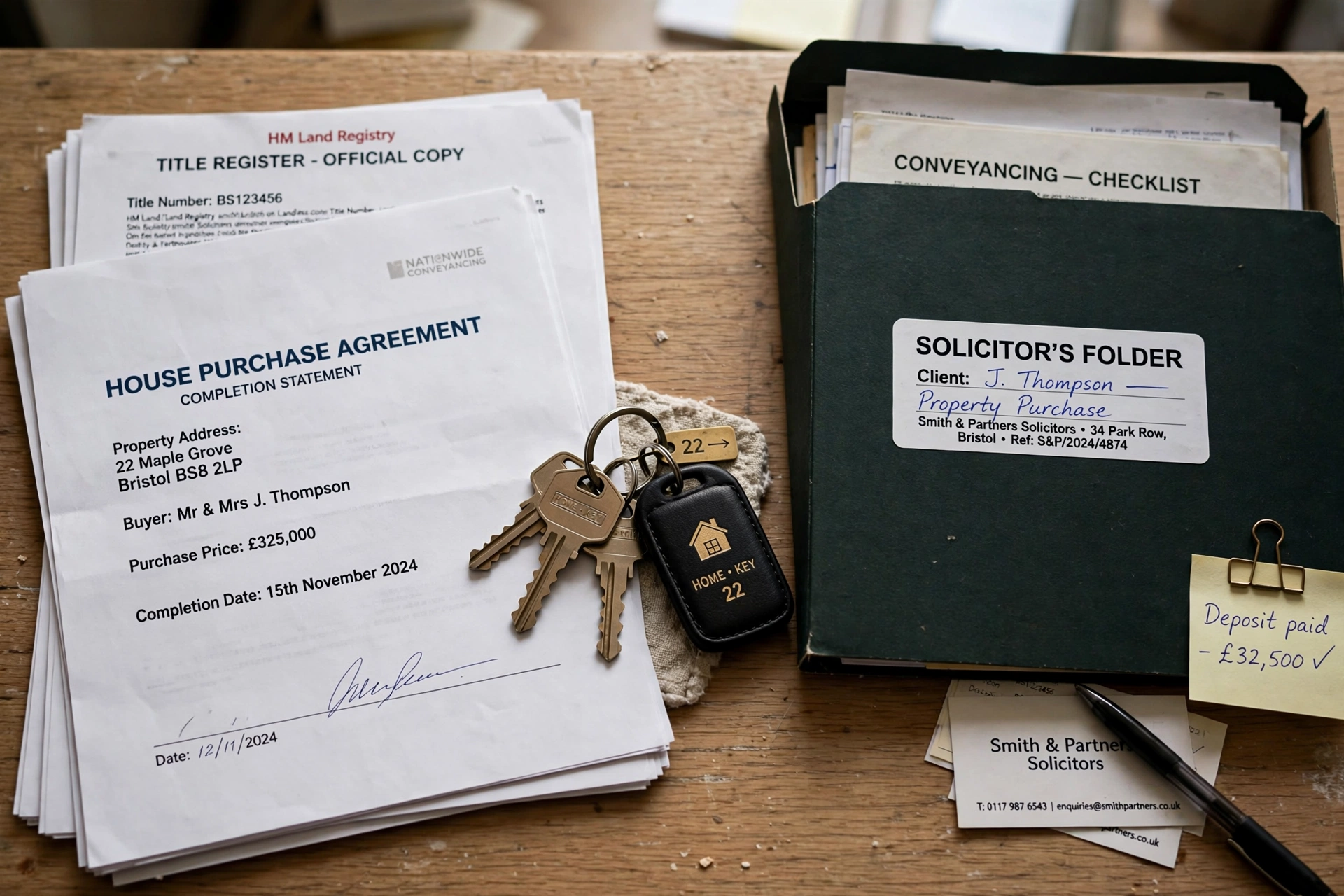
While searches run, your conveyancer studies the draft contract, title documents and the seller’s property information forms, then raises enquiries — questions about boundaries, extensions and their consents, guarantees for work, disputes, fixtures included in the sale, and anything the searches or title raised. The seller’s solicitor answers, sometimes after chasing the seller, and this exchange is often the slowest part of the process because it depends on documents neither solicitor controls. Your role is patience plus promptness: when your conveyancer sends you their report on title and asks you to approve the contract, read it, ask questions quickly, then sign and return it without letting it sit in an inbox.
If you are in a chain, progress is set by the slowest link. Stay in polite, regular contact with your estate agent, who can see the whole chain and chase where you cannot. Agree target dates early, be realistic about them, and avoid booking removals or giving notice on a tenancy until exchange has happened — before exchange, either side can still withdraw, a risk explored in our article on when a house sale falls through. As exchange approaches, you will need your deposit ready to transfer — usually 10 per cent of the price, though in chains a lower figure from below sometimes passes up — buildings insurance arranged from the exchange date, because the risk usually passes to you then, and your mortgage funds lined up for completion day.
Realistic Timelines and How Buyers Prevent Delays
A straightforward freehold purchase with no chain can exchange in six to eight weeks. Add a chain, a leasehold flat with management packs to obtain, or a slow local authority, and ten to sixteen weeks is more realistic. Most delays come from a short list of causes: searches ordered late, mortgage applications missing documents, enquiries waiting on third parties, and paperwork sitting unsigned. You control more than you think: instruct early, pay search fees immediately, return every form the day it arrives, keep one folder with every document your lender or solicitor might ask for, and reply to questions in writing. Do that, and when the call comes asking if you are ready to exchange, your answer can simply be yes.
Frequently Asked Questions
Is my purchase legally binding once the offer is accepted?
No. In England and Wales, neither buyer nor seller is legally committed until contracts are exchanged. Either side can withdraw before that point, which is why progressing promptly and communicating well matters.
How long does it take from offer to exchange?
Typically eight to twelve weeks. A chain-free freehold purchase can be quicker, while leasehold properties, long chains or slow searches can stretch the process to sixteen weeks or more.
What searches does my solicitor order?
Usually a local authority search, a water and drainage search, and an environmental search. Depending on the area, additional searches may cover mining, flood risk or chancel repair liability.
When do I pay my deposit?
Your deposit is transferred to your conveyancer shortly before exchange and is paid over on the exchange date itself. It is commonly 10 per cent of the purchase price, and you will also need buildings insurance starting from exchange.


