

Taking hardwood cuttings is the most forgiving way to multiply your favourite shrubs, and it costs nothing but patience. Done while plants are dormant in winter, one healthy dogwood, currant bush or rose can give you half a dozen new plants by next autumn. No misting unit, no heat mat, no daily fussing — just ripe wood, sharp secateurs and gritty soil. This guide covers which shrubs suit the method, how to cut and plant them, and the wait that follows.
Why Winter Is the Right Time
Hardwood cuttings are taken from ripe, one-year-old wood after the leaves have fallen and before growth restarts in spring — in practice, any time from late autumn to late winter, on a day when the ground is workable. Dormancy is the whole point. With no leaves to supply, the cutting loses almost no water, so it can survive for months on the energy stored in its stem while it slowly forms roots at the base. Winter soil is also cool and reliably moist, which suits a cutting that cannot yet drink properly. Take cuttings too early, while the wood is still soft and leafy, and they collapse within days; too late, in early spring, and the buds may burst before roots form, draining the stem’s reserves. A mild spell in the middle of winter is ideal; avoid frozen or waterlogged ground, and waiting a week costs nothing. If you are already working through your autumn garden jobs, cuttings fit naturally into the same tidy-up round.
Which Shrubs Work — and Choosing Healthy Wood
Not every shrub cooperates, but the reliable list is long and useful: dogwood, willow, forsythia, privet, buddleia, elder, viburnum, flowering currant, and fruit bushes such as blackcurrants, redcurrants and gooseberries. Roses respond well too, especially shrub and species roses; the dormant season is also when you follow good rose pruning practice, and prunings of ripe wood can go straight into the trench rather than the compost heap. Choose stems that grew this year and have ripened fully: pencil-thick, straight, firm and brown-barked, with plump healthy buds and no spots, splits or dieback at the tip. Avoid the thick old wood at the base and the thin, whippy ends of stems. Cut more than you need — even in a good year, expect perhaps two-thirds to root, and spares let you keep only the strongest plants next autumn. One hygiene rule matters: wipe the secateur blades between plants if any stem looks diseased, so you do not carry infection from bush to bush.
Taking the Cutting: Two Cuts That Matter
Work with sharp secateurs and cut each length to roughly 15–30cm, with at least three or four buds along it. The two end cuts have different jobs, and gardeners have used the same convention for generations. At the bottom, make a clean, flat cut straight across, immediately below a bud — roots will form from this end. At the top, make a sloping cut just above a bud, angled away from it so rain runs off. The slope is not only about weather: it tells you instantly which way up the cutting goes, and planting one upside down is the commonest reason a whole batch quietly fails. Strip off any sideshoots and remaining leaves, tie cuttings of one variety into labelled bundles straight away — in February, every dormant stick looks identical — and plant the same day if you can. If the weather stops you, wrap the bundles in a damp cloth inside a bag in a cold shed and plant within a few days. Rooting hormone powder is optional: most of the shrubs listed root readily without it, though a dip does no harm on slower subjects.
Planting: Trench or Pots
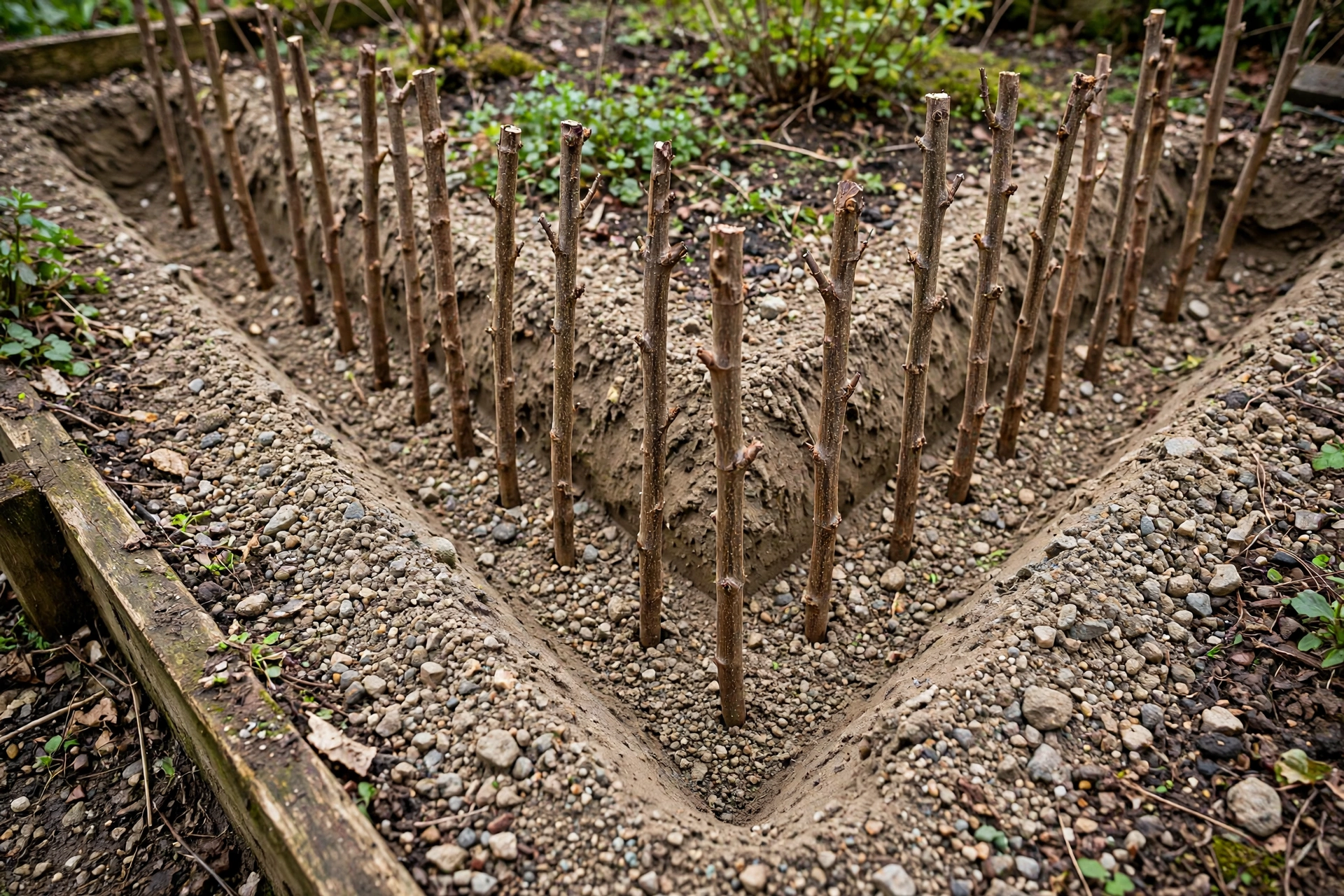
The trench method suits larger batches and is almost effortless. In a spare corner of a border or vegetable bed, dig a narrow V-shaped trench about 15cm deep and trickle a layer of sharp sand or grit along the bottom; this keeps the cut ends in contact with moisture but lifted away from rotting wet soil. Push each cutting in upright, flat cut down, so that only the top third, with a bud or two, shows above ground, spacing them roughly 15cm apart. Firm the soil back around them with your heel so there are no air pockets, and label the row. For small numbers, pots work just as well: use a deep pot of gritty, free-draining compost — half multipurpose compost, half sharp sand or perlite — with several cuttings pushed in around the edge, and stand it in a sheltered, shady spot against a wall. Pots need checking in dry spells; trench cuttings in open ground largely look after themselves.
The Long Wait and Common Failures
Then comes the hardest discipline in gardening: doing nothing. Hardwood cuttings sit apparently lifeless for months while a callus forms over the base and roots follow; buds may swell in spring, but strong top growth waits until the roots can support it. Leave them a full year and check the following autumn — rooted cuttings resist a gentle tug and can be lifted and planted out or potted on. Water the row during prolonged dry weather in spring and summer, keep weeds down so the young plants are not swamped, and move pots against a wall in hard frosts. Most failures trace back to a short list: cuttings planted upside down, wood that was too soft or too old, cuttings drying out in a windy, exposed site, or being lifted and checked so often that the new roots tear. Correct way up, ripe wood and steady moisture solve nearly all of it.
Frequently Asked Questions
When exactly should I take hardwood cuttings?
Any time between leaf fall in late autumn and bud burst in late winter, on a day when the soil is neither frozen nor waterlogged. A mild mid-winter spell is perfect.
Do I need rooting hormone?
No. Dogwood, willow, currants and most listed shrubs root readily without it. Correct cutting, firm planting and patience matter far more than any powder.
How long before I can plant them out?
Allow a full year. The following autumn, tug gently: resistance means roots. Then lift the rooted cuttings and plant them in their final positions or individual pots.
Why did all my cuttings fail?
Usually one of three causes: planted upside down (let the slanted top cut be your guide), wood that was soft or old instead of ripe one-year growth, or drying out. Occasional watering in drought prevents most losses.


