
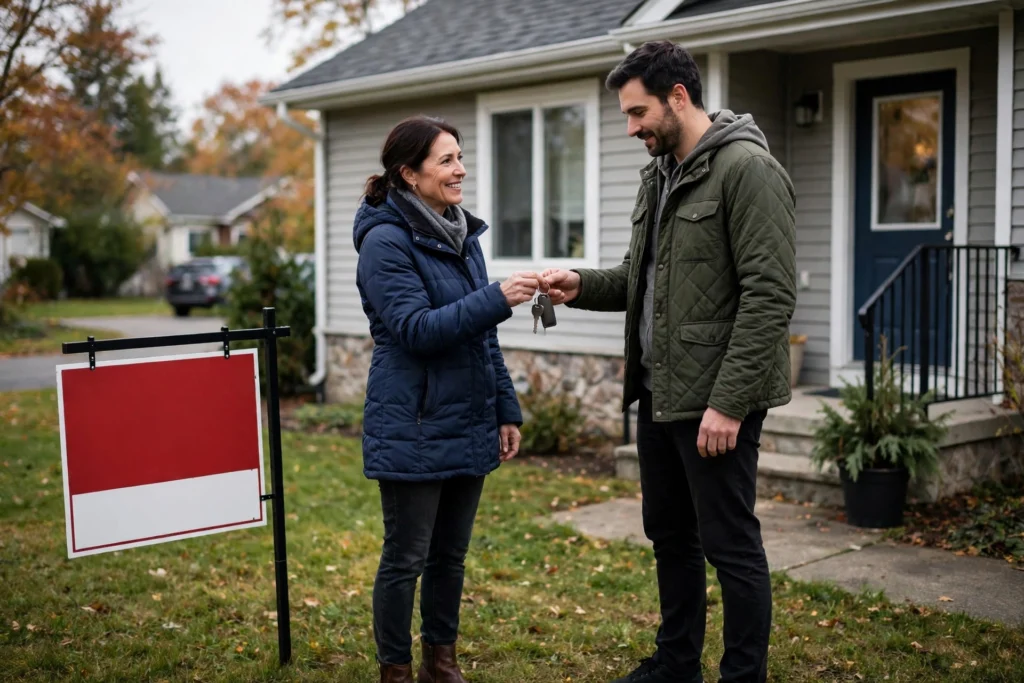
Chain-free homes are the closest thing the property market has to a fast lane: no seller waiting to find their own purchase, no chain of five sales that collapses when one buyer pulls out, no months of chasing other people’s solicitors. That is why agents headline them and buyers prize them. But chain-free does not mean problem-free, and the reason a home has no chain tells you a lot about what to check, what to offer, and how fast the sale can really go. Here is the full picture.
Why Chain-Free Sells Faster
A normal chain links every sale together: your purchase depends on your seller’s purchase, which depends on their seller’s purchase, and so on. Each link adds delay and a chance of collapse — surveys, mortgage offers, cold feet — and the longest chains can take six months or more. A chain-free sale removes all of that. The seller does not need to buy anything, so once your mortgage and legal work are done, you can complete. That speed is valuable in itself, but it also changes the negotiation: sellers of chain-free homes know their home is attractive, and they often hold firmer on price, while buyers gain certainty that is worth paying for. Fall-through rates for chain-free sales are far lower than for chained ones, which is why “no onward chain” appears in bold in listings.
Why Homes Are Chain-Free
The reason matters. Probate sales (an inherited home being sold by executors) are the commonest chain-free type: the seller is not moving, just winding up an estate, and the sale can be slow if probate is not yet granted — ask whether probate has been granted before you offer. Landlord sales are next: an investor selling up, often with tenants still in place or just vacated, which raises questions about condition and vacant possession. New builds are chain-free by definition, but come with snagging and developer timelines instead. Relocation sales (an employer moving someone) and repossessions are less common but faster-moving, and divorce sales can be chain-free but emotionally charged, with two sellers who must both agree. Each type has a different timeline and a different risk; the label alone tells you none of it.
What Buyers Should Still Check

Chain-free removes chain risk, not property risk. Do everything you would for any home: a full survey, because probate and landlord homes in particular may have had years of deferred maintenance; the usual legal checks on tenure, boundaries and permissions; and a careful look at condition, because a home sold by someone who never lived in it may hide problems no one noticed. Check vacant possession explicitly: a landlord sale with a sitting tenant is a different purchase from an empty home, and a probate sale where a family member still lives there needs a clear move-out date. Use the same discipline as any purchase — our second viewing checklist applies in full — and remember that speed cuts both ways: a seller pushing for a fast exchange may be hiding a deadline of their own. If the price seems too good, ask why twice.
Price and Negotiation
Chain-free homes often command a small premium, and that premium is usually justified by certainty and speed. But it is not unlimited: overpaying for chain-free status is still overpaying, and a home that has sat unsold for months is not commanding anything. Offer on comparables, then add for speed only if speed matters to you — a first-time buyer with a rental ending soon values it more than an investor with no deadline. If you need to move fast yourself, chain-free is also the route to consider alongside auction, though the two differ sharply: our guide to buy at auction explains the auction trade-offs. And be ready to move: the fastest chain-free sales go to buyers whose mortgage is agreed, whose solicitor is instructed, and whose deposit is ready — preparation is what turns chain-free into actually fast.
Frequently Asked Questions
How much faster is a chain-free purchase?
Typically 6–10 weeks from offer to completion, against 12–20 weeks for a chained sale. The legal work still takes time; chain-free removes other people’s delays, not your own.
Can a chain-free sale still fall through?
Yes — surveys, mortgage refusals, legal problems and cold feet still happen. The fall-through rate is lower, not zero, and a bad survey kills a chain-free sale just as surely as a chained one.
Should I pay more for chain-free?
A small premium for genuine speed and certainty is reasonable if you need it. Pay on comparables first; treat chain-free as a bonus, not a blank cheque.
What if probate has not been granted yet?
You can agree a sale, but you cannot complete until probate is granted. Ask for the grant status in writing and allow extra weeks — probate delays are the commonest hold-up in probate sales.


