

Overwinter tender plants properly and you save yourself a fortune every spring. Dahlias, cannas, citrus trees and olive trees all come from warmer climates, and a single hard frost can kill them outright — yet all four can survive a UK winter with the right treatment. The trick is that each needs something different: dahlias want to be lifted and stored, cannas want to stay dry, citrus wants light, and olives mostly want to be left alone. Here is each one, done properly.
Dahlias: Lift, Dry, Store
Wait until the first frost blackens the foliage — that is nature telling you the plant has shut down for the year. Cut the stems to about 15cm, lift the tubers carefully with a fork (they snap easily), and shake off loose soil. The critical step is drying: leave the tubers somewhere cool and airy for a week or two until the skins are dry to the touch. Then store them upside down in a box of dry compost, wood shavings or vermiculite, somewhere frost-free but cool — a garage or shed is ideal. Check them once a month and throw out any that have gone soft or mouldy, because rot spreads fast. In spring, start them in pots indoors in March and plant out only after the last frost, usually mid-May.
Cannas: Dry Is the Whole Game
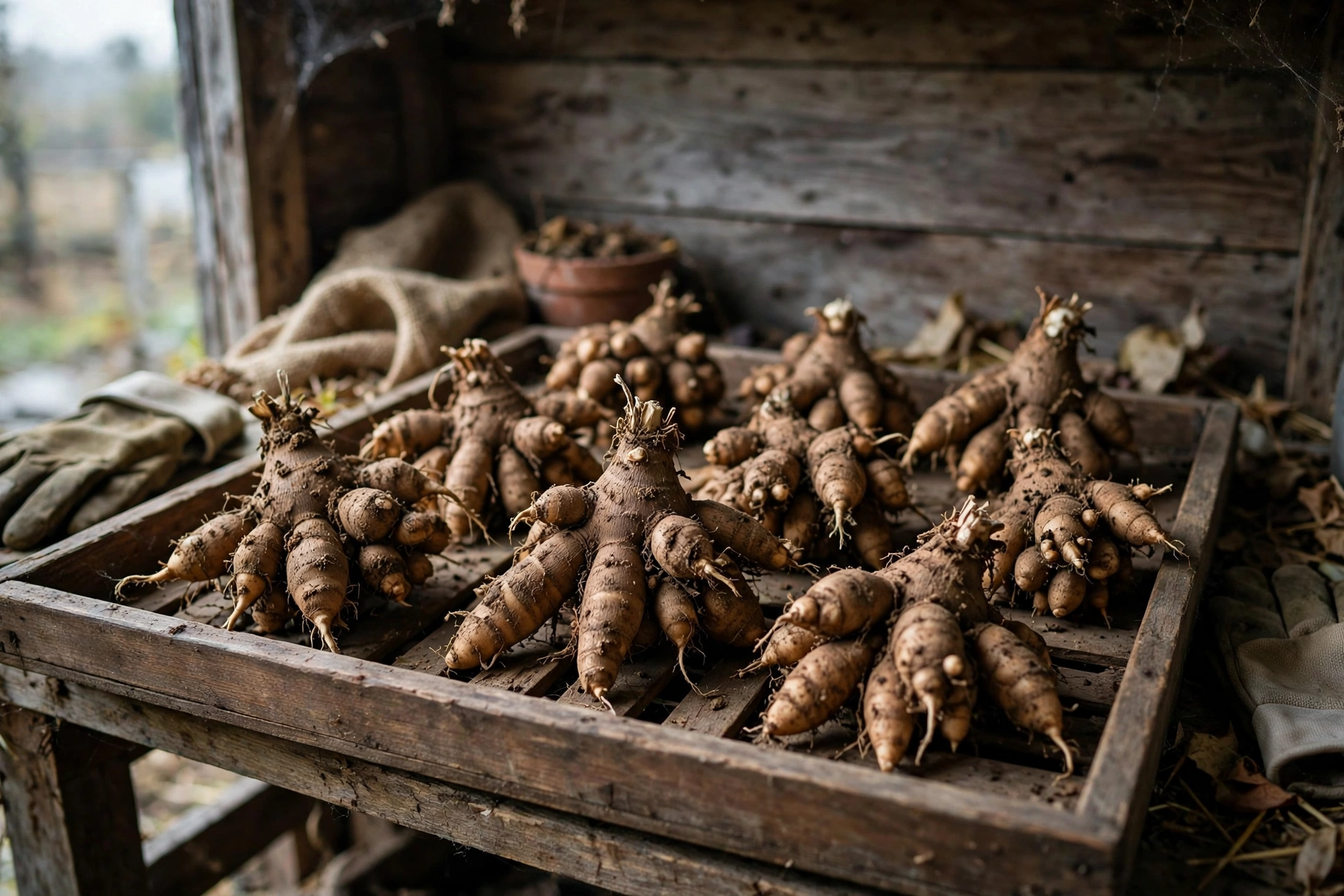
Cannas are even less frost-hardy than dahlias, but the method is similar: after the first frost, cut back the stems, lift the rhizomes, and dry them thoroughly. Cannas rot faster than dahlias in damp storage, so be strict about dryness — if the storage medium feels damp, replace it. Some gardeners in mild southern areas leave cannas in the ground under a thick mulch, and in a mild winter that works, but one cold snap can wipe them out, so lifting is the safe choice. Store like dahlias, and in spring, pot them up indoors in March for a head start; cannas are hungry plants, so feed them well once they are growing.
Citrus: Light Matters More Than Warmth
Citrus trees in pots should come under cover before the first frost — a bright, frost-free porch, conservatory or greenhouse is ideal. The common mistake is putting them somewhere warm and dark, like a heated spare room with the curtains drawn: citrus needs light through winter, and a dark room causes leaf drop. Keep them just above freezing (2–5°C is fine), water sparingly — only when the compost is dry — and do not feed until spring. If you only have a dark garage, a simple grow light on a timer works surprisingly well. Watch for scale insects and red spider mite, which thrive in dry indoor air; a weekly check and a wipe of the leaves keeps them under control.
Olives: Tougher Than You Think
Olives are the easiest of the four. Mature olive trees in the ground survive most UK winters unprotected, especially in the south, and only prolonged freezes below about −8°C cause real damage. Potted olives are more vulnerable because their roots freeze faster, so move pots against a sheltered wall and wrap the pot (not the tree) in bubble wrap or hessian to insulate the roots. Water very sparingly — wet roots in winter kill more olives than cold does. If a hard freeze is forecast, a fleece drape over the canopy overnight is enough; remove it in the morning so the tree gets light. Do not prune frost damage until spring, when you can see what is actually dead.
The Winter Routine That Ties It Together
The pattern for all tender plants is the same: act before the first hard frost, not after it, and check stored plants monthly. This is one of the most valuable pieces of autumn garden work you can do — an hour spent lifting and wrapping in October saves hundreds of pounds in replacements in May. Label everything you store (varieties all look alike as bare tubers), keep a note of where each plant lives, and resist the urge to plant out early in a warm April — a late frost undoes all of it. And if you are expanding into grow your own projects, the same discipline applies: tender crops need the same watchfulness as tender flowers.
Frequently Asked Questions
Can I leave dahlias in the ground over winter?
In mild southern gardens with free-draining soil and a thick mulch, sometimes — but it is a gamble. One hard winter can kill them all. Lifting is the reliable method.
How cold can an olive tree survive?
A mature tree in the ground usually tolerates down to about −8°C briefly. Potted trees are far more vulnerable because their roots freeze — insulate the pot and move it to shelter.
Why is my citrus dropping leaves indoors?
Usually too little light, too much water, or a sudden move from outdoors to a warm room. Give it the brightest frost-free spot you have and water only when dry.
When should I start overwintered plants growing again?
Start dahlias and cannas in pots indoors in March, and move everything outside only after the last frost — typically mid-May in most of the UK.


