

The easiest way to plant a winter container display that still looks good in February is to treat winter pots as a planting in their own right, not as summer pots left to fade. Cold, wet and short days defeat bedding that was bred for summer, but a well-chosen mix of hardy flowers, evergreen foliage and berries will carry colour through the darkest months — and, with bulbs layered underneath, give you a second display in spring without replanting. Here is how to build, plant and look after winter containers that earn their place by the door.
The Winter Version of Thriller, Filler and Spiller
Container designers use a simple structure — a thriller in the centre, fillers around it, spillers trailing over the edge — and it works just as well in winter with hardier plants. For the thriller, choose something with height and year-round structure: a small conifer, a skimmia with its winter buds, a compact evergreen shrub, an ornamental grass such as carex, or a hellebore whose flowers open from midwinter onwards. This one plant gives the pot its skeleton when everything else is resting.
Fillers provide the colour at the front and sides. The most reliable winter performers are cyclamen, winter heather, pansies and violas, ornamental cabbage with its purple and cream rosettes, and plants grown for berries. Cyclamen and heather flower for months and shrug off frost once established; violas, though smaller than pansies, often flower more freely through cold spells. Skimmia’s red buds and berries read as colour long before any flower opens. For spillers, ivy is the winter workhorse — plain green or variegated — trailing neatly over the edge. Aim for a balance of flower, foliage and berry, because on the greyest weeks foliage contrast keeps a pot looking intentional.
Layer in Bulbs for a Second Act
Before you finish planting, tuck spring bulbs into the pot for a display that follows on automatically. Plant bulbs in the gaps between the winter plants, at roughly twice their own depth, with dwarf daffodils, crocuses, snowdrops, dwarf irises and small tulips all suited to containers. As the winter bedding tires in early spring, the bulbs push through it, and the pot gets a second, brighter act with no extra work. If you are planting bulbs in beds as well this autumn, our guide to how to plant spring bulbs before winter covers depths and spacing in the ground.
Choose your pot with frost in mind. Porous terracotta can crack when wet compost freezes, so pick frost-proof terracotta, glazed or fibre-clay pots. Whatever the material, drainage holes are non-negotiable. Raise every pot on pot feet so water escapes freely and the base is not sitting in a frozen puddle. In exposed gardens, group pots in a sheltered corner and wrap vulnerable pots in bubble wrap or hessian during hard frosts, keeping the wrapping around the pot rather than over the plants.
Compost, Drainage and Planting
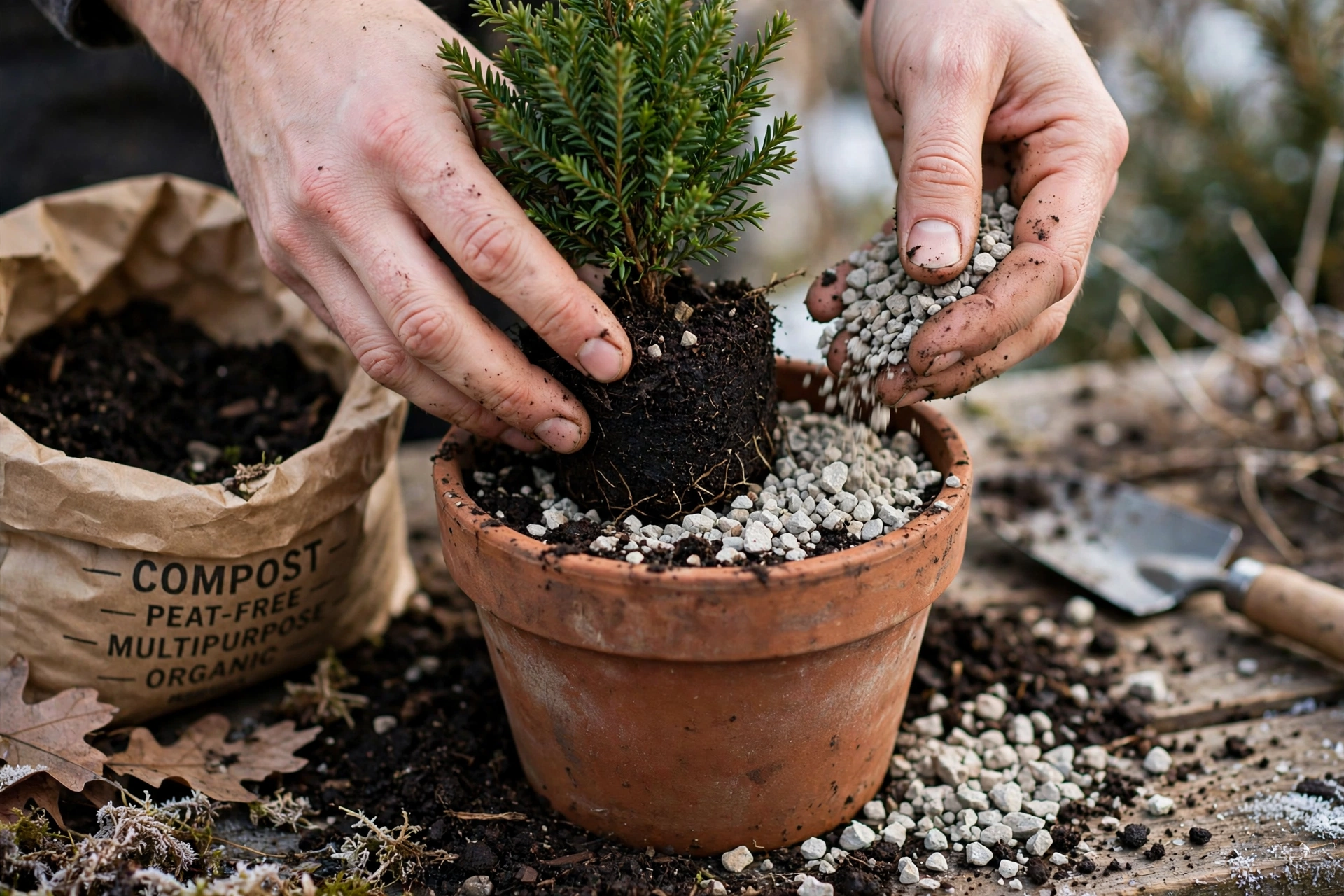
Winter kills container plants by wet far more often than by cold, so the planting mix matters. Cover the drainage holes with a few crocks or a piece of broken pot, then fill with a peat-free multipurpose compost mixed with horticultural grit — roughly one part grit to three parts compost — so water runs through rather than sitting around roots. For pots that will stay planted for several seasons with shrubs, use a loam-based John Innes No. 3 compost with grit added instead; it holds its structure far longer than multipurpose alone.
Plant firmly at the same depth the plants were growing in their pots, water well once to settle the compost, and leave a small gap below the rim so watering does not wash straight off. Position finished pots where you will actually see them: flanking the front door, under a kitchen window, or beside the path you use daily. Winter colour placed at the far end of the garden is colour wasted; the whole point of a winter display is cheer on the days you barely go outside. Container planting fits neatly alongside the other jobs in our autumn garden jobs round-up, and an hour spent on pots now pays you back for five months.
Winter Care: Water Less, But Do Not Forget
Winter containers need far less water than summer ones, but they do still need checking. Rain often does the job for pots in the open, yet pots under porches, eaves or against walls can dry out completely while the rest of the garden is soggy. Check weekly by pushing a finger into the compost; water in the morning on a mild day if it feels dry a couple of centimetres down, so leaves dry before the cold night. Avoid watering in the evening before a frost, and never leave pots standing in full saucers of water through winter.
Feeding can wait. Plants grow so slowly in winter that liquid feed is largely wasted; the feed in fresh compost is enough until spring. What does pay off is tidying. Pick off faded pansy and viola flowers weekly, remove leaves that turn slimy in damp spells, and remove spent cyclamen stems with a twist at the base. By January, a ten-minute refresh — replacing any failed plant with a fresh viola or primrose, topping up settled compost, wiping algae from the pot — will carry most containers through to the bulbs.
Frequently Asked Questions
What are the most reliable plants for winter pots?
Cyclamen, winter heather, violas and pansies for flowers; skimmia, small conifers and hellebores for structure; ornamental cabbage and winter berries for extra colour; and ivy to trail over the edge. All tolerate frost once settled in.
Why do my winter containers go soggy and the plants rot?
Almost always poor drainage. Use pots with holes, raise them on feet, and mix grit into the compost so water passes through. Pots standing in saucers of water or on flat ground in winter will rot even hardy plants.
Do winter containers need watering?
Yes, but much less than in summer. Rain covers pots in the open, while pots under eaves or porches can dry out unnoticed. Check weekly and water in the morning on a mild day only if the compost feels dry below the surface.
Can I plant bulbs in the same pot as winter bedding?
Yes — it is one of the best tricks in container gardening. Tuck dwarf daffodils, crocuses and small tulips into the gaps as you plant. They flower through the bedding in spring just as the winter display fades.


