

Learning how to prune apple trees in winter is the single most useful skill for anyone with a fruit tree in the garden. It looks drastic, but dormant pruning is how you keep an apple tree healthy, well-shaped and cropping heavily instead of shading itself into decline. Winter is when the tree’s structure is visible, disease pressure is lowest, and your cuts direct strong new growth in spring. Here is the order to work in, the cuts that matter, and the mistakes that quietly cost a harvest.
Why Winter Is the Pruning Season
The main pruning of free-standing apple trees happens between November and early March, while the tree is fully dormant. With the leaves gone you can see crossing branches and weak wood clearly. Fungal diseases such as canker are also less active in cold weather, and cuts made now heal as growth restarts. Winter pruning stimulates growth — the tree pushes strong shoots in spring, exactly what you want when maintaining the framework. Summer pruning does the opposite — it calms growth down and is mainly used on trained forms such as espaliers, cordons and fans, for size control and ripening fruit. If you are also planting bare-root roses and fruit trees this winter, new apple trees need only a light formative tidy at first — the heavier work below is for established trees.
Spur Bearers and Tip Bearers: Know Your Tree Before You Cut
Before touching a branch, work out how your tree fruits. Most apple varieties are spur bearers: they carry fruit on short, knobbly spurs along older wood, so you can shorten side branches without removing the crop. A minority are tip bearers — varieties such as ‘Irish Peach’ and some others fruit at the ends of last year’s shoots, so cutting back all the tips removes most of next year’s apples. If you do not know your variety, look at the tree: short, stubby spurs clustered along branches mean a spur bearer; long, whippy shoots with buds at their very ends suggest a tip bearer. With tip bearers, prune lightly — thin out whole branches rather than shortening shoots, and renew a few of the oldest fruiting stems each year. Getting this identification right matters more than any single cut.
Tools, Hygiene and the Three Ds
You need three tools, all sharp: bypass secateurs for wood up to about 1.5cm thick, loppers for branches up to about 4cm, and a curved pruning saw for anything larger. Blunt tools crush bark and leave ragged wounds, so sharpen or replace blades that tear rather than slice. Hygiene matters: canker spreads on tools, so wipe blades with disinfectant or a 10 per cent bleach solution between trees, and always after cutting diseased wood. Start every pruning session with the three Ds — dead, diseased and damaged wood. Remove anything dead, broken or split, and anything showing canker: sunken, flaking bark, often with concentric rings, which should be cut back to clean, healthy wood well below the infected area. Removing the three Ds first often decides half your remaining cuts for you.
The Cuts That Shape the Tree
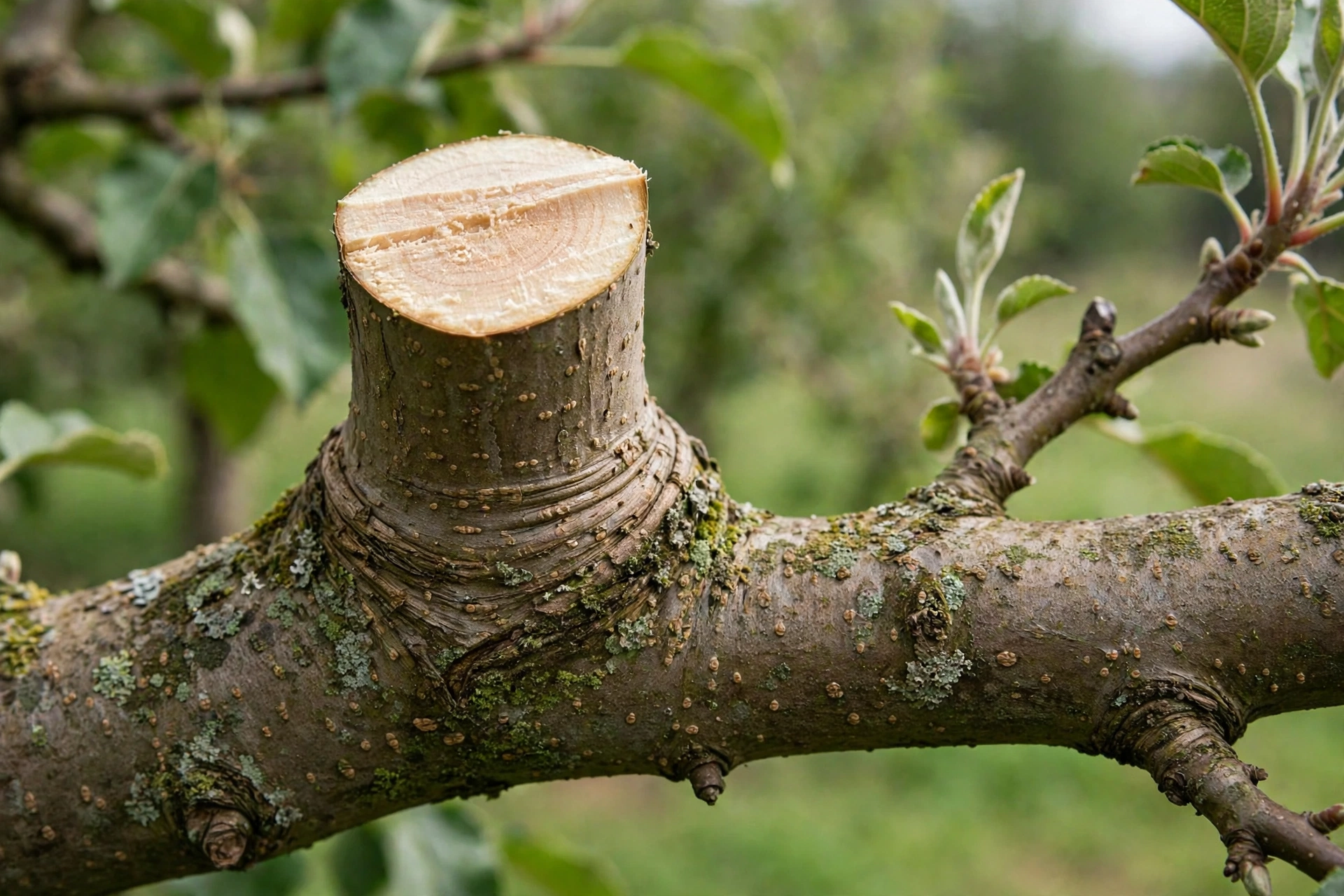
With the three Ds gone, remove branches that cross and rub — rubbing wounds invite disease — and any branch growing through or towards the centre. The goal for a free-standing tree is an open-centre, goblet shape: a clear trunk, three to five main framework branches, and a hollow middle that lets light and air reach the fruiting wood. Airflow matters: it dries leaves quickly after rain and reduces scab and mildew. Next, shorten this year’s long side shoots on spur bearers back to three or four buds to encourage fruiting spurs, and remove vigorous upright water shoots growing from main branches — unless one is perfectly placed to replace an ageing branch. When removing a whole branch, cut just outside the branch collar, the slightly swollen ridge where branch meets trunk: never flush with the trunk, which wounds the collar and slows healing, and never leave a stub, which rots back into the tree. When shortening a shoot, cut just above an outward-facing bud at a slight angle, so the new growth heads away from the centre. Finally, respect the limit: remove no more than a fifth to a quarter of the wood in one winter, or the tree answers with a thicket of useless water shoots and little fruit.
Young Trees, Neglected Trees and When Not to Prune
Young trees need formative pruning, not fruit-chasing: in the first three or four winters, choose three to five well-spaced branches as the framework, remove competitors and weak or badly angled growth, and shorten the leaders by about a third to a strong bud. A neglected, overgrown tree is the opposite trap — never try to fix it in one session. Spread renovation over two or three winters, taking out the largest problem branches first and removing roughly a quarter of the old wood each year, so the tree keeps cropping and does not explode into water shoots. And know when to keep the tools in the shed: avoid pruning in hard frost, when wood is brittle, and in very wet weather, when spores spread on fresh wounds; dry, mild days are best. The same patience applies across the winter garden — the careful timing behind how to prune roses is the same principle: cut at the right moment, cleanly, and only as much as the plant can answer well.
Frequently Asked Questions
When exactly should I prune my apple tree?
Between November and early March, while the tree is dormant and leafless. Pick a dry, mild day — avoid hard frost and very wet weather, when cuts heal poorly and disease spreads more easily.
How much can I cut off in one year?
No more than about a fifth to a quarter of the tree’s wood. Cutting harder triggers masses of soft water shoots and reduces fruiting. Neglected trees should be renovated gradually over two or three winters.
What is the difference between spur bearers and tip bearers?
Spur bearers fruit on short spurs along older wood and tolerate having side shoots shortened. Tip bearers fruit at the ends of last year’s shoots, so tip-pruning removes the crop — thin whole branches instead of shortening.
Do I need to paint pruning cuts afterwards?
No. Modern advice is to leave cuts clean and unpainted; a correctly placed cut just outside the branch collar seals itself. Wound paints can trap moisture against the wood and do more harm than good.


