

Selling a probate property is rarely just a house sale. You are usually grieving, dealing with solicitors and tax forms, and the property itself often needs clearing, securing and valuing before an agent can photograph it. Extra legal steps sit underneath the sale, and they decide the timescale. This guide explains what executors need to do, in what order, and where the common delays happen.
What Probate Is — and Who Is in Charge
Probate is the legal process of proving a will and giving someone the authority to deal with a deceased person’s estate: their money, possessions and property. If the person left a will, it names one or more executors, who apply for a grant of probate. If there is no will, the closest relatives apply for letters of administration instead, and are called administrators. Executors and administrators are both known legally as personal representatives — and only they can sell the property, and only once the grant has been issued. Valuing the estate, reporting to HMRC and paying any inheritance tax due all exist to get that grant issued. The grant is the document a buyer’s solicitor will insist on seeing before exchange, because it proves you have the legal right to sell.
You Can Market Before the Grant — but Not Complete
One point surprises many executors: you do not have to wait for the grant before putting the property on the market. You can instruct an agent, have the property valued and photographed, and even accept an offer while the application is in progress. What you cannot do is complete the sale, and most solicitors will not exchange contracts, because without the grant you cannot prove you may sell. This matters for buyers: one whose mortgage offer expires, or who has a chain behind them, may not wait an unknown number of weeks, so be honest about where the application stands from the first viewing. Ask the agent to filter for patient buyers — cash buyers, investors and buyers with no onward chain are usually most comfortable with probate timescales. If the property will sell over a winter, the presentation advice in our guide to selling your home in winter applies here too: warm, lit, dry houses sell, and empty ones deteriorate fast in cold months.
Valuing the Property — and the Tax Basics
Before the grant is issued, the estate must be valued, and the property is usually its largest asset. HMRC expects the open market value at the date of death — what the property would have sold for then, not what you hope it fetches. Many executors use a written estate agent valuation, but for larger estates, or values near the inheritance tax threshold, a formal RICS “red book” valuation from a chartered surveyor is safer, because HMRC can challenge low figures. Keep the evidence: valuation letters, comparable sales and photographs of the property’s condition at the date of death. If the property later sells for more than the declared value, HMRC may revisit the tax; if it sells for less within four years, the estate may be able to claim loss relief and reclaim some tax. The paperwork trail you keep now protects you later.
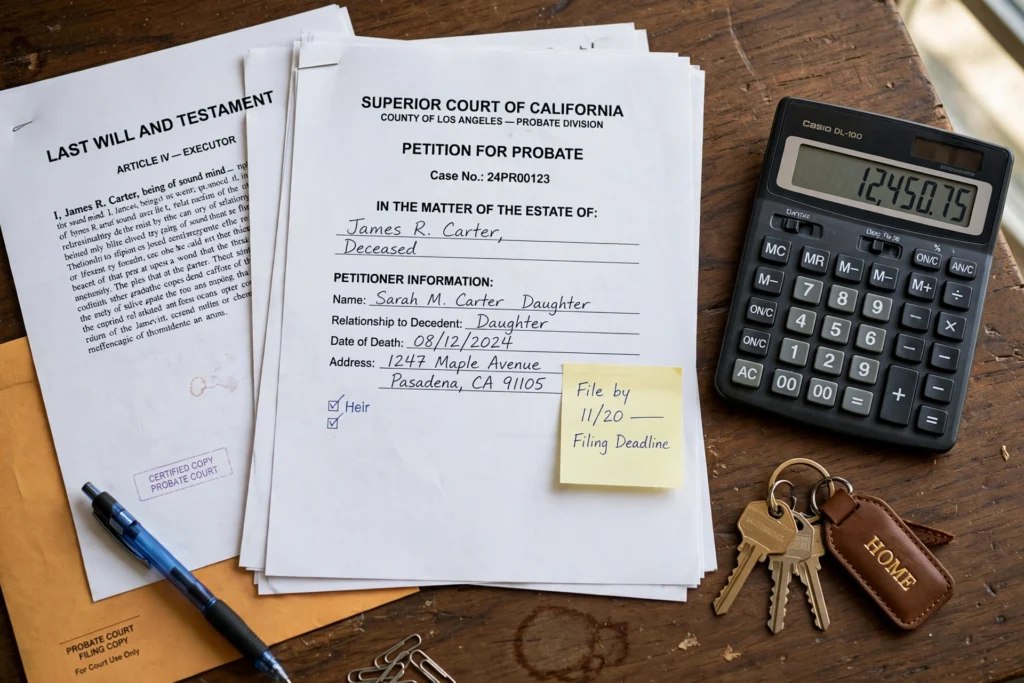
Two taxes can touch a probate sale. Inheritance tax is charged on the estate itself, based on values at the date of death, and any tax due usually has to be paid — or an instalment arrangement agreed — before the grant is issued. A solicitor will normally handle the HMRC forms and tell you what applies. Capital gains tax is different: it can arise if the property sells for more than its probate value, because the estate is treated as having acquired it at that value. A modest rise over a short sale often falls within the annual exemption, but a long delay in a rising market can create a real bill — another reason to keep the sale moving once the grant arrives. This is general information, not tax advice; estates near the thresholds or involving trusts deserve proper professional advice.
Clearing the Home, and Protecting It While It Stands Empty
Clearing a deceased person’s home is often the hardest part emotionally, and it helps to work in stages: documents and valuables first, then anything the will specifically leaves to someone, then furniture and everyday items. Beneficiaries should agree what happens to contents before a clearance firm is booked, and executors should keep a simple inventory with photographs — disputes over contents are a common cause of family friction during probate. The empty property then needs protecting. Standard home insurance often restricts cover once a home has been empty for 30 to 60 days, so arrange dedicated empty-home cover and check its conditions, which may require heating left on low or the water drained down, plus regular inspections. Secure it properly too: good locks, timed lights, post collected, garden kept tidy — an obviously empty house invites trouble.
Choosing an Agent and Managing the Timescale
Not every agent handles probate sales well. You want one who understands that completion cannot happen before the grant, who will be straight with buyers about timescales, and who can price a property that may be dated or need work — probate homes often are, and pricing honestly matters more than chasing the highest figure and sitting unsold for months. Our guide to choosing an estate agent covers fees, contract terms and the warning signs to watch for before you sign a sole agency agreement. Ask each agent how they would market a probate property, and whether they would suggest auction — it suits some dated probate homes well and gives a fixed completion date once the grant is in hand. A straightforward probate sale commonly takes six to twelve months from death to completion: a few months for the grant, then a normal sale on top. Executors who say that to beneficiaries and buyers from the start have a far smoother ride.
Frequently Asked Questions
Can I sell a house before probate is granted?
You can market the property, accept an offer and let the conveyancing groundwork begin, but the sale cannot complete — and usually cannot exchange — until the grant (or letters of administration) has been issued. The buyer’s solicitor needs the grant as proof that you are legally entitled to sell.
How long does probate usually take?
For a straightforward estate, the grant commonly takes a few months from application, though complex estates or HMRC queries can extend it. Add a normal sale period on top, and six to twelve months from death to completion is a realistic planning assumption.
Who pays the bills on the property during probate?
The estate does. Council tax, insurance, utilities and maintenance costs are paid from the estate’s funds and accounted for by the executors before the balance is distributed. Keep every invoice — executors must be able to show where the money went.
What if the property sells for less than its probate value?
If a property sells for less than the value declared at the date of death within four years, the estate may be able to reclaim some inheritance tax through loss relief. Keep the original valuation evidence and tell your solicitor the sale price so the claim is not missed.


