

Winter garden wildlife faces its hardest months just as our gardens look their emptiest. Natural food is scarce, frost hardens the ground, and the creatures that share our gardens — birds, hedgehogs, frogs, insects — survive on reserves and luck. The good news is that small, simple help from gardeners makes a disproportionate difference, and most of it costs nothing at all. Some of the best winter wildlife care is, in fact, doing less.
Birds: Feed Consistently, Water Daily
Winter feeding is the single most effective thing you can do for garden birds. Small birds burn enormous energy just staying warm, and a reliable feeder can be the difference between survival and starvation in a cold snap. Offer a mix: sunflower hearts and peanuts (in mesh feeders, never loose whole nuts, which can choke young birds), fat balls, and seed mixes without cheap fillers like wheat. Equally important is water: bird baths freeze, so break the ice each morning and top up with fresh water — birds need to drink and bathe even in freezing weather. Two rules matter: be consistent (birds learn where food is and waste energy visiting empty feeders), and keep feeders clean (dirty feeders spread disease — wash them every couple of weeks).
Hedgehogs: Leave Them Alone, Mostly
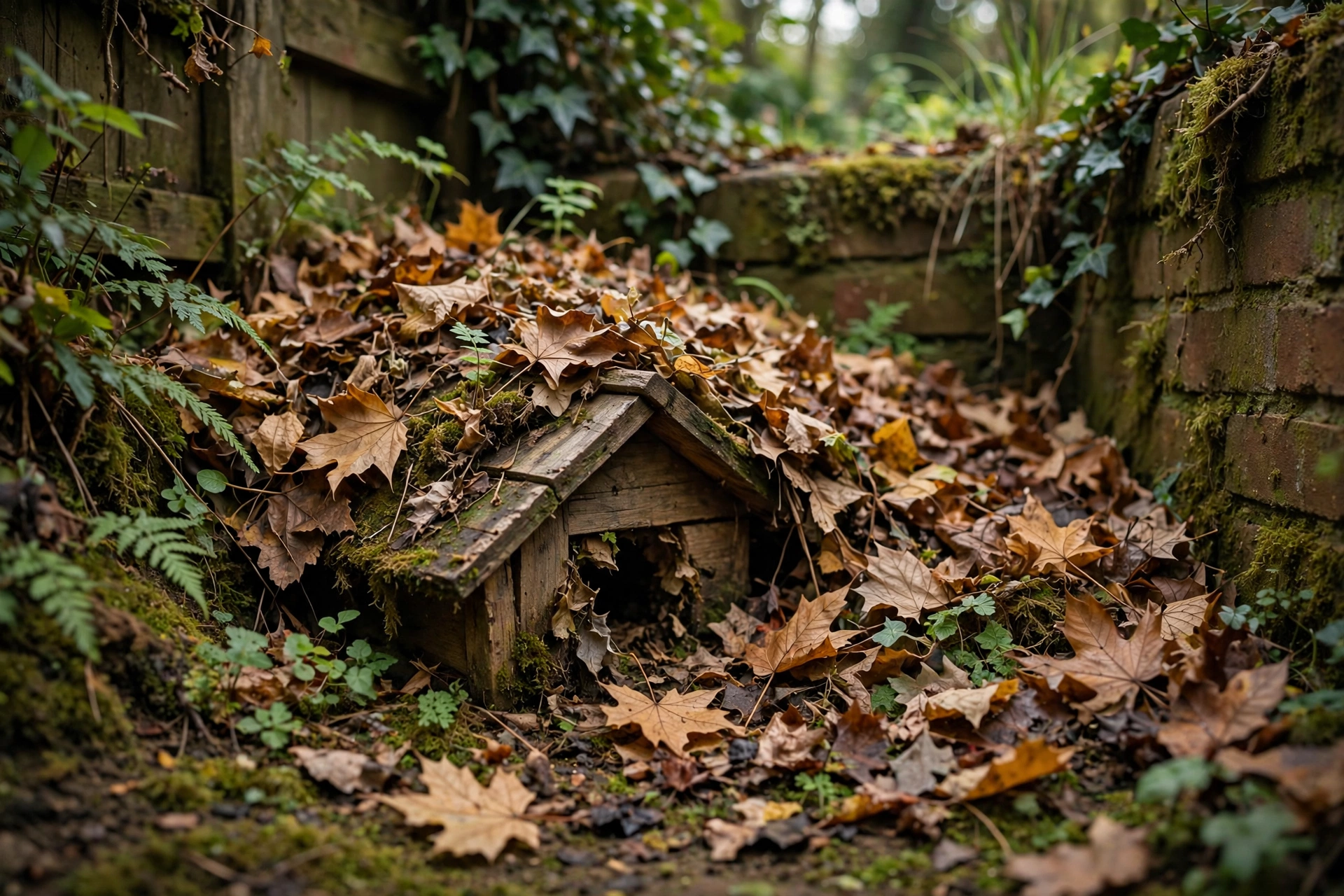
Hedgehogs hibernate from roughly November to March, and a garden can be a lifeline — or a trap. The best help is a quiet, undisturbed corner: a pile of leaves, a log pile, or a purpose-built hedgehog house tucked somewhere sheltered and dry. Do not disturb a hibernating hedgehog: waking it burns the fat reserves it needs to survive until spring. Before hibernation, a shallow dish of meaty cat food (not fish-based) and fresh water helps them fatten up — never milk, which makes hedgehogs ill. And be careful with autumn garden work: check bonfires before lighting (hedgehogs nest in them), and avoid strimmers in long grass and leaf piles where they may be sleeping.
Insects: The Tidy Garden Is the Enemy
Most garden insects overwinter as eggs, larvae or adults tucked into exactly the places tidy gardeners clear away: hollow stems, leaf litter, log piles, and undisturbed soil. Resist the urge to cut everything back in autumn — leave perennial stems standing until spring, leave a corner of leaves unraked, and keep a log pile (even a small one) in a shady spot. A simple insect hotel, hung facing south and kept dry, gives solitary bees and other insects somewhere to shelter. And avoid pesticides entirely in winter: with food scarce, any poisoned insect is also poison for the birds and hedgehogs that eat it.
Frogs, Toads and the Pond
If you have a pond, winter care is mostly about not breaking it. Frogs and other amphibians overwinter in mud at the pond bottom or in damp, sheltered spots nearby. Never smash ice on a pond — the shockwaves harm the creatures below; instead, float a ball on the surface (it keeps a small area ice-free) or rest a pan of hot water on the ice to melt a hole gently. Keep a shallow, sloping edge or a ramp so anything that falls in can climb out. And do not empty or clean the pond in winter: the mud is a nursery, not a mess.
The Bottom Line
Winter garden wildlife needs three things from us: food, water, and to be left alone in the right places. Feed birds consistently, keep water unfrozen, leave a quiet corner for hedgehogs, let stems and leaves stand until spring, and protect the pond. It is a small effort — and the reward is a garden that wakes up in spring full of life, because you helped it survive the winter.
Frequently Asked Questions
What is the best food to put out for birds in winter?
Sunflower hearts, peanuts in mesh feeders, fat balls and good-quality seed mixes. Avoid bread (low nutrition), loose whole peanuts (a choking hazard for young birds), and anything salted. Fresh water daily matters as much as food.
Should I feed hedgehogs in winter?
Before hibernation (autumn) and after they wake (spring), yes — meaty cat food and fresh water help enormously. During deep winter, a hibernating hedgehog should not be disturbed or woken; if you see one out in daytime in midwinter, it may be in trouble and is worth a call to a local wildlife rescue.
When should I cut back perennials for insects?
Leave them until spring. Hollow stems shelter overwintering insects, and cutting them in autumn destroys that habitat. Cut back in early spring as new growth appears, and leave the cuttings in a pile for a few days so anything sheltering inside can escape.
Is it safe to break the ice on my pond?
Do not smash it — the shock can harm amphibians below. Melt a hole gently with a pan of hot water placed on the surface, or keep a floating ball in the pond to prevent a full freeze. Never add antifreeze or chemicals to pond water.


