
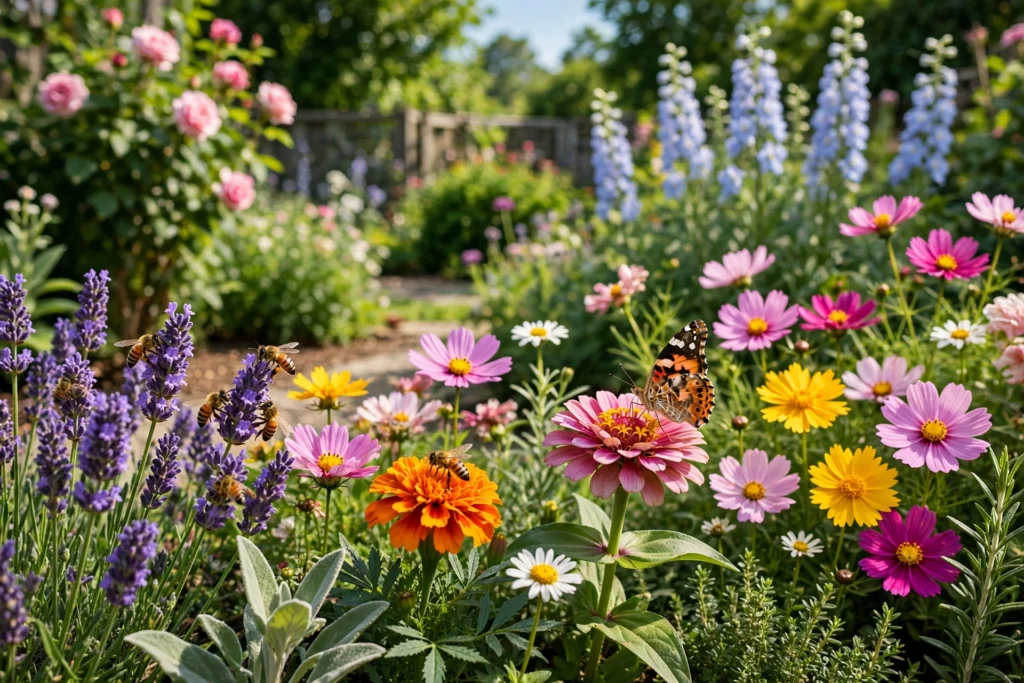
To attract bees and butterflies to your garden is to invite in the workers who make the whole garden function. Bees pollinate your fruit, vegetables and flowers; butterflies are a sign that the food chain in your garden is healthy from the ground up. The encouraging truth is that neither creature is hard to please. They need flowers they can feed from, water, shelter, and — most of all — a garden free of the sprays and habits that drive them away.
This guide explains the natural way to do it: which plants genuinely work, how to keep something in flower from spring to autumn, and the small changes that turn any garden, balcony or allotment into a place pollinators choose to visit.
Why Your Garden Needs Them
Roughly a third of the food we eat depends on pollinators. In a home garden the effect is easy to see: strawberries, courgettes, beans, apples and tomatoes all set more fruit when bees are working the flowers. Butterflies matter too — their caterpillars are essential food for baby birds, and a garden with butterflies is a garden with a working ecosystem. There is also a selfish reason: a garden humming quietly with life is simply a nicer place to sit.
Plant Flowers Bees and Butterflies Can Actually Use
Not all flowers feed pollinators. Highly bred double flowers often hide or remove the nectar and pollen entirely. Choose single, open flowers, and plant them in generous groups — a block of one flower is far easier for bees to find and work than single plants dotted around. These are the proven performers:
- Lavender — the single best all-rounder; bees queue for it all summer.
- Herbs in flower — thyme, oregano, chives, rosemary and borage. Let some of your herbs flower instead of cutting them all; you get the best of both worlds.
- Buddleia — rightly nicknamed the butterfly bush; plant one and butterflies will find it.
- Scabious, echinacea, verbena bonariensis and sedum — long-flowering perennials that carry the show into autumn.
- Foxgloves, hollyhocks and wildflowers — cottage-garden classics loved by long-tongued bumblebees.
- Early and late flowers — crocus, snowdrops and hellebores for the first bees of spring; ivy flowers and Michaelmas daisies for the last of autumn. The hungry gaps at the ends of the season matter most.
Think in Seasons, Not in Plants
The most common mistake is a garden that peaks in June and offers nothing in March or September. Aim for a relay: bulbs and blossom in spring, herbs and perennials through summer, sedum and ivy into autumn. You do not need many plants to do this — two or three reliable performers per season, planted in groups, will keep visitors fed all year. A useful trick is to stand in your garden once a month and simply ask: what is in flower for them right now?
Give Them Water and Shelter
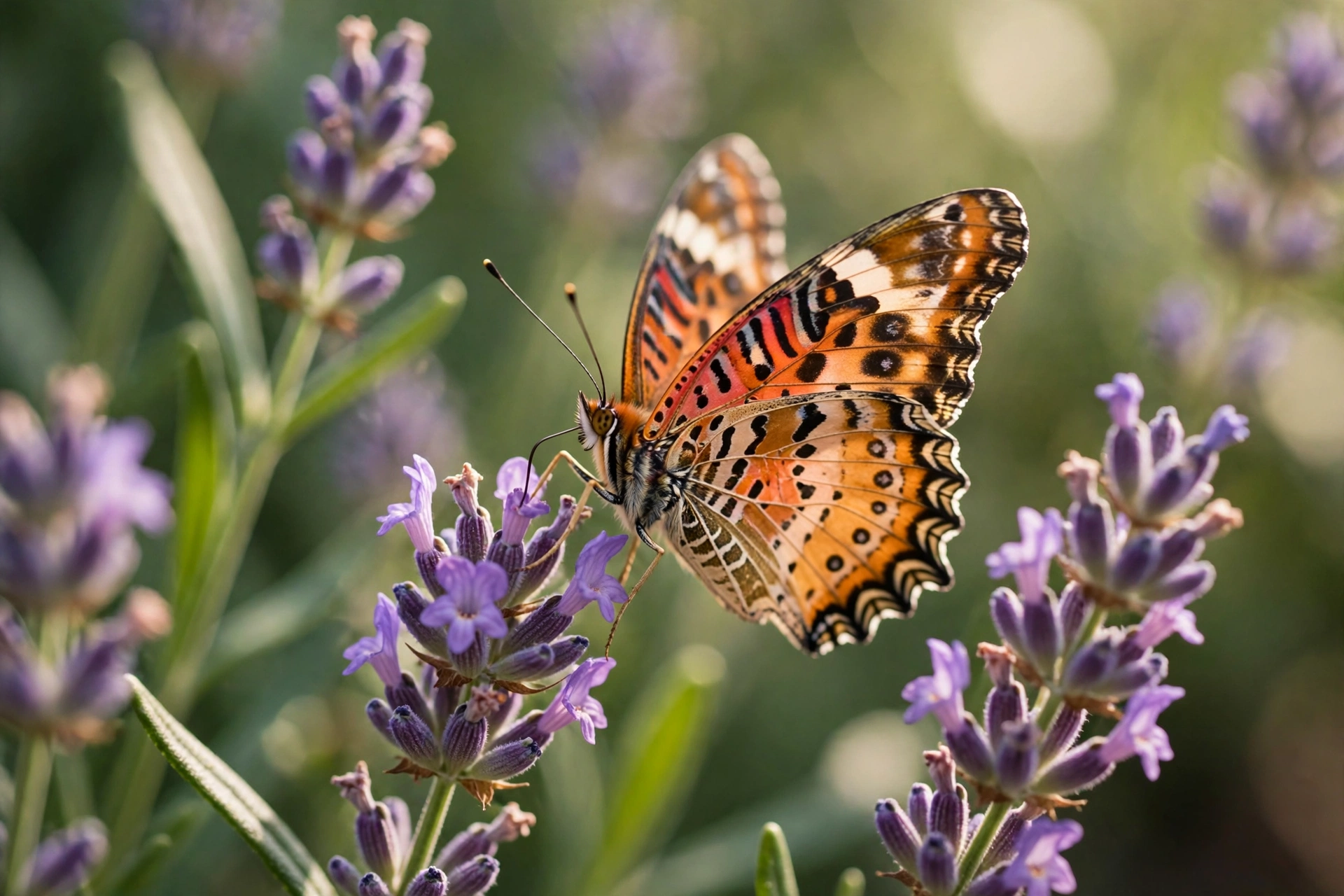
Bees drink, and butterflies need minerals from damp ground. A shallow dish or bird bath with pebbles or marbles in it — so insects can land and sip without drowning — placed in a sunny spot will be used daily in summer. For shelter, leave a corner a little wilder: long grass, a log pile, and leaf litter under hedges are homes for caterpillars, pupae and hibernating butterflies. Delay cutting back hollow stems and seed heads until spring, because solitary bees and other insects spend the winter inside them.
Feed the Caterpillars Too
No caterpillars means no butterflies. Many common butterflies lay eggs on plants we call weeds: nettles for red admirals, peacocks and small tortoiseshells; ivy and holly for the holly blue; native grasses for skippers and browns. A small nettle patch in a sunny corner, tolerated rather than treasured, is one of the most generous things you can plant. Expect a few chewed leaves elsewhere too — that is not damage, that is the garden working.
What to Stop Doing
The other half of attracting pollinators is removing what repels or kills them:
- Stop using insecticides, especially on flowering plants. If you must treat a problem plant, do it at dusk, never on open flowers, and try water, hand-picking or netting first.
- Avoid peat-free confusion: buy plants from nurseries that do not treat with systemic insecticides, and ask — it is a fair question.
- Leave some lawn long. A patch of clover and daisies left unmown for a few weeks is a feeding station, not a mess.
- Reduce night lighting near flower borders — moths are pollinators too, and constant bright light disrupts them.
The Bottom Line
Attracting bees and butterflies naturally comes down to three gifts: flowers in every season, water and shelter, and the patience to stop spraying and tidying everything away. Start with lavender, let some herbs flower, and leave one wild corner — within a single summer you will see the garden change, and within two it will be alive in a way no ornament can imitate.
Frequently Asked Questions
What is the best plant for attracting bees?
Lavender is the most reliable all-rounder in a typical garden, followed by herbs such as thyme, oregano and borage. Plant them in groups in full sun for the biggest effect.
How do I attract butterflies to a small garden or balcony?
Use pots of lavender, verbena and buddleia (there are compact varieties for containers), add a shallow water dish with pebbles, and avoid all insecticides. Even one sunny pot can become a regular stop.
Will attracting bees mean more stings?
No. Bees feeding on flowers are focused entirely on nectar and almost never sting unless trapped or handled. Most garden visitors are gentle bumblebees and solitary bees; leave them to work and they will ignore you completely.
Do I need a beehive to help bees?
Not at all. Most bees are solitary species that never live in hives. Flowers, water, undisturbed nesting corners and a spray-free garden help far more bees than a single hive does.


