A herb garden is the friendliest place to begin growing your own food. Herbs are forgiving, fast, and generous: a single basil plant picked the right way will flavour a whole summer of meals, and a pot of rosemary will look after itself for years. You do not need a big garden, an allotment, or experience — a sunny doorstep, balcony or windowsill is enough.
This guide explains exactly how to start a herb garden at home: which easy herbs to choose first, where to grow them, what soil and pots they need, and the simple watering and harvesting habits that keep them healthy instead of leggy, yellow and sad.
Step 1: Choose the Right Spot
Almost all kitchen herbs come from sunny, dry places around the Mediterranean, so they want the same conditions in your garden: as much sun as you can give them — at least five or six hours a day — and shelter from strong wind. A spot near the kitchen door is perfect, because you will actually use herbs you can reach in the rain while cooking. South or west-facing walls, patios and windowsills are ideal. If your garden is shady, mint, parsley and chives tolerate more shade than the sun-lovers.
Step 2: Pick Easy Herbs for Beginners
Start with herbs you know you will cook with, and favour the ones that are hard to kill:
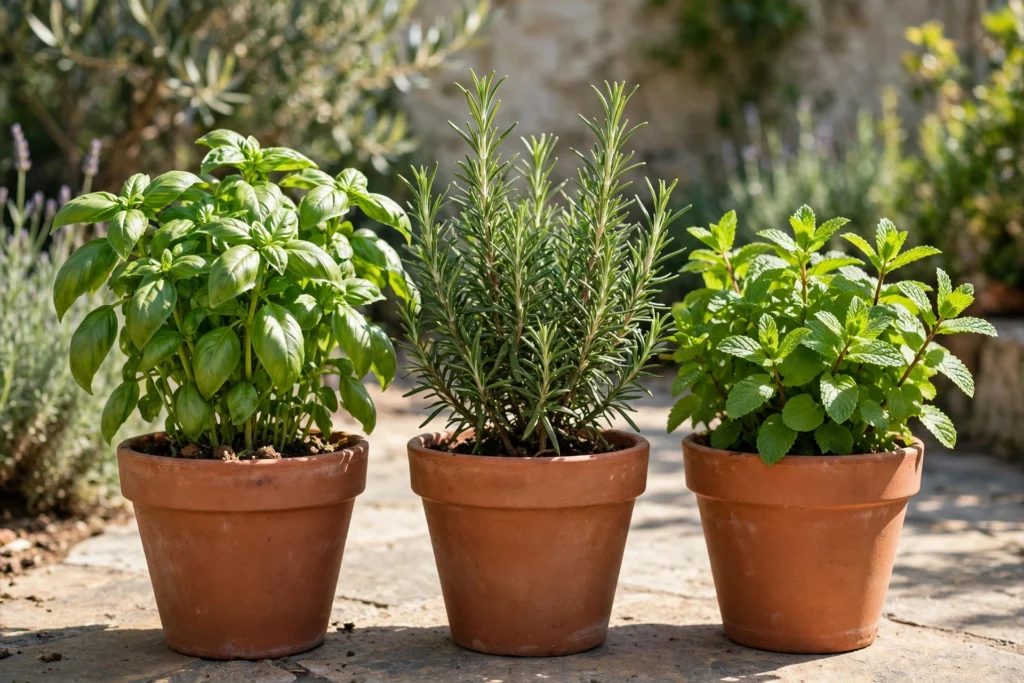
- Basil — the taste of summer. Tender and thirsty, it hates cold; grow it in a pot on a sunny sill or plant out only when nights are warm.
- Mint — almost indestructible, and that is the warning: always grow mint in its own pot, or it will take over the whole bed.
- Rosemary — a woody shrub that thrives on neglect once established. Superb in small gardens because it looks good all year.
- Chives — cheerful, hardy tufts with a mild onion flavour, and pretty purple flowers the bees love.
- Parsley — slower to start but generous for months. Flat-leaf has the best flavour; curly is tougher in winter.
- Thyme and oregano — low, spreading, drought-tolerant herbs that ask for almost nothing and flavour everything.
- Coriander — quick and delicious, but quick to bolt (flower and set seed) in hot weather; sow little and often.
Step 3: Pots, Soil and Planting
Drainage is the whole secret. Herbs rot in soggy soil, so every pot needs holes in the bottom and a gritty, free-draining mix — ordinary multipurpose compost with a handful of horticultural grit or perlite stirred in works well. Terracotta pots suit herbs beautifully and help soil dry between waterings, though they need watering more often in summer.
Buy small plants from a garden centre for your first year — they are quicker and more reliable than seed — and give each herb room: a 20–25cm pot for one plant is a good rule. Plant at the same depth the herb was growing in its nursery pot, firm gently, and water in well. Woody herbs like rosemary, thyme and sage can share a big pot or a sunny bed; soft herbs like basil and coriander do better in pots you can move and protect.
Step 4: Watering — Less Than You Think
More beginner herbs die from kindness than neglect. The Mediterranean herbs — rosemary, thyme, oregano, sage — prefer to dry out between waterings; water deeply, then leave them until the top few centimetres of compost are dry. Soft herbs — basil, parsley, coriander, mint — like steadier moisture and will wilt theatrically when thirsty, but usually recover within an hour of a good drink. Water at the base of the plant in the morning, not over the leaves in the evening, and never leave pots sitting in saucers of water.
Step 5: Harvesting So Plants Keep Growing
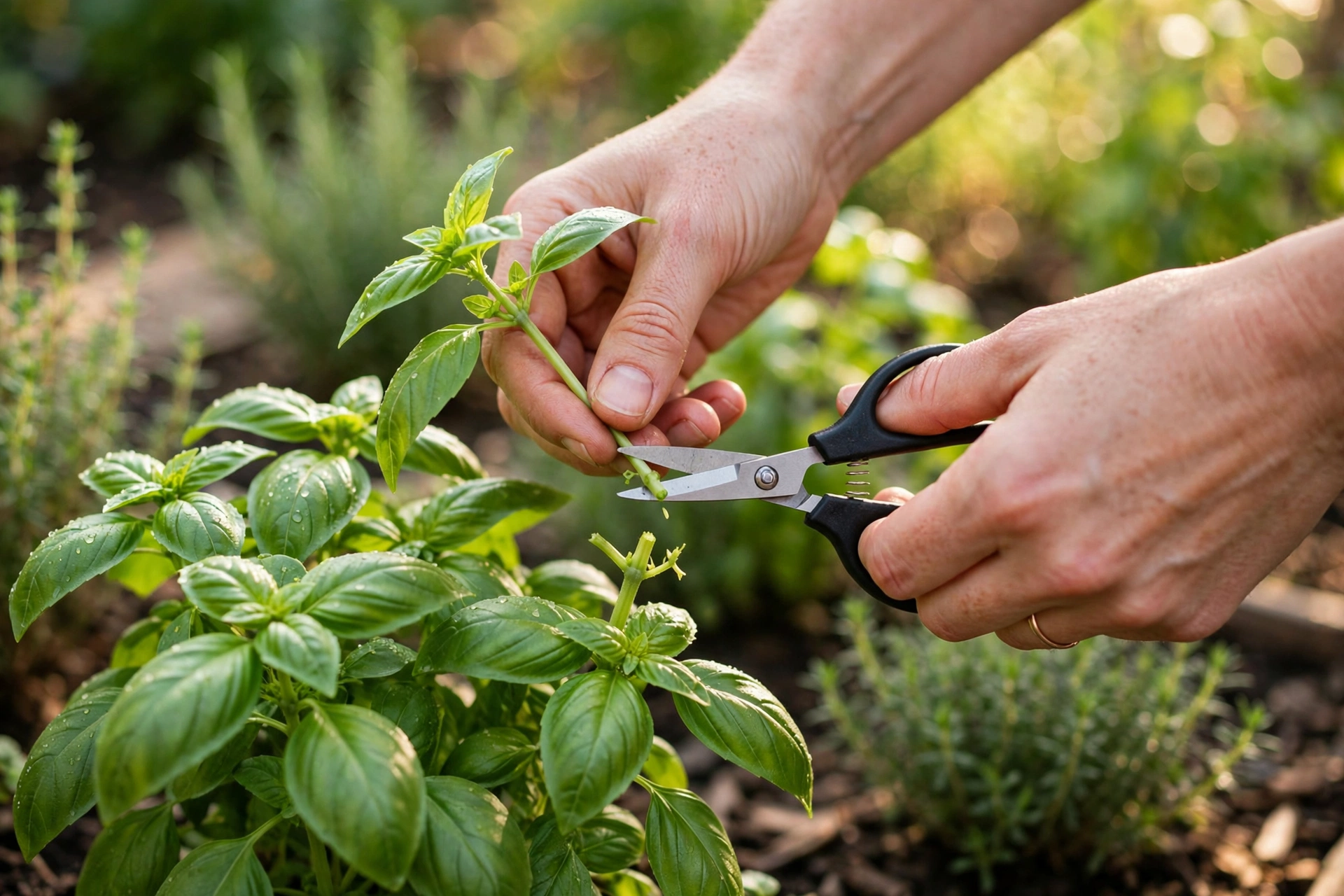
Picking herbs is not just allowed — it is how you make them grow better. For basil, pinch out the tip of each stem just above a pair of leaves; the plant responds by growing two stems, becoming bushy instead of tall and bare. Cut chives and parsley stems at the base. Take whole sprigs of rosemary and thyme rather than stripping leaves. The golden rules: never take more than a third of a plant at once, harvest in the morning when flavours are strongest, and keep picking — a herb that is used is a herb that keeps producing.
Keeping Your Herb Garden Going All Year
Hardy herbs — rosemary, thyme, sage, mint, chives, parsley — survive a typical UK winter outside, especially in the ground or in big pots against a wall. Tender herbs — basil and coriander — are summer annuals; enjoy them to the first frosts, then sow fresh next spring. Bring a pot of basil and parsley indoors to a bright sill to stretch the season, feed pots monthly with a general liquid fertiliser through summer, and your small herb garden will quietly transform your cooking from the first spring picking to the last autumn roast.
The Bottom Line
To start a herb garden you need a sunny spot, a few forgiving herbs, pots that drain, and the confidence to pick what you grow. Begin small — five pots is plenty — learn how each herb behaves in your space, and expand next year. It is the smallest garden you can make, and quite possibly the one you will use every single day.
Frequently Asked Questions
What is the easiest herb to grow for a beginner?
Mint and chives are the most forgiving, followed by rosemary once it is established. Basil is easy in a warm summer but hates cold and irregular watering, so keep it on a sunny windowsill if your garden is exposed.
Can I grow a herb garden in pots on a balcony?
Yes — pots are ideal for herbs, especially on balconies. Choose the sunniest spot you have, use pots with drainage holes and gritty compost, and remember pots dry out faster than beds in summer.
Why does my basil always die?
Usually cold, wet roots or both. Basil needs warmth, steady moisture (not sogginess), and to be picked by pinching the tips — not stripped of its big lower leaves, which are the plant’s engine.
Should herbs be grown from seed or bought as plants?
For your first year, bought plants give instant results and fewer failures. Parsley, coriander and basil from seed are cheap and satisfying once you have the basics, ideally started indoors in spring.