When two or more people buy together, the solicitor will ask a question many buyers have never considered: do you want to own as joint tenants or as tenants in common? Despite the word “tenants”, this has nothing to do with renting. It is about how your ownership is structured, and the choice decides what happens to your share of the home if you die or separate. Getting it wrong is easy in the rush of a purchase and awkward to unpick later, so understand both options before you sign anything.
Joint Tenants: One Property, One Shared Ownership
Joint tenants own the whole property together, equally, with no separate shares: legally there are not two halves, just one property owned as a single unit. The defining feature is the right of survivorship: when one joint tenant dies, their interest passes automatically to the survivor, whatever any will says. You cannot leave your interest to anyone else: in law there is no separate share to leave. For many couples who want the other to have the home outright, this simplicity is exactly the point — no probate complications, no share to argue about. The flip side appears if the relationship ends: splitting an undivided whole between two people who no longer agree is messier than dividing defined shares.
Tenants in Common: Defined Shares You Control
Tenants in common each own a distinct share. Shares are often equal — 50/50 — but any split can be recorded: 60/40, 70/30, suiting buyers who put in different amounts of money. Because your share is a separate asset, it is yours to deal with as you wish. When you die, your share passes under your will, or under the intestacy rules if you have no will — it does not automatically go to the other owner. That single difference is why tenants in common is the usual choice where an owner needs their share to benefit someone else: children from an earlier relationship, for example. While you are alive, you can also sell or give away your share, subject to any agreement made with your co-owner. It works for flats too; our guide to buying a flat covers the lease and service charge questions alongside the ownership choice.
Who Each Option Usually Suits
Joint tenancy tends to suit married couples and civil partners buying their main home together and wanting the survivor to own it outright without fuss. Tenants in common tends to suit almost everyone else. Unmarried partners often choose it because defined shares are far clearer if they separate. Friends or siblings buying together almost always should: theirs is a financial arrangement, not a merged life. Buyers contributing unequal deposits — one partner bringing £40,000, the other £10,000 — use it to make the split reflect the money. People in second marriages, or with children from earlier relationships, use it so their share can pass to their own children rather than automatically to a new partner. Neither structure changes whether the property is freehold or leasehold — our explainer on leasehold vs freehold covers that side of the same purchase.
The Declaration of Trust: Writing the Shares Down
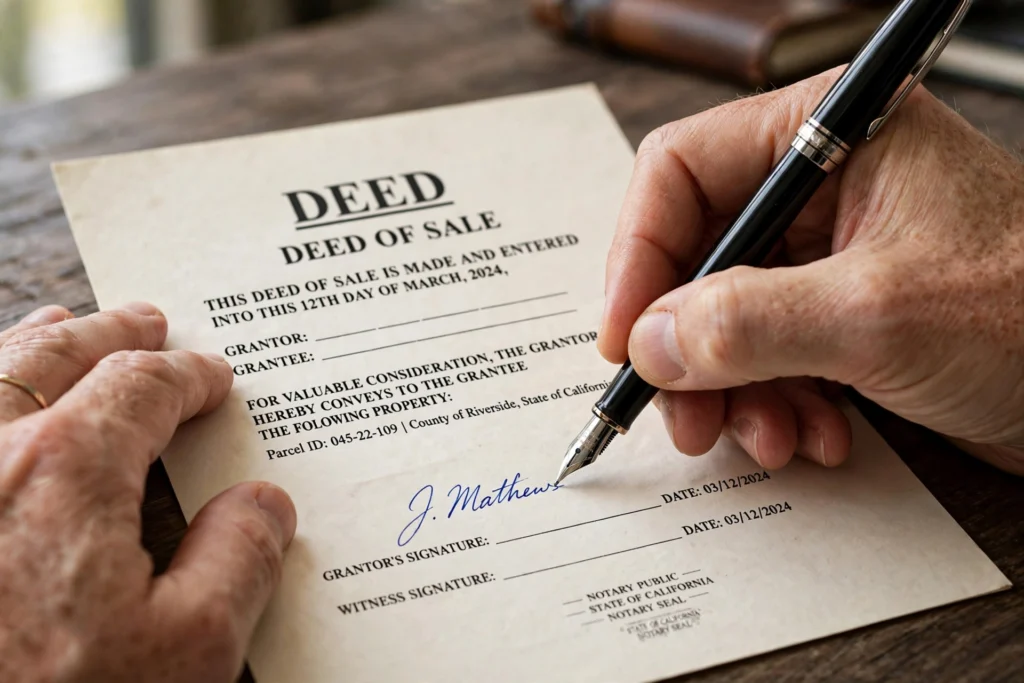
If you buy as tenants in common with anything other than a simple equal split, a declaration of trust (sometimes called a deed of trust) is the document that makes it solid. It records each owner’s percentage share, how much deposit each person contributed, and often how mortgage payments and major costs will be divided, plus what happens if one owner wants to sell and how the property will be valued then. Your conveyancer will usually offer to prepare one for a modest fee, and it is money well spent: without one, a dispute years later can descend into competing memories of who paid for the deposit, the extension or the new roof. Even equal-share buyers sometimes take a short declaration to record that deposits were unequal but the shares are deliberately equal. Keep the signed copy with your will, and tell your executors where it is.
Separation, Death, Changing Later — and Questions to Settle First
On death, the difference is stark: a joint tenant’s interest simply evaporates into the survivor’s ownership, while a tenant in common’s share forms part of their estate and goes where their will directs — which is why tenants in common should each make a will when they buy. On separation, tenants in common already have their percentages agreed, so the only argument is whether the home is sold or one buys the other out, and at what valuation. Joint tenants who separate typically convert to tenants in common first, because while they remain joint tenants, a death would still send everything to the other — rarely what either wants mid-split. That conversion is called severance, and it can be done by written agreement or by one owner serving formal notice on the other. Going back the other way needs everyone’s agreement and legal advice. Either change costs more after the purchase than choosing correctly at the start.
So before completion, talk through the practical questions and record the answers. Who is paying what towards the deposit, and will the shares reflect that? How will mortgage payments, insurance and repair costs be split — in the same proportions as the shares, or equally? What happens if one of you loses income, or wants to move out and rent their share, or bring a partner to live in the property? Most important of all: what is the exit plan? Agree now whether a departing owner gets first refusal on being bought out, how the property will be valued (independent valuation is fairest), and how much notice either side must give before a sale can be forced. None of this is pessimism — it is the same conversation solicitors will push you towards, and co-buyers who have it early rarely regret it. Put the ownership decision, the declaration of trust and your wills on the same pre-completion checklist.
Frequently Asked Questions
What is the main difference between joint tenants and tenants in common?
Joint tenants own the whole property together with no separate shares, and on death the survivor automatically owns it all. Tenants in common each own a defined share — equal or unequal — and that share passes under their own will when they die.
Can tenants in common have unequal shares?
Yes. Shares can be split however you agree — 60/40, 75/25 or anything else — and the split is normally recorded in a declaration of trust prepared by your conveyancer when you buy, together with each person’s deposit contribution.
Does owning as tenants in common affect our mortgage?
Not in the way many people fear. If you have a joint mortgage, you are each liable for the whole mortgage debt regardless of your ownership shares — owing a 30 per cent share does not mean owing only 30 per cent of the mortgage if the other person stops paying.
Can we change from joint tenants to tenants in common later?
Yes, through a process called severance, done by mutual agreement in writing or by one owner serving formal notice on the other. It is a common step when couples separate — but choosing the right structure at purchase is cheaper and simpler.