
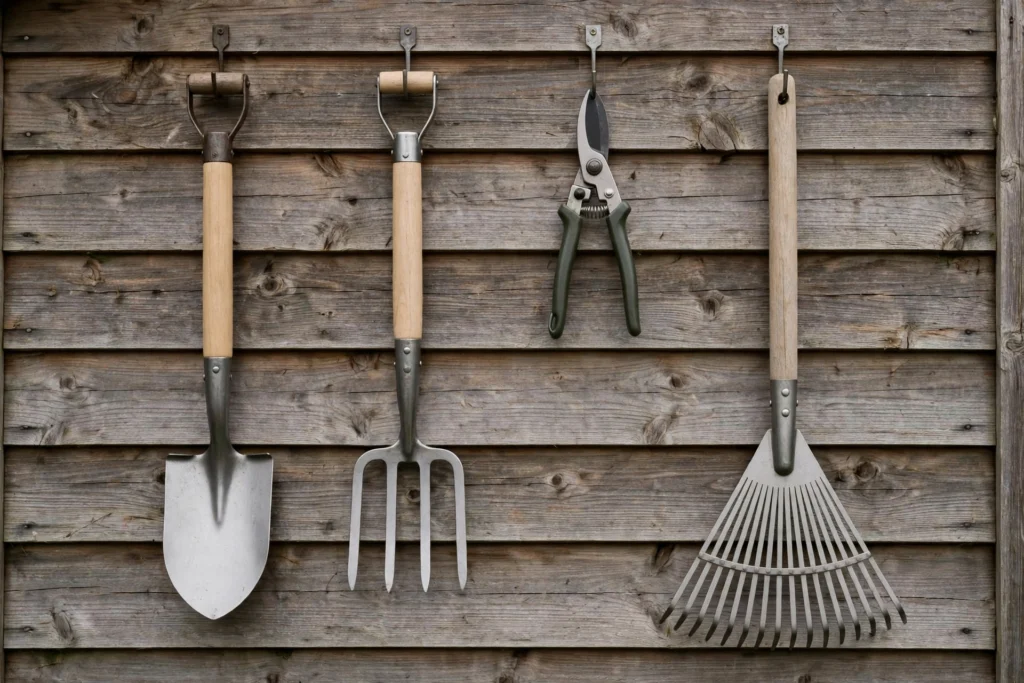
How to store garden tools and furniture for winter is a job most of us skip — and then pay for in spring, when the spade is rusted, the secateurs are seized, and the wooden bench has spent five wet months turning grey. One dry autumn afternoon of proper storage saves real money and makes the first spring weekend a pleasure instead of a repair job. Here is how to do it, tool by tool and chair by chair.
Clean Everything Before It Goes Away
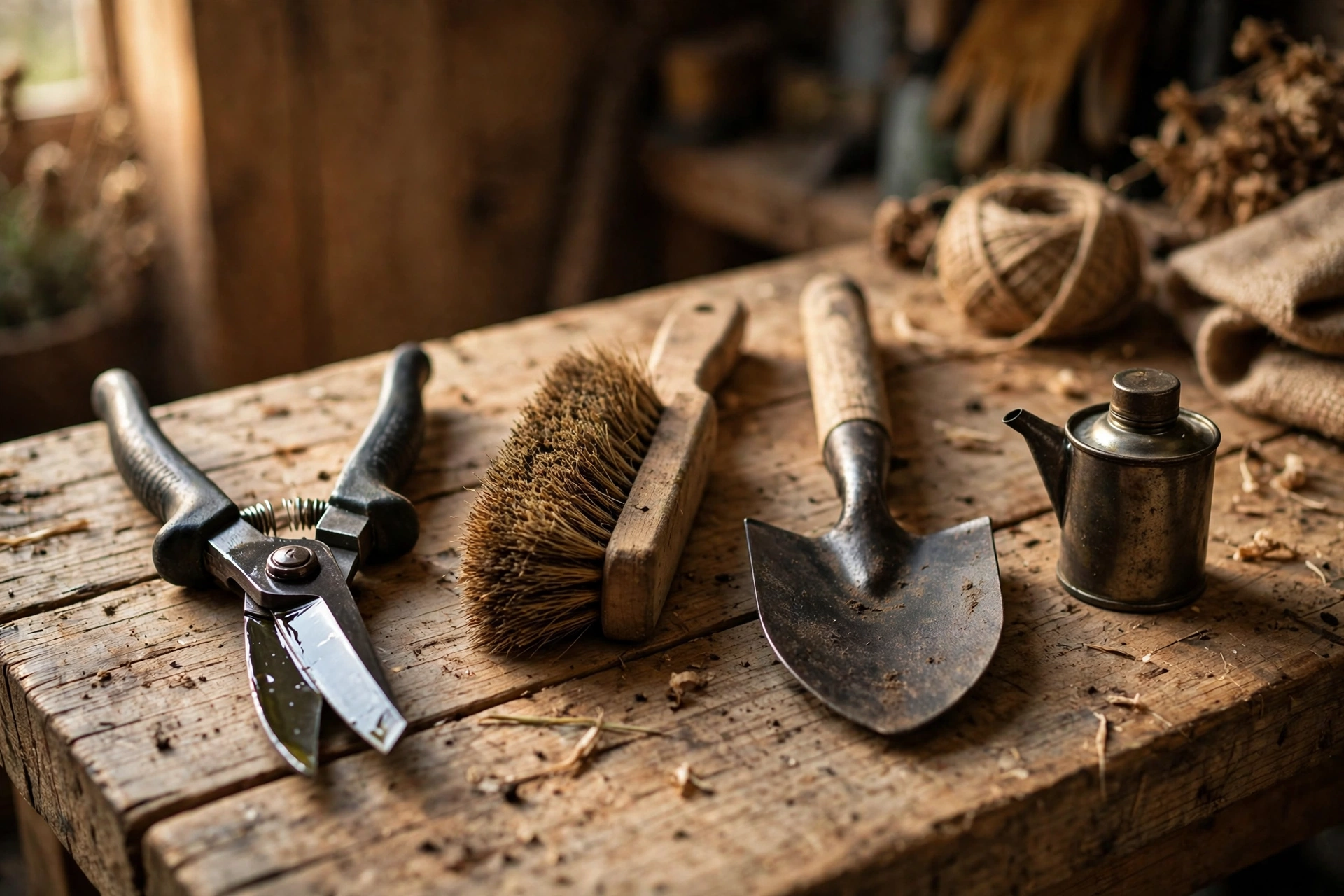
Never store a dirty tool. Soil holds moisture against metal, and moisture is what makes rust. Knock soil off spades, forks and hoes with a stiff brush, then wash them in a bucket of warm soapy water and dry them thoroughly — a rag and half an hour in the sun, or a quick wipe with an old towel if the weather is against you. Secateurs, shears and loppers need their blades cleaned with a cloth and a little disinfectant, especially if you have cut any diseased wood this year; dirty blades spread disease from plant to plant next spring. Lawnmower blades and strimmer heads get the same treatment, and the mower itself should be brushed clean of grass, which rots and corrodes if left caked underneath.
Oil, Sharpen and Protect the Metal
Once tools are clean and dry, wipe metal parts with an oily rag — ordinary vegetable oil works, or a light machine oil if you prefer. The thin film keeps air and damp off the steel all winter. Sharpen blades now, not in spring: a sharp edge is easier to achieve on a clean blade, and you will thank yourself at the first pruning session. Wooden handles benefit from a rub of linseed oil, which stops them drying and splintering. For power tools, follow the manual: drain or stabilise fuel in petrol machines, remove batteries from cordless tools and store them indoors at room temperature (cold garages shorten battery life), and coil cables loosely rather than kinking them.
Where to Store Tools So They Survive
Dry, dark and off the floor is the rule. Hang tools on a shed wall rather than leaning them in a damp corner — hanging keeps edges off concrete, which draws moisture, and stops handles warping. A simple pegboard or a row of hooks costs little and changes everything. Small tools and seeds go in labelled boxes or old buckets, and anything with a sharp edge gets a blade guard or an old piece of hose slipped over it. If your shed leaks, fix the roof before you store anything valuable in it, or move the best tools into the garage or a dry corner of the house. Damp air rusts even oiled steel over five months, so ventilation matters as much as a roof: a shed sealed tight with wet air inside is worse than one with a small vent.
Furniture: Wood, Metal and Cushions
Garden furniture needs the same logic. Wooden benches and tables should be cleaned, left to dry, and given a coat of oil or wood preserver before winter; then either cover them with breathable covers (never plastic sheeting, which traps condensation) or move them under cover. Metal furniture should be cleaned, checked for chips in the paint — touch them up, because bare metal rusts fast — and stored dry. Cushions and fabric must come indoors: even “all-weather” cushions go mouldy if left out all winter, and mice love them for nesting. Stack chairs rather than leaving them scattered, and put pots and ornaments somewhere they will not freeze-crack. Terracotta pots are the classic casualty: empty them, clean them, and store them upside down under cover. While you are at it, this is the perfect moment for the rest of the autumn garden jobs list, and for checking which plants need to overwinter tender plants indoors before the first frost.
Frequently Asked Questions
Can I leave tools in an unheated shed all winter?
Yes, if the shed is dry and ventilated. Cold alone does not damage tools; damp does. Oil the metal, keep tools off the floor, and they will be fine.
Should I drain petrol from the mower?
Either drain it or add fuel stabiliser and run the engine for a few minutes. Stale petrol gums up carburettors over winter and causes the classic spring non-start.
Are breathable furniture covers worth it?
Yes — they keep rain off while letting moisture escape. Cheap plastic tarps trap condensation underneath and can cause more damage than no cover at all.
When should I do all this?
Late October or early November, before the first hard frost and before the shed becomes a wet, cold place you avoid. One afternoon is enough for most gardens.


