Knowing how to bleed a radiator is the most useful five minutes in home heating. If your radiators are hot at the bottom and cold at the top, the boiler is working hard, the room never quite warms up, and your energy bills are paying for heat that never arrives. The cause is almost always trapped air — and the fix costs nothing but a radiator key.
This guide takes you through bleeding a radiator step by step, then covers the other simple heating fixes every homeowner should know: cold spots, noisy pipes, low boiler pressure and radiators that stay cold altogether — plus the clear line where a problem stops being DIY and becomes a job for a Gas Safe engineer.
How to Bleed a Radiator, Step by Step
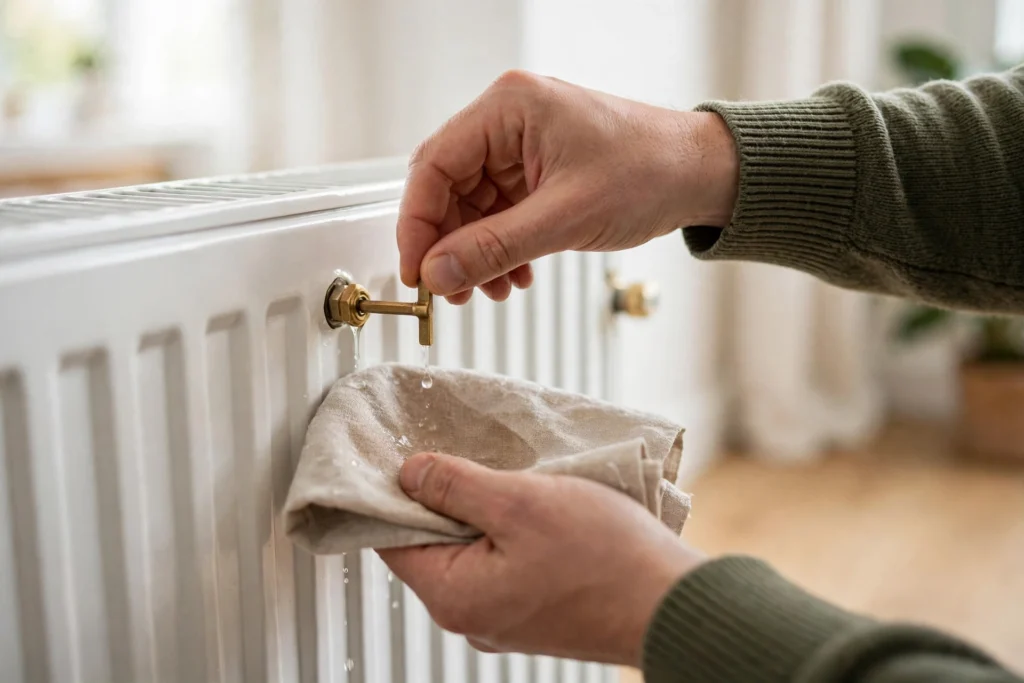
You will need: a radiator key (a couple of pounds from any hardware shop; some radiators take a flat screwdriver instead), an old cloth or small container, and a towel for the floor.
- Turn the heating on for 10–15 minutes so the system is warm, then switch it off and let the radiators cool just enough to touch comfortably. Bleeding a scalding-hot, running system sprays hot water.
- Start with the downstairs radiators and work upstairs — air rises, and so should you.
- Find the bleed valve: a small square or slotted screw at the top corner of the radiator. Hold the cloth under it.
- Insert the key and turn anti-clockwise about a quarter to half a turn — no more. You should hear a hiss as air escapes.
- Keep the valve open until the hissing stops and water starts to dribble steadily, then close it firmly (clockwise) — snug, not forced.
- Wipe up, move to the next radiator, and repeat.
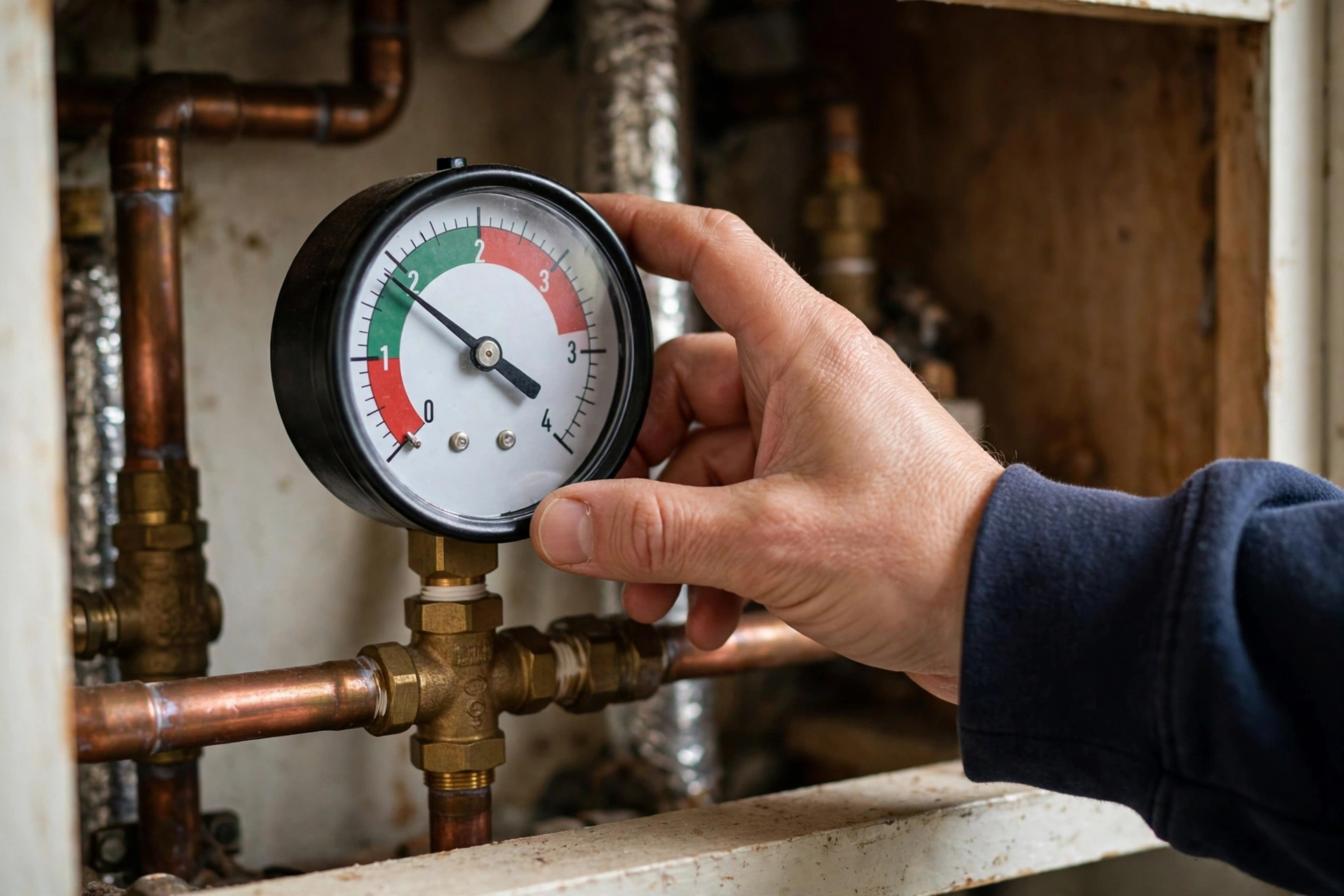
Then the step everyone forgets: check your boiler pressure. Bleeding radiators releases pressure from the system. Look at the gauge or display on the boiler — with the system cold it should sit around 1 to 1.5 bar. If it has dropped below 1, top it up using the filling loop or the boiler’s built-in key, following the manual, until it is back in range. Skip this and you may end up with a boiler that will not fire at all.
Fix 2: A Radiator That Is Cold at the Bottom
Cold at the top means air; cold at the bottom usually means sludge — a build-up of rust and debris settling inside the radiator. Bleeding will not fix it. A heating engineer can power-flush the system or remove and flush the radiator; fitting a magnetic filter to the system helps prevent it returning. Sludge is also a common cause of boiler noise and breakdowns, so do not ignore it for years.
Fix 3: Noisy Pipes and Gurgling Radiators
Gurgling and trickling sounds usually mean air moving around the system — bleed all the radiators and check the pressure first. Banging or clunking (“kettling”) inside the boiler itself is a different matter: it suggests limescale or sludge inside the heat exchanger, and that is an engineer’s job. Ticking and creaking as pipes warm up is usually just expansion and is normal, especially where pipes pass through tight holes in joists.
Fix 4: One Radiator Stays Cold
If a single radiator stays cold while the others are hot, check its valves first: the thermostatic radiator valve (TRV) may be turned down or its pin stuck after a summer of being off — remove the TRV head and gently free the pin. If that fails, the system may need balancing: partly closing the lockshield valves on the radiators nearest the boiler pushes more flow to the distant ones. Balancing is free, takes half an hour with two adjustable spanners and patience, and transforms many uneven systems.
When to Call a Heating Engineer
Anything involving the boiler itself beyond the user controls — and anything gas-related at all — belongs to a Gas Safe registered engineer (in the UK, check the card). Call one if: the boiler keeps losing pressure within days (a leak or a faulty expansion vessel); you see water leaking from the boiler; the boiler locks out repeatedly; radiators stay patchy after bleeding and balancing (likely sludge); or there is any smell of gas, in which case turn off the gas at the meter and call the National Gas Emergency Service on 0800 111 999.
The Bottom Line
Bleed your radiators at the start of every heating season, keep the boiler pressure in its green zone, and most ‘broken heating’ turns out to be trapped air and five spare minutes. Your rooms warm up properly, the boiler works less hard, and the energy you pay for ends up where it belongs — in the room, not fighting a pocket of air.
Frequently Asked Questions
How often should you bleed radiators?
Once a year is enough for most homes, ideally in autumn when the heating goes back on. Bleed them again any time you notice cold tops on radiators or hear gurgling in the system.
Should the heating be on or off when bleeding a radiator?
Run it first to warm the system, then switch it off and let the radiators cool slightly before bleeding. Bleeding with the pump running can draw air in and sprays hot water.
Why does my boiler pressure drop after bleeding radiators?
Because you have let air (and a little water) out of a sealed system — the pressure has to fall. Top it back up to 1–1.5 bar cold via the filling loop. If it keeps dropping every few days, you have a leak or a fault and need an engineer.
Water came out black when I bled my radiator. Is that bad?
A little discoloured water is normal, but consistently black, sludgy water is a sign of corrosion inside the system. It is worth having it flushed and treated with inhibitor before it damages the boiler.