Good kitchen storage ideas share a secret: the kitchens that stay tidy are not the biggest ones, they are the ones with a system. A place for everything, zones that match how you cook, and storage that uses the awkward spaces most kitchens waste — the deep cupboard corners, the dead gap above the wall units, the inside of every door. When those pieces fall into place, the worktops clear themselves, because there is finally somewhere better for things to be.
This guide works through the kitchen in the order chaos usually strikes: cupboards first, then drawers, then the worktops everyone actually sees, plus the vertical and forgotten spaces that hold more than you would believe.
Start With an Honest Audit
Before buying a single organiser, empty one cupboard at a time and be truthful about what you find. Every kitchen accumulates the same archaeology: duplicate gadgets, the bread maker of 2019, lids without containers, containers without lids, spices old enough to be historical artefacts. Group what survives into honest categories — everyday cooking, baking, entertaining, appliances — and let go of anything unused for a year or more; storage products cannot organise things you do not need, they can only hide them at your expense. Then plan by zones: cooking things near the hob, prep things near your main work surface, dishes and glasses near the dishwasher, tea and coffee near the kettle. Kitchen storage fails when the system fights the cook; zone it by how you actually move, and tidiness becomes the path of least resistance instead of a daily battle.
Cupboards: Make the Depths Reachable
The standard kitchen cupboard is a dark cave where things go to be forgotten. Fixes that change everything: pull-out racks or baskets fitted inside deep base cupboards, so the back comes to you; a turntable (lazy Susan) in corner cupboards and for oils and spices; stackable shelf risers that double the usable levels for plates, bowls and tins; and clear or open-front boxes for the small packets that otherwise avalanche. Keep everyday items between knee and shoulder height, heavy things (cast iron, the big mixer) low, and the once-a-year items — the fondue set, the turkey platter — on the highest shelf. Inside the cupboard door, slim racks hold cling film, foil, lids and cleaning bits, reclaiming a few centimetres that most kitchens simply donate to the void.
Drawers: Dividers Change Everything
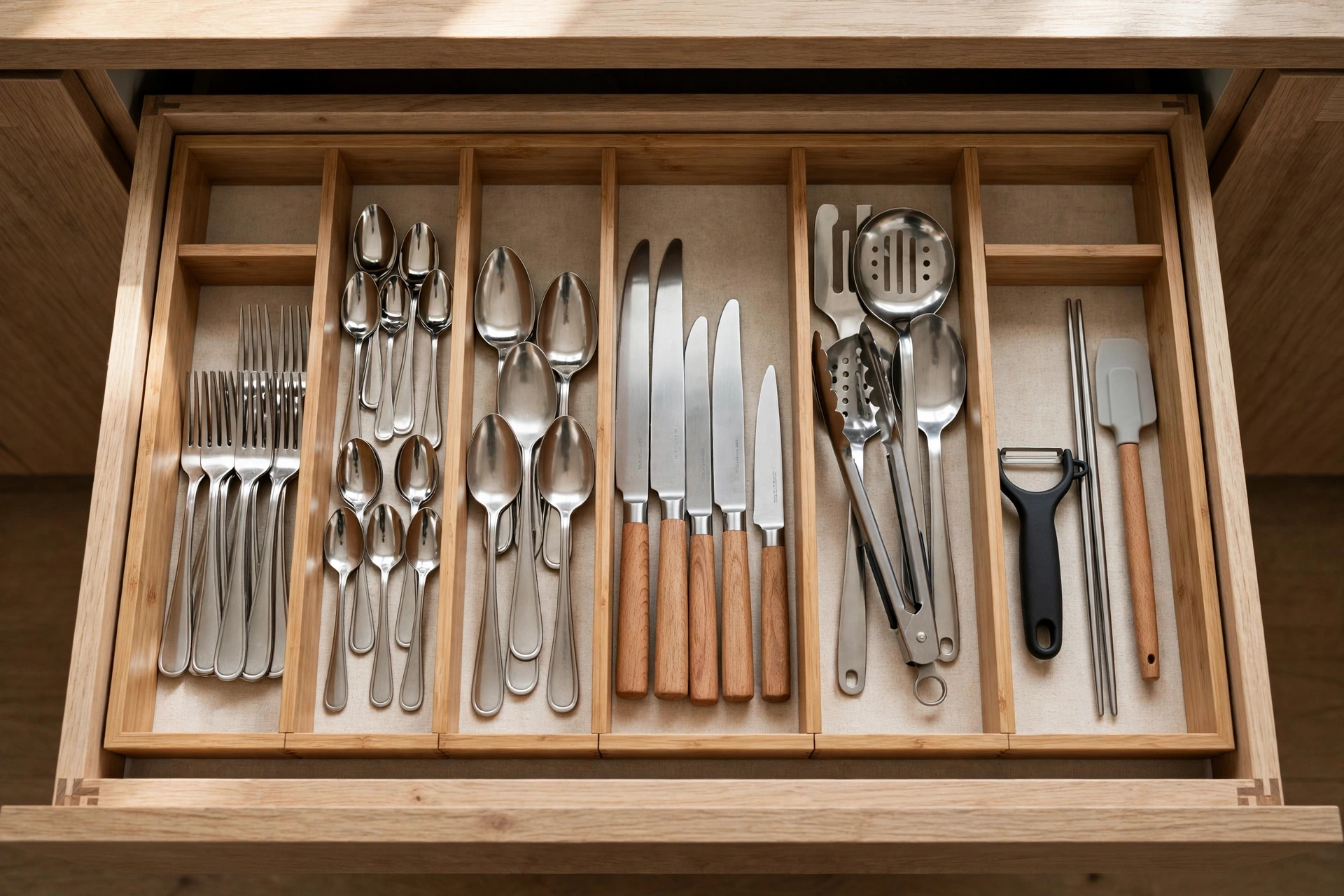
A kitchen drawer without dividers is a rummage waiting to happen. Fit adjustable dividers or tray inserts in every drawer: cutlery in its tray, utensils corralled in compartments sized to them, and — the upgrade cooks love — deep drawers for pans and plates instead of base cupboards, because a drawer shows you everything from above and lifts nothing over anything else. Knife storage deserves a decision: an in-drawer knife block keeps blades safe and off the worktop; a magnetic wall strip does the same where drawer space is precious — either beats the loose-drawer jumble that dulls edges and finds fingers. Keep one slim drawer or a section of one as the household’s ‘admin drawer’ — tape, batteries, takeaway menus, the scissors everyone hunts for — and defend its boundaries cheerfully.
Worktops: Defend the Clear Surface
Worktop space is for cooking, and every permanent resident there should have to justify itself. The daily few — kettle, toaster, perhaps the coffee machine — earn their place; everything else (the blender, the bread bin overflow, the fruit bowl the size of a paddling pool, the paper drift) gets a home in a cupboard, a drawer or a wall-mounted rail. Use the wall between worktop and wall units: a rail with hooks for utensils, pans and mugs turns dead backsplash into storage and frees a whole drawer. Magnetic strips, small shelves for spices, and a wall-mounted paper holder all work the same trick. The test of a kitchen system is the two-minute reset: if putting the kitchen back to clear takes longer than that, something on the worktop still has not found its real home.
The Forgotten Spaces
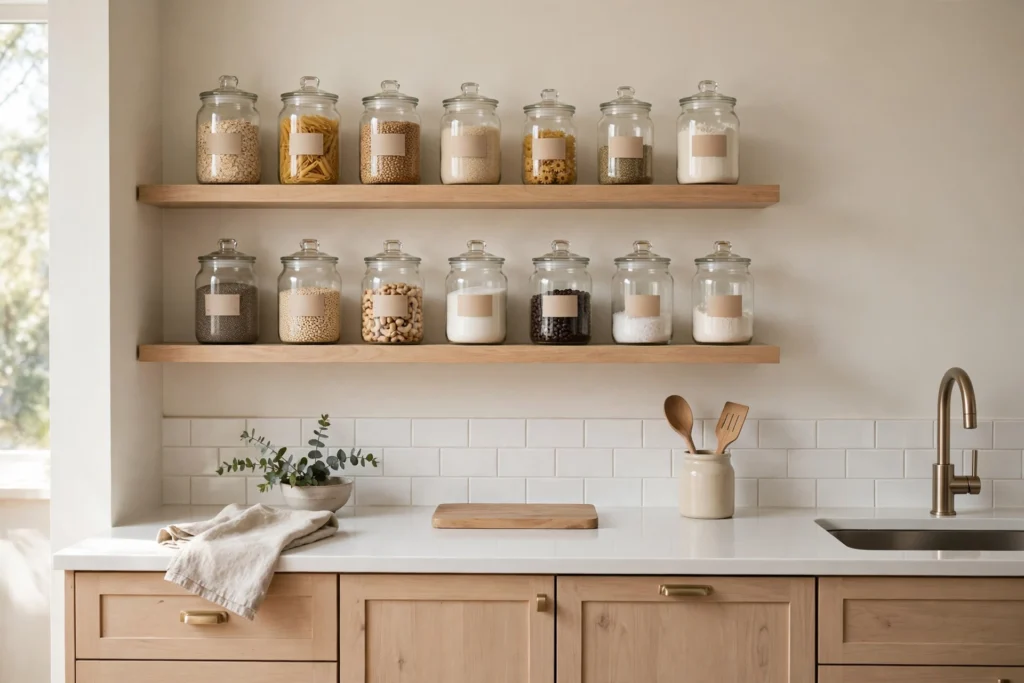
Finally, harvest the spaces most kitchens ignore. The gap above wall cupboards stores baskets of rarely-used items handsomely (and hides them in plain sight). The kick-space under base units can take shallow drawers for trays and baking sheets. The ends of cupboard runs and island sides hold slim shelves for cookbooks and boards. The sink cupboard tames with a tension rod for spray bottles and a caddy on the door. And the pantry principle works even without a pantry: decant dry goods into matching labelled jars on one shelf or in one deep drawer — you will see what you have, use what you bought, and stop buying a fourth packet of lentils.
The Bottom Line
Kitchen storage ideas work when they follow a system: audit ruthlessly, store by cooking zones, make cupboard depths reachable with pull-outs and turntables, divide every drawer, defend the worktops for the daily few, and claim the vertical and forgotten spaces. Do that once, and the kitchen stops being a daily tidying project and becomes what it should be — the easiest room in the house to cook in.
Frequently Asked Questions
What is the best way to organise deep kitchen cupboards?
Pull-out racks or baskets are the single best fix — they bring the back of the cupboard to you. Turntables work well for corners and for oils and sauces. Failing that, store items in clear boxes grouped by type, so you lift out one box instead of excavating.
How do I keep kitchen worktops clear?
Give every appliance and item a home off the worktop, keep only the daily-used few out, and use the wall: rails for utensils, a magnetic knife strip and small shelves move a surprising amount off the surface. A clear worktop stays clear when the two-minute reset is easy.
Are drawer organisers worth it?
Yes — dividers and tray inserts are cheap and transform drawers from rummage pits into systems. Measure your drawers first, choose adjustable dividers where possible, and prioritise the cutlery and utensil drawers you open many times a day.
How should I organise kitchen cupboards by zone?
Store things where they are used: pans and oils by the hob, prep tools and boards by the main work surface, crockery and glasses near the dishwasher, mugs and tea by the kettle. Zoning by activity is what makes a system stay tidy without effort.