Paint kitchen cabinets and you can transform the most expensive room in the house for under £200. New cabinets cost thousands and take weeks; a careful paint job takes a long weekend and changes the whole room. But kitchen cabinets are also the most punishing surface to paint — greasy, handled daily, and knocked by pots and plates. A rushed job chips within months. A prepared job lasts years. The difference is entirely in the preparation, so here it is, step by step.
Preparation: The Job That Decides Everything
Remove every door, drawer front and handle, and label each one (a bit of masking tape on the back with its position — “top left”, “sink right” — saves hours of confusion later). Clean everything twice: first with sugar soap to cut grease, then with a rinse. Kitchens accumulate a film of cooking grease that paint simply will not stick to, and skipping this step is the number one cause of peeling. Then sand lightly with 120-grit paper — you are keying the surface, not stripping it — and wipe away the dust. Fill dents and chips with wood filler, sand smooth when dry, and mask the carcass edges you are not painting. Good preparation is dull work, but it is 70% of the job.
Primer and Paint: What Actually Works
Use a proper adhesion primer — Zinsser BIN or a similar shellac-based primer grips melamine, laminate and previously varnished wood, which ordinary primer does not. One coat of primer, sanded lightly when dry, gives the topcoat something to hold. For the topcoat, a water-based satin or eggshell furniture paint (or a dedicated cabinet paint) is the best choice for beginners: it levels well, dries hard, and cleans up with water. Avoid ordinary wall emulsion — it stays soft and marks permanently. Two thin coats beat one thick coat, and a foam roller on flat areas plus a good brush for edges gives a near-sprayed finish. If you own or can borrow a paint sprayer, the finish is smoother still — but practice on a spare door first, because spraying has its own learning curve.
Paint Doors Flat, and Mind the Drying

Always paint doors and drawer fronts flat on a bench or trestles, not hanging: paint sags on vertical surfaces, and dust settles less on a horizontal one. Paint one side, let it dry fully (check the tin — “touch dry” is not “ready to recoat”), then flip and do the other. Rushing recoats is the second-biggest cause of failure after poor cleaning: the top layer skins over while the layer beneath is still soft, and the finish stays tacky for weeks. Allow at least the manufacturer’s recoat time, and longer in a cold or damp kitchen. Between coats, a light sand with 240-grit paper and a dust wipe keeps the finish smooth. Total time: a day for preparation, a day for priming and first coats, a day for final coats and refitting.
Refitting and Keeping the Finish Good
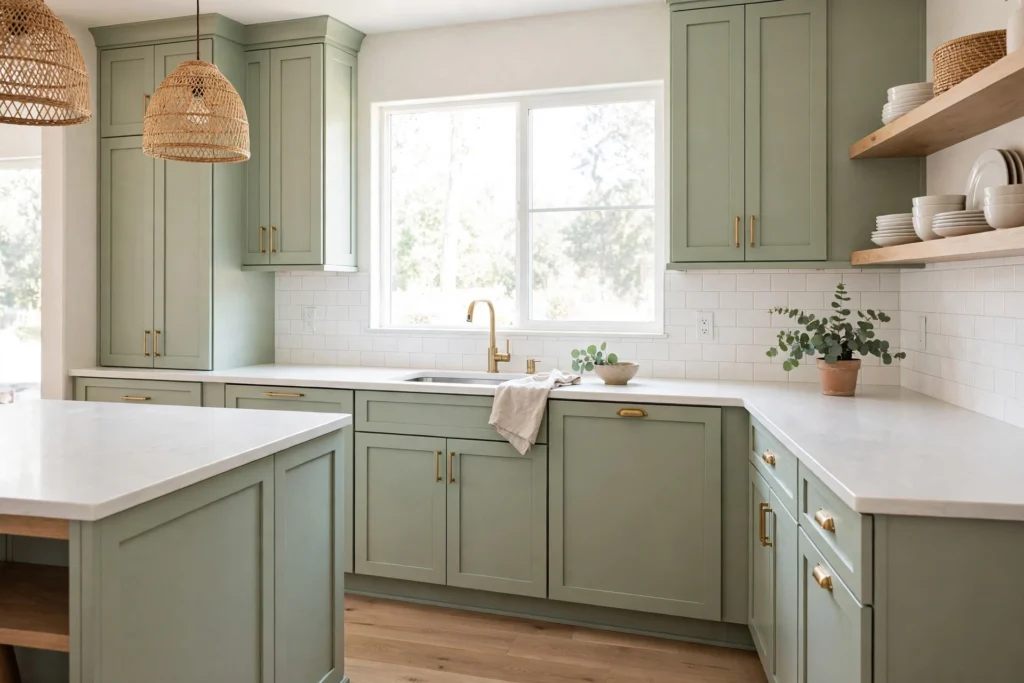
Refit only when the paint is fully cured — water-based paints feel dry in hours but take up to two weeks to reach full hardness, so treat doors gently at first and do not slam them. New handles are the finishing touch that makes painted cabinets look like new cabinets: measure the existing hole spacing before ordering, or fill old holes and drill new ones for a different style. For colour, the modern kitchen ideas guide is a good source of palettes — soft sage, warm off-white and deep navy all work with painted cabinets. Clean painted cabinets with a soft cloth and mild detergent, never abrasives, and keep a small pot of touch-up paint for the inevitable chip. Done this way, a painted kitchen looks professional and lasts for years — and the same preparation discipline applies to any painting job, from cabinets to exterior painting.
Frequently Asked Questions
Can I paint laminate or melamine cabinets?
Yes, with a shellac-based adhesion primer and proper degreasing. Without the primer, paint peels off laminate within weeks.
Should I spray or brush kitchen cabinets?
Spraying gives the smoothest finish, but brushing and rolling with good paint and technique gets very close. Beginners should brush and roll — spraying badly is worse than brushing well.
How long does a painted kitchen last?
With proper preparation and cabinet paint, several years of normal use. Touch-ups once a year keep it looking fresh.
Do I need to sand before painting cabinets?
Yes — a light sand keys the surface so primer grips. You do not need to strip to bare wood, just dull the existing finish evenly.