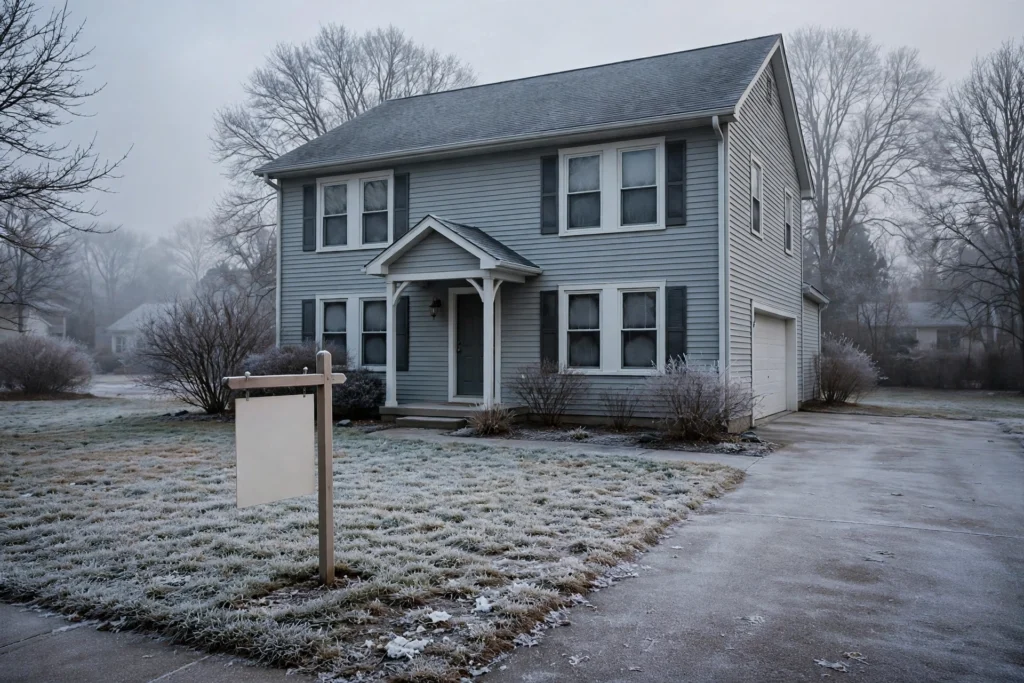
House prices in winter are one of the most repeated claims in property: everyone says homes sell for less in November and December. There is some truth in it, but the picture is more useful — and more hopeful for sellers — than the headline suggests. Winter does change the market, but it changes who is buying, how fast homes sell, and what kind of discount is realistic, rather than simply knocking a fixed percentage off every price. Here is what the season actually does, and how to use it whether you are buying or selling.
What the Data Actually Shows
Asking prices do tend to dip in late autumn and winter. Sellers who list in November and December are often motivated — a relocation, a probate sale, a chain that must complete before Christmas — and new listings are fewer, so the homes that do come to market are not always the best-presented stock. Completed-sale prices, though, fall less than asking prices: the gap between asking and achieved price widens slightly in winter, which tells you negotiation matters more, not that values collapse. Regional differences are large too: in London and the South East the winter effect is muted, while in coastal and rural markets, where second-home demand drives summer prices, the seasonal swing is much sharper.
Why Fewer Homes Sell in Winter
The main reason is simple: fewer people move house in winter. Dark evenings make viewings harder, Christmas absorbs everyone’s attention and money, and families with children avoid mid-school-year moves. Estate agents list fewer homes, and buyers delay searches until spring. That thinner market cuts both ways. Sellers face fewer viewers, so a home that would attract ten viewings in May might get three in December. But the buyers who are active in winter are usually serious — they need to move, not just browse — so the viewing-to-offer ratio is often better than in the spring frenzy.
Do Prices Really Drop?
For a typical family home, the realistic winter discount is small — often 1–3% against a spring price, and frequently zero for well-presented homes in short supply. The big discounts you read about usually involve homes that were overpriced to begin with, or properties with obvious winter problems: a cold house, a dark garden, a roof that leaks in heavy rain. Winter exposes those faults, and buyers price them in. A warm, bright, well-maintained home does not suddenly lose value on 1 November. What does change is time: winter sales take longer on average, so sellers who need speed must price keenly, while sellers who can wait until spring often do better to wait.
Buying in Winter: How to Use the Season

Winter is a good time to buy if you know what to look for. View a home on a cold, wet day and you will learn things a summer viewing hides: whether the heating copes, whether windows draught, whether the garden floods, and how dark the rooms really are at 4pm. Check the boiler’s age and service history, look for damp patches behind furniture, and ask how much the energy bills run in January. On price, winter gives you leverage — but use it on evidence, not folklore. Offer below asking when the home needs work or has sat unsold, and back your offer with comparable sold prices, not with “it’s winter”. Sellers respond to serious buyers with finance in place, and that matters more than the calendar. Keep an eye on interest rates too: a rate move in the new year changes affordability more than any seasonal dip.
Selling in Winter: Pricing and Presentation
If you must sell in winter, presentation beats discounting. Photograph the home in daylight, keep the heating on for viewings, light every room, and clear the garden of dead leaves so it looks cared for rather than abandoned. Price against recent sold prices, not against what a neighbour achieved in June, and be ready to negotiate — a small, early concession often beats months on the market. Consider the timing of your listing: the week between Christmas and New Year is actually one of the busiest browsing periods online, as people plan January moves, so a listing that goes live then can catch the new-year wave. And remember the wider market: retirement housing demand, for example, stays steady through winter because downsizers move on life events, not seasons.
Frequently Asked Questions
Is November or December the cheapest month to buy?
December usually shows the lowest asking prices, but the difference against spring is small — typically a few percent — and varies hugely by area and property type. The cheapest home is the one priced right, whatever the month.
Should I wait until spring to sell?
If you can wait and your home suits spring — a big garden, a family area — spring usually brings more viewers. If you need to move, or your home is warm and bright, winter buyers are serious and competition from other sellers is lower.
Do mortgage lenders treat winter purchases differently?
No. Lending criteria do not change by season. What changes is timing: Christmas closures at solicitors and lenders can slow completions, so allow extra weeks if you are buying in December.
Does winter affect new-build prices?
Developers often offer incentives at year-end to hit targets — stamp duty contributions, upgrades, or furniture packs — which can be worth more than a headline price cut. Always compare the total deal, not just the price.