A compost heap is the hardest-working corner of the garden, turning peelings, clippings and fallen leaves into dark, crumbly soil food for free. Yet many heaps disappoint: slimy, smelly, or the same dry tangle a year later. The difference between a heap that works and one that sulks is a simple recipe, not luck or expensive activators. The right spot, enough bulk to heat up, a rough balance of greens and browns, and moisture like a wrung-out sponge will carry almost any heap. This guide covers siting, size, the mix, what never to add, and how to fix a heap that has gone wrong.
Choosing the Right Spot
Site the heap before you build anything. It needs to stand on bare soil, not slabs or decking, so worms, beetles and microbes can move up into the material and surplus water can drain away. Good drainage matters: a heap sitting in a winter puddle turns cold and airless, so avoid the lowest, boggiest corner. Aim for light shade or a spot that gets sun for part of the day — full sun bakes a heap dry in summer, while deep, permanent shade keeps it cold and slow. Shelter from the worst of the wind helps hold warmth in, and a hedge or fence behind it does the job. Finally, think about access: you will visit with barrows of clippings and return with finished compost, so site it somewhere reachable in all weathers, near the beds it will feed and close to a tap or water butt.
Size, Bins and Simple Bays
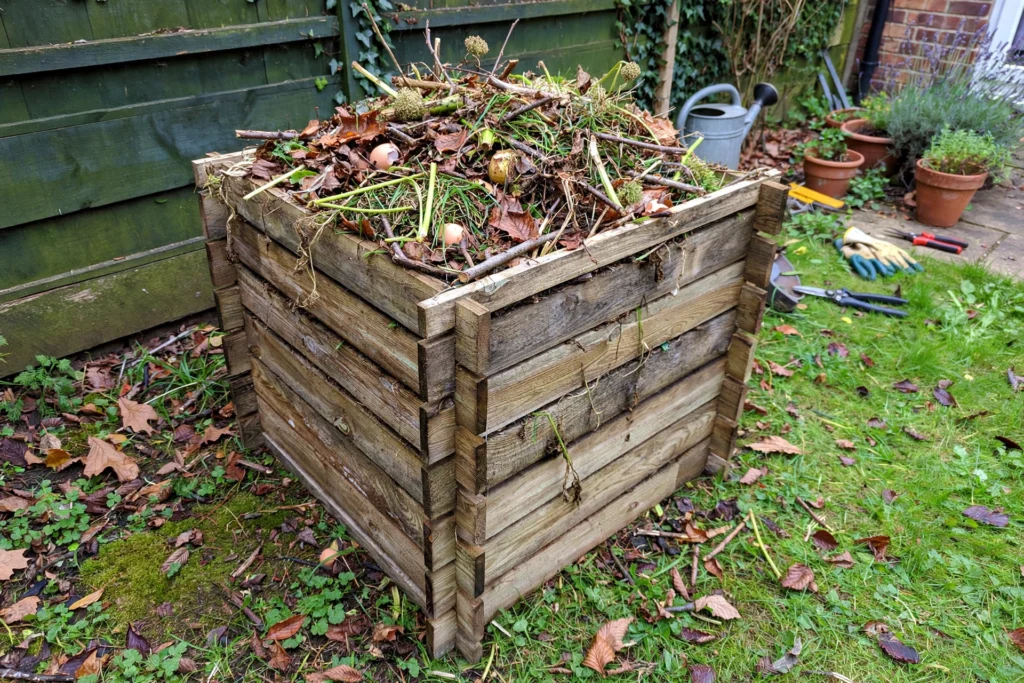
Size is the quiet secret of composting. A heap needs bulk to hold the heat its microbes generate, and roughly one cubic metre — a metre cube — is the threshold where a heap starts to cook properly in the middle. Smaller piles still rot down eventually, but slowly and coldly. An open heap works, but some structure keeps it tidier, holds heat at the edges and stops it spreading. The familiar black plastic “dalek” bins suit small gardens and kitchen waste, though they are awkward to turn and empty. A slatted wooden bay is the gardener’s classic — cheap to build from pallets or planks with gaps for air, and easy to fill and to fork out of. Two or three bays side by side are better still: one filling, one cooking, one ready to use. Whatever you choose, a lid or an old carpet on top keeps winter rain from waterlogging the heap and holds warmth in.
Greens and Browns: The Recipe That Matters
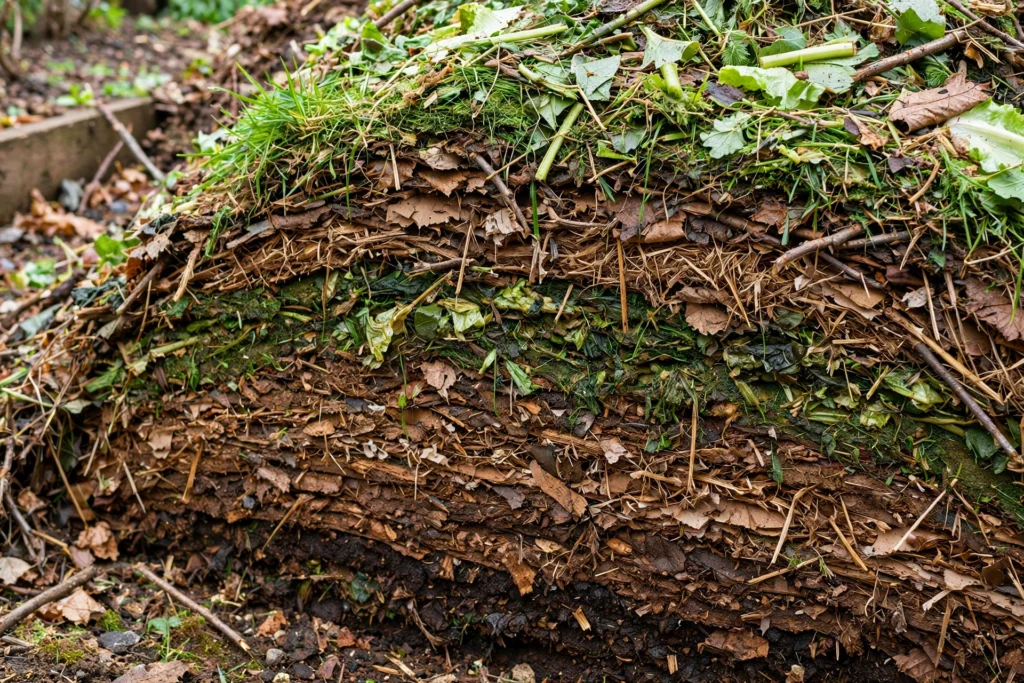
Everything you add falls into two camps. Greens are soft, fresh and nitrogen-rich: grass clippings, vegetable peelings and kitchen scraps, coffee grounds, annual weeds before they seed, soft prunings and manure from herbivores such as horses, cows and chickens. Browns are dry, woody and carbon-rich: fallen leaves, straw and hay, shredded prunings and twigs, cardboard and newspaper torn up, woodchip, and the contents of the vacuum cleaner in a pinch. Aim for roughly half and half by volume — in practice, about two to three parts browns to one part greens keeps most heaps sweet. Too many greens and the heap collapses into a slimy, airless mass that smells of ammonia; too many browns and it sits dry and inert for a year. Autumn leaves deserve a special note: they rot slowly and are better handled separately, exactly as our guide to making leaf mould explains, though a modest share mixed through the heap is fine. Chop or shred anything chunky first — smaller pieces break down noticeably faster.
Building the Heap: Layers, Moisture and Air
Build in loose layers, alternating a bucket or two of greens with a similar depth of browns, never a thick slab of one thing — a deep layer of grass clippings, in particular, mats into a slimy sheet that nothing can breathe through. Start with a base of coarse twigs or straw to let air in from below. Check moisture as you go: the whole heap should feel like a wrung-out sponge, damp but not dripping. If it is dry, water each layer as you build; if it is soggy, fork in shredded cardboard or straw to soak up the excess. Air is the other ingredient. Turning the heap with a fork every few weeks — moving the outside to the middle, where the heat is — speeds everything up and revives a heap that has stalled, though a no-turn heap will still get there in time. Forget shop-bought activators: they add nothing a forkful of soil, a spadeful of finished compost or a few comfrey leaves cannot. There is plenty to feed the heap at this time of year — the clearings from your autumn garden jobs are mostly ideal material.
What Never Goes In — and Troubleshooting
Some things should never reach the heap. Meat, fish, dairy and cooked food attract rats and foxes and smell as they rot. Diseased material — blighted potato foliage, clubrooted brassica roots, rose leaves covered in blackspot — risks carrying infection back to the beds, because a home heap rarely stays hot enough, long enough, to sterilise it. Perennial weed roots such as bindweed, ground elder and couch grass survive a cool heap and sprout wherever you spread the compost, as do weed seeds; both belong in the council green bin, which composts hot industrially. Cat and dog waste can carry parasites and should never go on soil that grows food. Glossy magazines, treated timber and coal ash are also out.
When a heap misbehaves, the symptoms name the cause. A heap that smells sour or of ammonia is too wet and too green: fork in dry browns and turn it. A dry, dusty heap where nothing changes is too brown and too dry: add greens and water it well as you turn. Clouds of tiny fruit flies mean exposed kitchen scraps — bury them in the middle of the heap and keep a layer of browns on top. A well-run heap gives usable compost in six to twelve months; a hot, turned heap can manage three or four. It is ready when it is dark, crumbly, sweet-smelling and you cannot recognise anything in it.
Frequently Asked Questions
How long does a compost heap take to work?
A typical garden heap takes six to twelve months. A heap of a cubic metre or more that is turned regularly and kept moist can produce usable compost in three to four months in the growing season.
Can I compost weeds?
Annual weeds pulled before they set seed are fine. Keep out the roots of perennials such as bindweed, ground elder and couch grass, and any weed already carrying seed — a home heap rarely gets hot enough to kill them.
Why does my compost heap smell?
A sour or ammonia smell means too many greens and not enough air or browns. Turn the heap, fork in shredded cardboard, straw or dry leaves, and make sure it is not waterlogged at the base.
Do I need to buy a compost activator?
No. Activators add nothing your heap cannot get from a spadeful of garden soil, some finished compost, or a few comfrey or nettle leaves. The green-to-brown balance, moisture and turning matter far more.