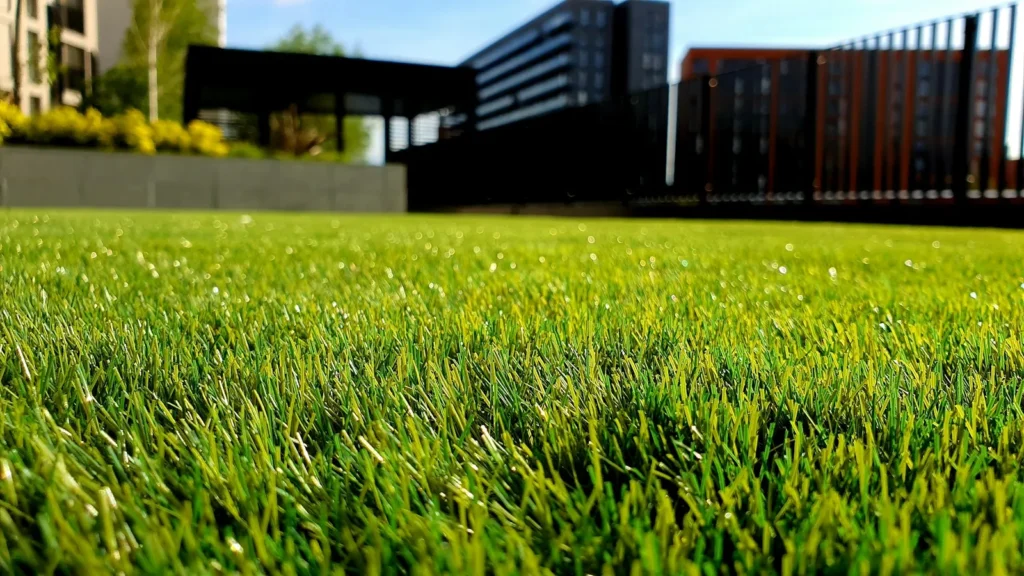
Most lawns are not bad lawns; they are lawns that missed the right job at the right time. Grass is a forgiving plant — feed it in spring, cut it correctly, deal with moss and weeds once a year — and it will repay you with the deep green carpet that makes the whole garden look designed. This lawn care guide organises the work by season, so you always know what your lawn needs next.
Mowing: The Job That Matters Most
Little and often beats rare and drastic. Never remove more than a third of the grass height in one cut — scalping weakens the plant and invites weeds and moss. In spring and autumn, cut once a week if it is growing; in a dry summer, raise the cutting height and leave the clippings on the lawn as a mulch that returns moisture and nutrients to the soil. Keep mower blades sharp: torn grass tips turn brown and let disease in. And vary your mowing direction — the light stripes in our garden design ideas come from a roller and alternating stripes, not from products.
Feeding: Twice a Year Is Enough
A spring feed (high in nitrogen) wakes the lawn up and greens it fast. An autumn feed (higher in potassium and iron) hardens it for winter and greens without soft growth. That is genuinely all most lawns need. Apply evenly — ideally with a spreader — just before rain is expected, and water in if none arrives within a couple of days. More feed than the lawn can use does not make it greener; it makes it thirstier and softer.

Weeds and Moss: Cause Before Cure
Weeds and moss are symptoms. Moss means shade, compaction, poor drainage or hungry soil; dandelions and clover mean the grass is too thin to compete. Aerate compacted areas by pushing a garden fork in deeply every few centimetres (autumn is ideal), scarify out the dead thatch and moss in early autumn, and overseed bare patches straight after — new seed in contact with soil, kept moist, thickens the lawn so weeds have nowhere to move in. Individual weeds can be dug out with a daisy grubber; lawn weedkillers are a last resort for widespread problems, used exactly as labelled.
Watering and the Summer Rules
Established lawns survive drought by going dormant and brown — and nearly always recover when rain returns. If you do water, do it rarely and deeply (one long soak a week) rather than a daily sprinkle, which trains roots to stay at the surface. Water early morning so less evaporates. Brown patches from dog urine or spilt fuel will not respond to water; dig out, reseed, and move on.
The Seasonal Calendar
Spring: first cuts on a high setting, spring feed, repair winter damage, edge the borders. Summer: raise the cut, water deeply if at all, enjoy it. Autumn: the lawn’s most important season — scarify, aerate, overseed, autumn feed, keep leaves off the grass. Winter: stay off frozen or waterlogged grass, service the mower, sharpen the blade. Lawns sit within the bigger picture too: healthy soil here supports the whole planting scheme, just as the right plants do in our guide to low maintenance plants.

The Bottom Line
Lawn care is a rhythm, not a rescue mission: cut little and often, feed twice, fix moss and compaction in autumn, and let winter rest it. Keep that rhythm for one full year and the lawn you have will look like the lawn you wanted. More help and inspiration live in our garden section.