Smart home technology has come a long way in five years. A smart thermostat was once just a nice talking point on a property listing; in 2026, it is close to a requirement. Estate agents say buyers now ask about smart heating, video doorbells and app-controlled lighting in the same breath as they ask about broadband speeds — and homes that already have them are winning attention over homes that do not.
What changed? Not the technology itself, which has been around for a while, but the reason people want it. With energy costs still high and working from home now normal, smart technology has stopped being a gadget and become a money-saving, everyday tool. This article looks at the features buyers ask for most, what they actually save, and what sellers should — and should not — install before putting a home on the market.
The Features Buyers Ask For First
Smart heating controls
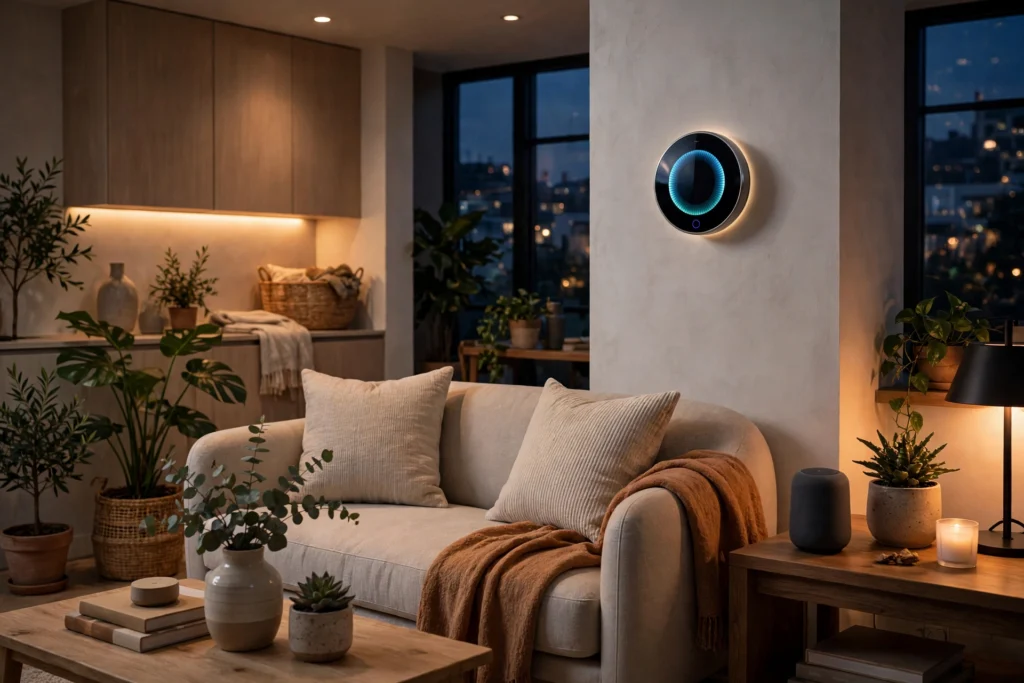
The undisputed number one. A smart thermostat learns when a home is occupied, heats rooms only when needed, and can be controlled from a phone. For a buyer facing today’s energy prices, that is not a luxury — it is a running-cost feature, like double glazing. Homes marketed with zoned heating controls regularly use it in their listing headlines.
Video doorbells and smart security
Second on the list, especially for families and people who receive a lot of deliveries. A video doorbell, a smart lock and a couple of cameras form a package buyers understand instantly. Because these devices are usually wireless and easy to remove, buyers increasingly expect them to be included in the sale rather than taken away.
Smart lighting
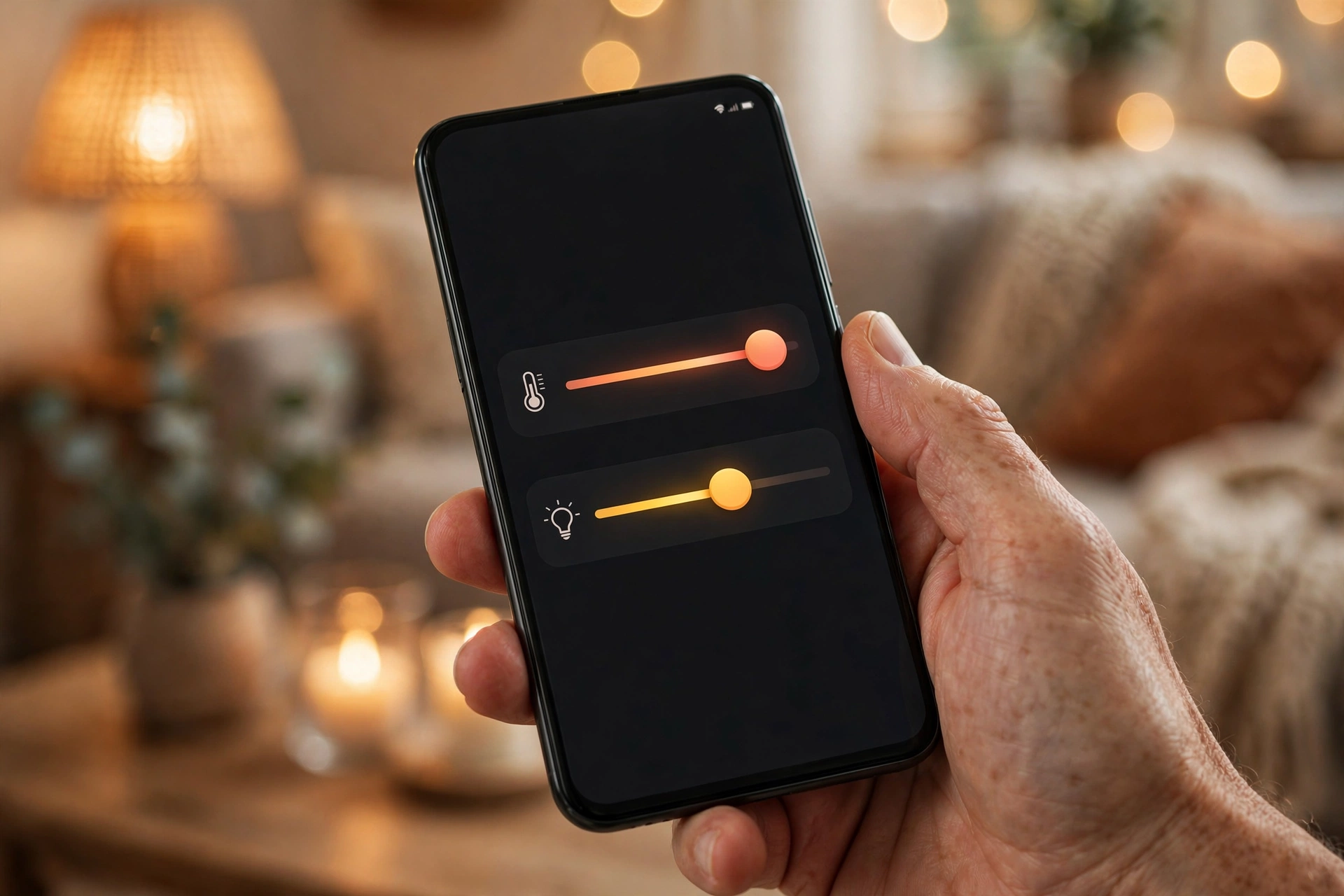
App and voice-controlled lighting is now common in kitchens and living rooms. It rarely sells a home on its own, but agents say it changes how a viewing feels: a house that responds, dims and warms its light feels modern in a way that photographs well and lingers in a buyer’s memory.
Fast, whole-home connectivity
Not a gadget at all, but buyers treat it as smart infrastructure: full-fibre broadband, a mesh Wi-Fi system that reaches every room, and enough sockets with USB charging where people actually work and sleep. For hybrid workers, a dead spot in the spare room is now as off-putting as a small kitchen once was.
What Smart Technology Actually Saves
Buyers are not just buying convenience. Smart heating controls are widely estimated to cut heating waste by turning the boiler off when nobody is home and by heating only the rooms in use — savings that show up on the first winter’s bills. Smart lighting uses efficient LED bulbs by default, and smart plugs can end the slow drain of devices left on standby.
There is a second, quieter saving: time. Timers, schedules and automations — heating on before the alarm, lights off when the last person leaves, the doorbell answering itself — remove dozens of tiny jobs a week. Agents say this is the benefit buyers mention most after they move in, even if energy savings were what attracted them first.
What This Means If You Are Selling
Sellers do not need to turn their home into a showroom. The value is in a small number of visible, working, easy-to-explain features:
- Install a smart thermostat if you have not already. It is one of the few sub-£250 upgrades that appears in listings and genuinely reduces bills while you wait for a buyer.
- Leave the doorbell and cameras in the deal. Mention them in the listing. Their resale value to you is small; their perceived value to a buyer is much larger.
- Make sure everything works on viewing day. A smart home that does not respond is worse than a normal home. Charge devices, connect them, and have the heating schedule running.
- Write it down. A short note listing the smart devices, the apps they use and what is included in the sale answers the questions buyers are already asking.
What not to do: expensive, niche automation that only you understand. Whole-house systems with custom programming can actually worry buyers, who fear being locked into technology they cannot maintain. Simple, mainstream, phone-controlled devices are what the market rewards.
What This Means If You Are Buying
For buyers, smart features are worth having but rarely worth overpaying for. Most of what makes a home feel smart can be added after you move in for a few hundred pounds. The valuable things to check are the fixed infrastructure: a modern boiler that supports smart controls, good broadband available at the address, and an electrical system in sound condition. Gadgets can be upgraded in an afternoon; infrastructure cannot.
It is also worth asking what stays. Sellers usually take personal voice assistants but leave wired devices like thermostats and doorbells. Get it in writing as part of the fixtures list, so there are no surprises on moving day.
Where Smart Homes Go Next
The direction is clear: new-build homes increasingly come with smart heating, security and lighting as standard, in the same way they come with fitted kitchens. As that happens, expectations for older homes rise too. Within a few years, agents expect ‘smart ready’, to join ‘energy efficient’, as one of the first things buyers filter for — which is why a checklist that started with location, price and bedrooms now so often includes the thermostat.
The Bottom Line
Smart home technology has moved from early-adopter hobby to mainstream buyer expectation because it saves money, saves time and makes a home feel up to date. Sellers should focus on a few simple, working features. Buyers should value the infrastructure over the gadgets. And everyone should expect the checklist to keep growing.
Frequently Asked Questions
Does smart technology increase a home’s value?
It rarely adds a fixed amount to the price, but agents say it helps a home sell faster and stand out in listings — especially smart heating, which buyers link directly to lower running costs.
Which smart upgrade is best value before selling?
A smart thermostat. It is relatively inexpensive, visible in marketing, and useful to you while the home is on the market.
Should buyers pay extra for a smart home?
Only modestly. Most smart devices can be added after moving in for a few hundred pounds, so pay for the house and its fixed infrastructure — not for gadgets you could buy yourself.
Do smart devices stay when a house is sold?
Wired-in devices such as thermostats and video doorbells usually stay; portable devices such as voice assistants usually go with the seller. It should be confirmed in the fixtures and fittings list.