Learning how to clean gutters safely is less about bravery on a ladder and more about method: clear the debris, flush what remains, and know when the job belongs to a professional. Blocked gutters look harmless from the ground, yet an overflowing channel quietly soaks walls, rots fascia boards and feeds damp all winter. An hour’s work after leaf fall prevents most of it. This guide covers what blockages do, how to work safely at height, the method step by step, and the honest point at which to hire help.
What Blocked Gutters Actually Do
A gutter has one job: catch the water running off the roof and deliver it to a downpipe. When leaves, moss and roof grit fill the channel, the water takes the next available route — over the front edge, straight down the wall, or backwards under the roof covering. Overflow running repeatedly down brickwork soaks the wall, and over a winter that moisture can penetrate to the inside as damp patches. Standing water is heavy too: it pulls on brackets, bows the profile and leaves low spots that puddle even after clearing. Timber fascias and soffits behind a leaking gutter rot quietly, and the first visible sign is often peeling paint or a dark stain. It is why clear gutters protect the work described in our exterior painting guide as much as the wall itself. In freezing weather, trapped water expands as ice, stressing joints and cracking brittle old sections. Clearing the channel is preventative maintenance, not cosmetics.
Ladder Safety Comes First
Most gutter injuries happen on ladders, not roofs, so set up properly first. Stand the ladder on firm, level ground — never on soft soil, loose gravel or decking without a solid board beneath the feet — and set the angle at roughly one unit out for every four up. Extend the ladder at least a metre above the gutter line, and use a standoff or stabiliser at the top: it steadies the rails and keeps the ladder’s weight off the plastic gutter, which can crack. Keep three points of contact at all times, keep your belt buckle between the stiles, and never overreach to save a climb — reaching sideways is how ladders slide. Climb down and move the ladder instead. Have someone foot the ladder, wear shoes with a good grip, and carry tools in a belt or a bucket hung from a rung rather than in your hands. Finally, choose your day: no gutter work in gusty wind, rain or icy conditions, and stop if the rungs are wet.
The Method, Step by Step
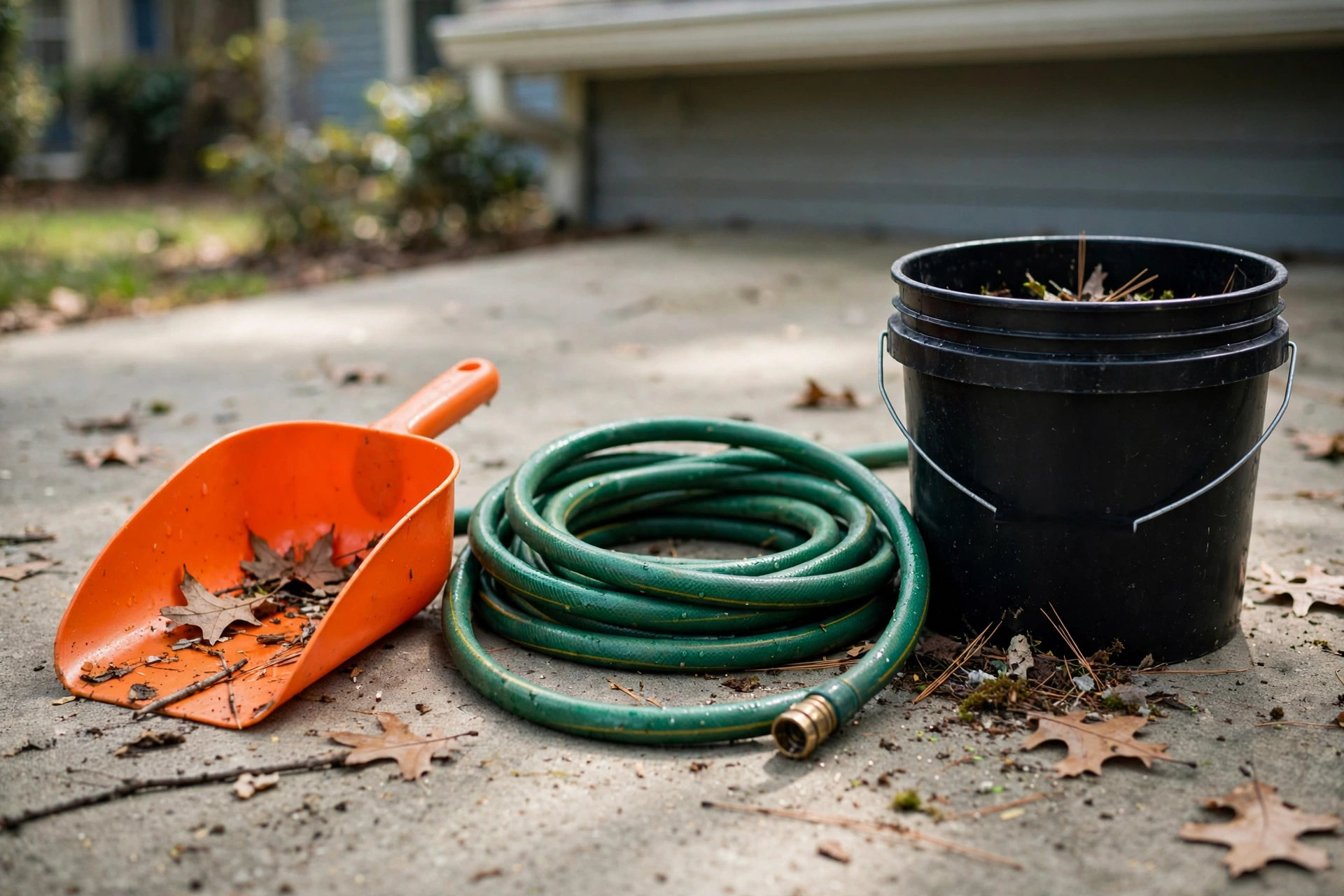
You need little equipment: a gutter scoop or old trowel, a bucket, gloves and a garden hose. Scoop the debris into the bucket, working in short sections and always away from the downpipe outlet, so you never push leaves and grit down into it. Lower full buckets rather than throwing debris down, which spreads it over the path and flowerbeds. Wear gloves: gutter sludge hides sharp tile edges, screws and occasionally wasp nests. Once the channel is clear, flush it with the hose from the end furthest from the downpipe and watch the water run: it should flow steadily and disappear down the pipe. A trickle, a rising puddle in the channel or water bubbling back tells you where the remaining problem sits. For a blocked downpipe, first check the shoe at the bottom and the hopper or outlet at the top, where most blockages lodge; clear them by hand, and if the blockage sits mid-pipe, a flexible drain rod worked gently from the top usually shifts it. While flushing, walk the length of the gutter watching the joints — a drip at a union means the rubber seal inside has perished, a cheap part to replace.
Guards, Brushes and Checking the Fall
Gutter guards and hedgehog brushes are sold as an end to this job, and the honest verdict is that they reduce it, not finish it. A brush in the channel stops large leaves settling, but moss, seeds and fine silt build up underneath it, seedlings root in the brush itself, and it still needs lifting out and cleaning every year or two. Mesh guards keep leaves on top where wind can move them, yet fine debris passes through and accumulates below. They may suit houses under heavy trees; on most, they swap one maintenance task for another. While you are up there, check the rest of the system. Brackets should grip the gutter firmly at regular intervals — a cracked or missing bracket is where sagging starts. Then test the fall: gutters should slope gently towards the downpipe, around 3mm per metre. Standing water after flushing means a bowed section or a bracket set too low — worth correcting before winter.
When to Hire a Professional Instead
Professional cleaning for a typical two-storey house commonly costs £50–£150 depending on size, access and region, and many firms now work from the ground with vacuum systems and cameras. That money is well spent in several situations: a three-storey house, anywhere the ladder would have to stand on a conservatory roof, fragile slate or clay tiles near the eaves, gutters that are visibly cracked or pulling away from the fascia, or any house where you are not fully confident at height. Professionals also spot damage you might miss. Like draught-proofing your home before winter, this is a small seasonal job that prevents expensive damage — the only real mistake is skipping it because the ladder feels daunting.
Frequently Asked Questions
How often should gutters be cleaned?
Once a year is enough for most houses, timed just after leaf fall. If large trees overhang the roof, twice a year — late spring and late autumn — keeps moss and seedlings from taking hold.
Can I use a pressure washer to clean gutters?
It is not recommended. The jet can force water under tiles, blow joint seals apart and spray sludge over walls and windows. A scoop and a hose flush do the job more completely.
My downpipe is blocked solid. What should I try?
Check the shoe at the bottom and the outlet at the top first — most blockages sit there. Work a flexible drain rod gently from the top. If it will not clear, or access needs a tall ladder, hire help.
Are ground-based gutter vacuum services worth it?
For tall or awkward houses, yes: no ladders, a camera check, and prices close to traditional cleaning. For an easy two-storey house, the DIY method above costs nothing but an hour.