Good pest control rarely starts with a spray can. Almost every household pest problem — ants marching across the worktop, mice scratching in the loft, wasps building in the eaves — begins with three invitations: food, water and a way in. Remove those, and most pests leave on their own or never arrive at all.
This guide shows you how to deal with the most common household pests safely: how to identify what you are dealing with, the prevention steps that actually work, humane and low-chemical ways to remove pests that are already inside, and the honest signs that a job belongs to a professional.
First, Identify Your Pest
Treatment depends on the pest, so look before you act. The usual suspects:
- Ants — trails to sweet or greasy food, worst in spring and summer. Tiny black garden ants are a nuisance; they are rarely a structural problem.
- Mice — droppings like dark grains of rice, scratching sounds at night, gnawed packaging. A mouse can squeeze through a gap of about 6mm — the width of a pencil.
- Spiders — mostly harmless and genuinely useful pest controllers themselves. Autumn is when big house spiders wander indoors.
- Wasps — a nest in a loft, wall cavity or shed, with a steady stream of wasps at one entry point. Nests grow all summer and are best dealt with early.
- Clothes moths and carpet beetles — small holes in natural-fibre clothes and carpets, worst in undisturbed corners, wardrobes and under furniture.
- Cluster flies and ladybirds — gather in lofts and window frames in autumn to overwinter; annoying but harmless.
Prevention: Remove Food, Water and Entry Points
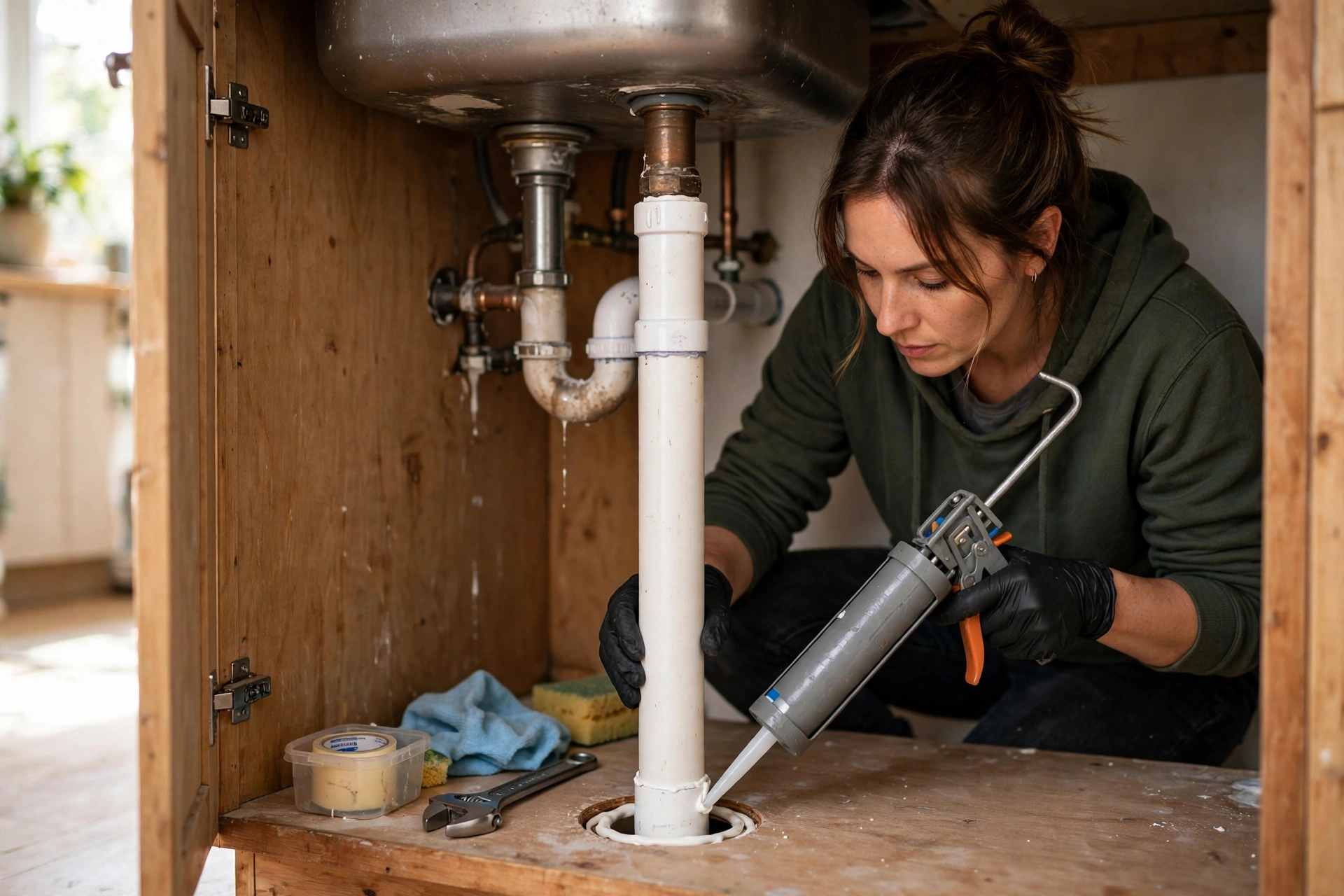
This is where pest control is won. Store dry food — flour, cereal, sugar, pet food — in sealed glass or hard plastic containers rather than opened bags. Wipe up spills and crumbs promptly, keep bins lidded and emptied, and do not leave pet food down overnight. Fix dripping taps and leaks, because many pests come for water as much as food. Then walk the outside of your house with a tube of sealant and a critical eye: fill gaps around pipes, cables and vents, fit covers to air bricks (fine mesh, not blocked), repair cracked render, and brush-strip the bottom of doors. The same sealing that keeps pests out also keeps heat in — draught-proofing and pest-proofing are largely the same job.
Safe Pest Control Methods That Work
For ants, follow the trail and remove what they are feeding on, wipe the trail with soapy water or vinegar to erase their scent path, then seal the entry point. Bait stations placed on the trail work better than sprays for a colony, because workers carry the bait back to the nest.
For mice, humane catch-and-release traps work if you check them very frequently and release the mouse well away from houses — but be honest with yourself about whether that solves or relocates the problem. Traditional snap traps baited with peanut butter, placed along walls where droppings appear, are quick and effective. Avoid loose poison indoors: a poisoned mouse dying inside a wall creates a worse problem than the mouse.
For spiders, a glass and a card are all you need — relocate them to a shed or garage where they will earn their keep. Vacuum webs and reduce clutter in corners to make rooms less inviting.
For clothes moths, vacuum thoroughly under furniture and along skirting, wash affected clothes hot where the fabric allows, and store out-of-season natural fibres clean and sealed. Cedar and lavender deter but do not cure an infestation; pheromone traps help you monitor one.
For wasp nests, leave well alone if the nest is somewhere out of the way — wasps are pollinators and pest-eaters, and the nest empties by winter. If the nest blocks a doorway, loft access or a child’s play area, that is a professional job (below).
When to Call a Professional
Call a qualified pest controller — look for BPCA or NPTA membership in the UK — when: a wasp nest needs treating; you have rats (indoors or in drains); bed bugs appear (they are almost never a DIY fix); you find evidence of wood-boring insects in structural timber; or a problem keeps returning despite proper prevention, which usually means a hidden source such as a drain defect. Also know the protected list: all bats are legally protected in the UK, so if you find bats in a loft, you need advice from the Bat Conservation Trust before any work — never seal them in or out yourself.
The Bottom Line
Safe pest control is mostly housekeeping and sealing: store food properly, fix leaks, close the gaps, and most pests never become a problem. For the ones that do, there is usually a targeted, low-chemical answer — and for wasps in the wall, rats, and bed bugs, a professional is money well spent.
Frequently Asked Questions
What is the safest pest control method for a home with children and pets?
Prevention first — sealed food, cleanliness and blocked entry points carry no risk at all. For active problems, traps and bait stations placed out of reach are safer than sprays. Always follow label instructions, and keep children and pets away from treated areas until they are dry.
How do I stop ants coming into my kitchen every summer?
Find the trail, remove the food source, wipe the trail to erase their scent, and seal the crack or gap they use to enter. Repeat for a few days and the colony usually reroutes away from your kitchen.
Can a mouse really fit through a tiny hole?
Yes — a young mouse can squeeze through a gap of about 6mm, roughly the width of a pencil. That is why sealing gaps around pipes, vents and doors is such an effective control measure.
Are ultrasonic pest repellers worth buying?
The evidence for them is weak at best, and reputable pest control bodies do not recommend them as a sole solution. Spend the money on sealant, traps and storage containers instead — they demonstrably work.