

How to grow herbs indoors through winter is one of the most rewarding small gardening projects, because it turns the darkest months into a source of fresh flavour. A pot of basil, a tray of parsley, a rosemary bush by the window — plants that ask little and give back weekly. But indoor herbs fail for predictable reasons: too little light, too much water, and varieties unsuited to a windowsill. Get those three things right, and you can pick fresh herbs in January while the outdoor garden sleeps. This guide covers the varieties that genuinely thrive indoors, where to put them, how to water and feed them, and how to keep them going until spring.
Best Varieties for Indoors
Not every herb suits indoor life, so choose with the windowsill in mind. The reliable winners are parsley (flat-leaf is hardier than curly), chives, mint, thyme, and rosemary — all tolerate indoor conditions and forgive occasional neglect. Basil grows fast and tastes wonderful, but it is the neediest: it wants warmth and light, so keep it on your sunniest sill and accept it may need replacing once or twice over winter. Coriander is similar — quick to grow, quick to bolt — so sow small batches every few weeks rather than relying on one plant. Avoid woody Mediterranean herbs in small pots unless you have a very bright spot, and always give mint its own pot: it spreads aggressively and swamps neighbours. If you already start a herb garden outdoors in summer, bring in cuttings or small divisions in autumn rather than digging up whole plants, which resent the move indoors. Supermarket herb pots can work, but split them: one pot is often several seedlings crammed together, and dividing them gives each plant room to grow.
Light and Position
Light is the single biggest factor in indoor herb success, and winter daylight is short and weak. A south-facing windowsill is ideal; east- or west-facing works for hardier herbs like parsley, chives, and mint. North-facing sills will keep herbs alive but leggy and flavourless, so either choose only the toughest varieties or add a simple grow light — a basic LED daylight bulb on a timer for 12 to 14 hours a day transforms results. Keep pots close to the glass but off cold panes on frosty nights, and turn them a quarter-turn every few days so they grow evenly. Watch out for radiators: hot, dry air above a radiator stresses herbs and dries compost fast, so move pots to a cooler sill if the leaves crisp at the edges. Kitchens are ideal — bright, humid from cooking, herbs where you use them — while a cool, bright spare room suits rosemary and thyme.
Watering, Pots and Feeding
Overwatering kills more indoor herbs than anything else. Most herbs prefer compost that dries out a little between waterings: push a finger an inch into the compost, and water only if it feels dry. Water thoroughly until it runs from the drainage holes, then empty the saucer — herbs sitting in water rot quickly. Drainage is non-negotiable: every pot needs holes, and grit or broken crocks at the bottom help. Use free-draining compost — multipurpose mixed with perlite or grit — rather than heavy garden soil. Pots should be generously sized — a 15cm pot per plant is a good minimum — because tiny pots dry out in a day and starve the roots. Feed lightly: a half-strength liquid feed once every two to three weeks is plenty, and stop feeding if growth slows in the depths of winter. Too much feed produces soft, flavourless growth, and herbs grown lean taste better than herbs grown lush. Repot in spring when roots fill the pot, and refresh the top layer of compost if you are not repotting.
Picking, Problems and Keeping Plants Going
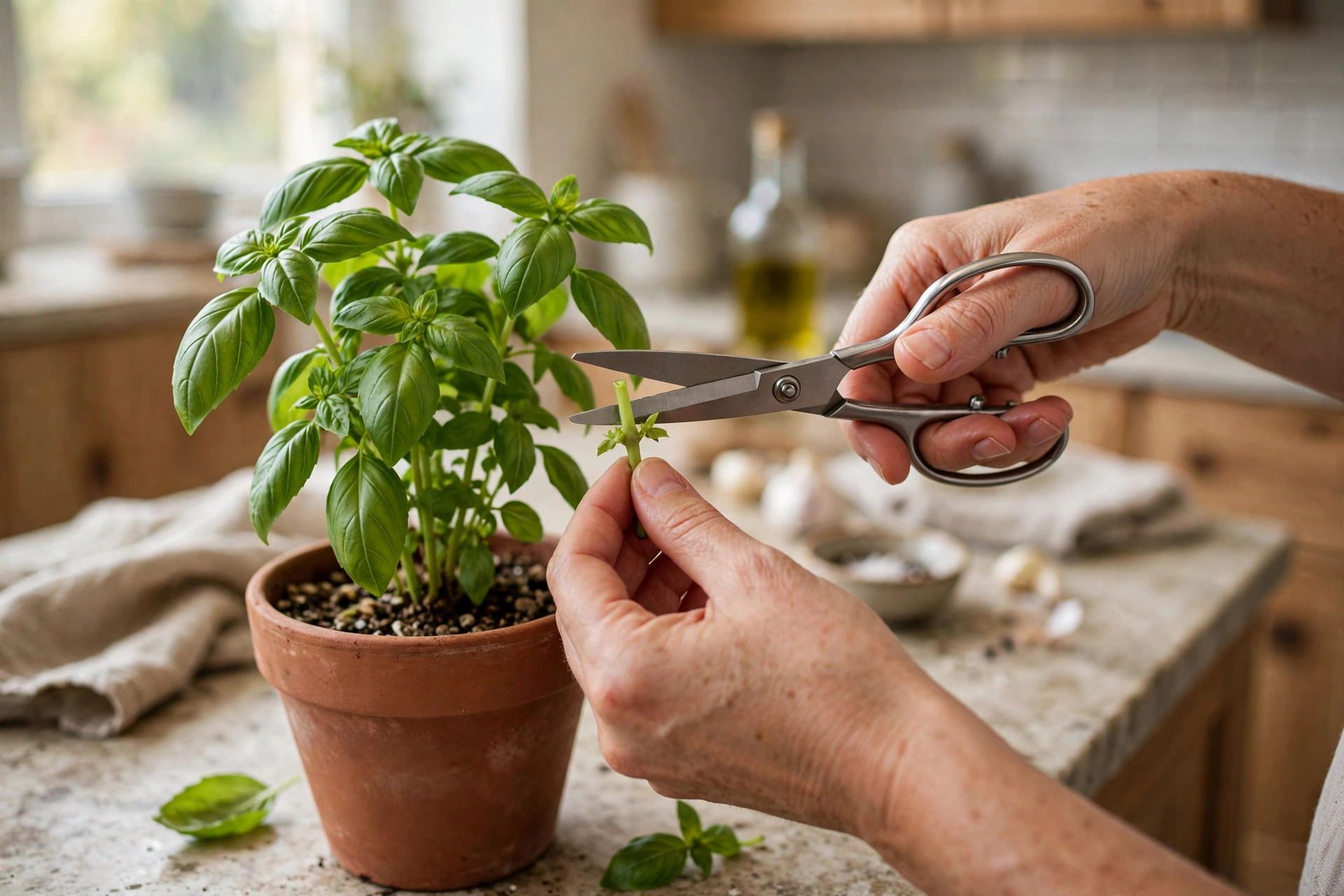
Pick little and often, always from the top: pinching out growing tips encourages bushy growth, while stripping lower leaves leaves a bare stem. Never take more than a third of a plant at once, and let it recover before picking again. The commonest problems are all fixable. Leggy, pale growth means too little light — move the plant or add a grow light. Yellow leaves usually mean overwatering or waterlogging — check drainage and let the compost dry out. Small flies around the pots are fungus gnats, a sign of constantly damp compost; let the surface dry and they fade. Aphids can appear even indoors — wipe them off or wash the plant under a tap. Most indoor herbs last one winter well; hardy perennials (rosemary, thyme, mint, chives) can go back outside in spring. Meanwhile, if you grow garlic and winter vegetables, your indoor herbs give you fresh flavour to go with them all season.
Frequently Asked Questions
Can I grow herbs on a north-facing windowsill?
You can keep hardy herbs like parsley, chives, and mint alive there, but they will grow slowly and taste milder. For basil and coriander, add a grow light or move them to a brighter sill — without enough light, no amount of water or feed will help.
Why do my supermarket herb pots always die?
Because one pot holds many seedlings competing for light, water, and roots. Split the pot into individual plants, give each a proper pot with drainage, and water only when the compost feels dry an inch down.
How often should I water indoor herbs?
There is no fixed schedule — it depends on light, heat, and pot size. Check the compost with your finger: if the top inch is dry, water thoroughly and drain; if it is damp, wait. In winter, most herbs need water only once or twice a week.
Do indoor herbs need feeding in winter?
Only lightly. A half-strength liquid feed every two to three weeks is enough for plants in active growth, and you can stop entirely in the darkest weeks. Overfeeding produces soft growth with less flavour.


