Grow garlic this autumn and you will understand why experienced gardeners call October planting season, not shutdown season. Garlic planted now — along with a handful of hardy winter vegetables — grows slowly through winter and rewards you months before spring crops even start. The work is small, the cost is tiny, and there is something deeply satisfying about harvesting food from a garden that looks bare. Here is what to plant and how.
Garlic: The Easiest Crop You Will Ever Grow
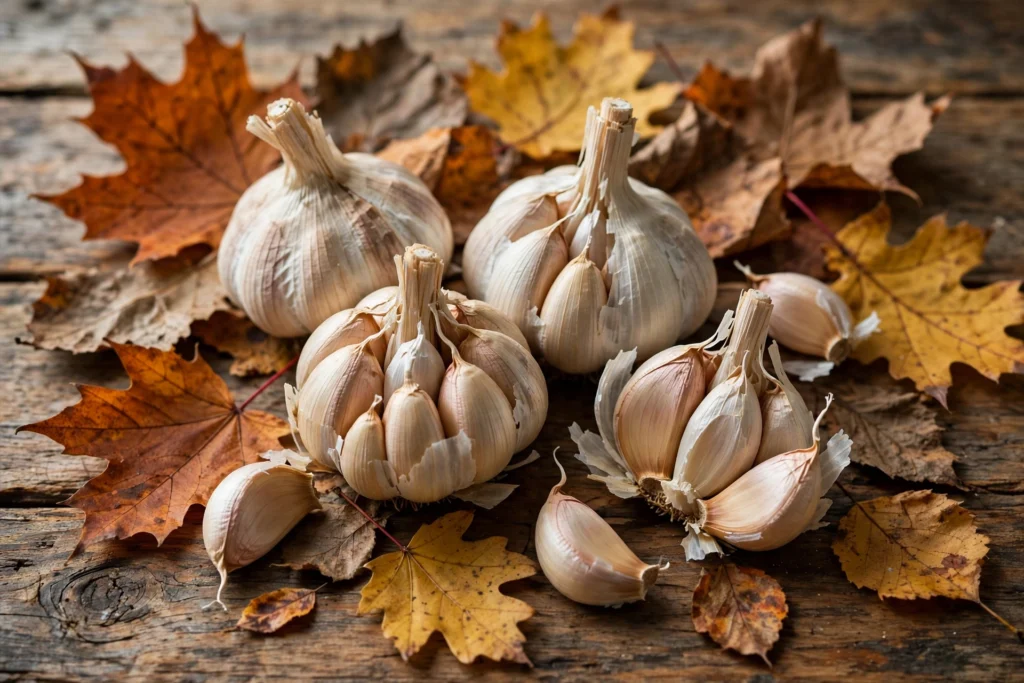
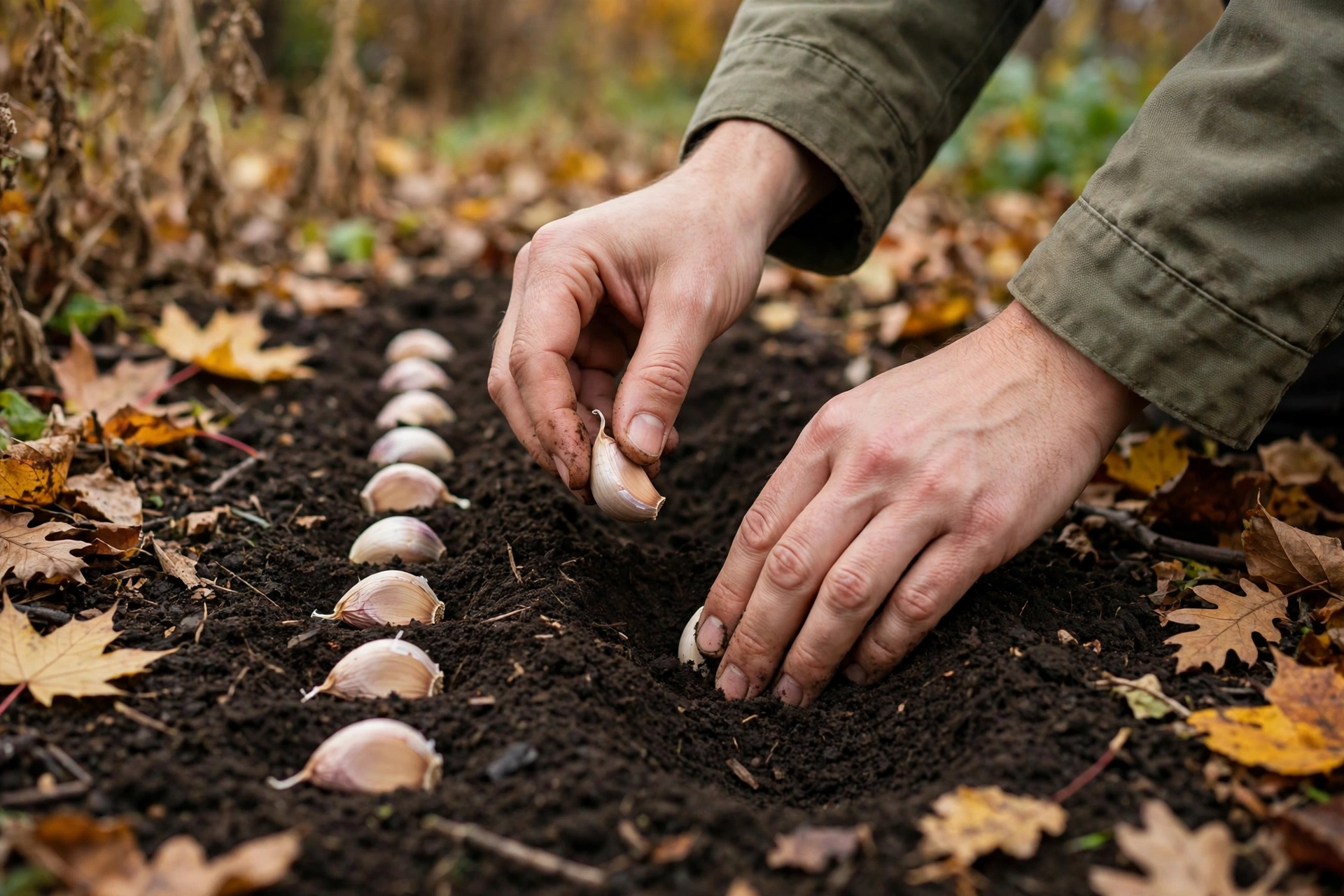
Garlic needs cold to form proper bulbs — that is why autumn planting beats spring planting. Buy seed garlic (not supermarket garlic, which is often treated to stop sprouting and may carry disease), split the bulbs into cloves, and plant each clove pointy-end up, about twice as deep as the clove is tall, 15cm apart in rows 30cm apart. Choose a sunny, free-draining spot: garlic hates wet feet, and waterlogged soil rots it faster than frost does. If your soil is heavy clay, plant in a raised bed or in pots. Water once after planting, then leave it alone — autumn rain usually does the rest. Varieties matter: softneck types store longest and suit most of the UK; hardneck types give bigger cloves and a bonus harvest of scapes (the curly flower stems, delicious in stir-fries) in early summer.
Winter Vegetables Worth the Space
Garlic is the star, but it has good company. Winter lettuces and salad leaves (winter gem lettuce, corn salad, land cress) grow slowly but steadily in a cold frame or under a cloche. Spring cabbage and purple sprouting broccoli, planted now as young plants, overwinter as small plants and surge in spring. Leeks planted earlier can be left in the ground and harvested all winter — frost actually sweetens them. Broad beans (the hardy Aquadulce type) sown in November overwinter and crop weeks before spring-sown beans. And perpetual spinach and chard keep producing leaves through mild winters with almost no care. None of these need a greenhouse; a sheltered bed and, for the salads, a simple cloche is enough.
Feeding the Soil Before Winter
Autumn planting works best in soil that has been fed. Spread a thick mulch of garden compost or well-rotted manure over beds now — the worms will work it in over winter, and the soil will be rich by spring. If you have not started yet, learning to make compost is the single best investment in a productive garden. Avoid digging wet soil (it destroys its structure), and do not leave beds bare: bare soil loses nutrients in winter rain, while a mulch or a cover crop like crimson clover protects it. For containers, refresh the top few centimetres of compost and add a slow-release feed.
The Winter Routine
Winter vegetables need less than you think: check them after storms, keep slugs in check (they love mild, wet winters — beer traps or copper tape around pots work), and harvest little and often rather than letting crops get overgrown. Garlic needs almost nothing until spring, when a feed of general fertiliser and a weed will push bulb growth. The biggest winter mistake is fussing: overwatering kills more winter crops than cold does, so water only when the soil is dry. If you are new to this, our grow your own vegetables guide covers the basics that make autumn planting feel easy rather than brave. By February, while the garden still looks asleep, your garlic will be pushing green shoots through the soil — the first sign that the growing year never really stopped.
Frequently Asked Questions
Can I plant supermarket garlic?
It sometimes grows, but it is often treated to prevent sprouting and can carry disease. Certified seed garlic is cheap and far more reliable.
When do I harvest autumn-planted garlic?
Usually June to July, when the leaves start yellowing. Lift, dry in the sun for a week, then store somewhere cool and dry — it keeps for months.
Do winter vegetables need a greenhouse?
No. Hardy types cope outdoors; salad leaves benefit from a cloche or cold frame, but garlic, leeks, chard and broad beans are fine in the open.
What if my soil is heavy clay?
Plant garlic and winter crops in raised beds or pots with free-draining compost — wet, heavy soil rots garlic and stunts most winter vegetables.