The loveliest guest bedroom ideas all come from the same honest test: would you sleep well in this room yourself? Guest rooms drift easily into being the home’s overflow — the tired mattress, the wardrobe of out-of-season clothes, the lamp with the missing bulb — while our visitors politely insist they slept ‘fine’. But a guest room done well is one of the great kindnesses of a home, and it does not take a hotel budget. It takes a comfortable bed, control over light, somewhere for their things, and a handful of small, thoughtful details.
Here is how to build that room: the bed and bedding that matter most, light and darkness on demand, storage that says ‘unpack, stay a while’, temperature and noise, and the finishing touches guests remember and mention on the drive home.
Start With the Bed (And Sleep in It Once)
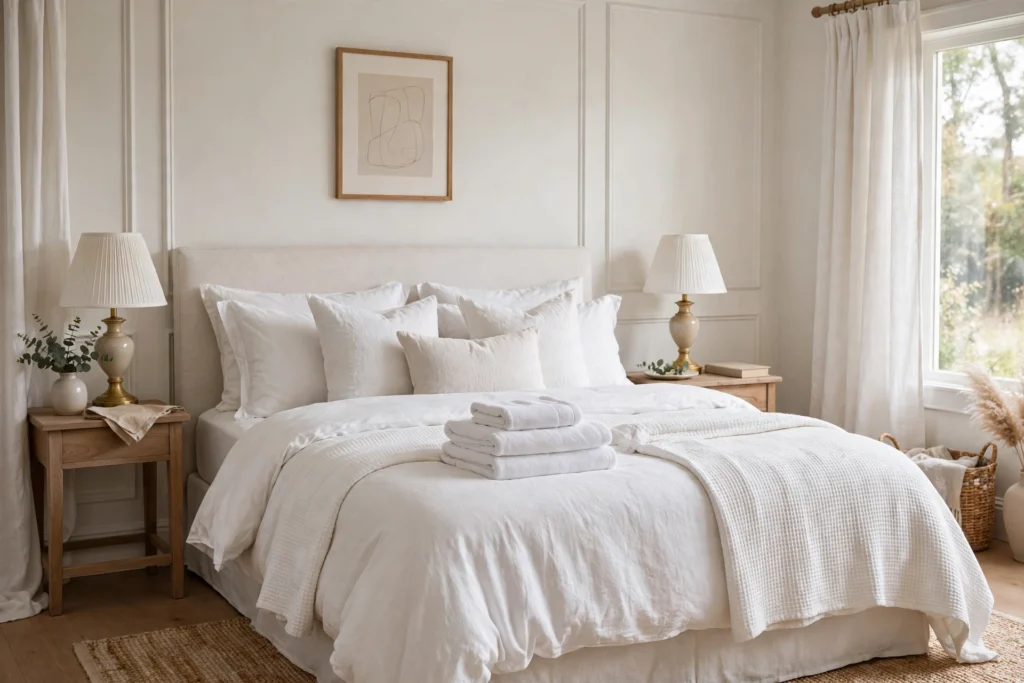
Everything else is decoration compared to the bed. If the mattress is the one demoted from your own room because it dipped, your guests already know. You do not need to buy the most expensive mattress in the shop, but a guest bed should be a mattress you would pass in your own room — and the only reliable audit is to sleep in the guest room yourself for a night before the next visitors arrive. You will discover the dip, the streetlight stripe, the radiator clicking at 3am, and fix in a weekend what guests would never have mentioned. Dress the bed in layers like a hotel: a mattress protector, crisp cotton bedding (white or pale always reads cleanest), two pillows per person with a choice of firm and soft if you have them, and a throw or extra blanket folded at the foot for the guest who runs cold. A stack of fresh towels on the bed completes the message: this room was prepared for you.
Light and Darkness, Both on Demand
Guests sleep in a strange room in a strange light pattern, so give them control of both ends. For darkness: blackout-lined curtains or a blackout blind, especially in summer when British dawns arrive before 5am, and an eye on stray light from hallways under the door. For light: a bedside lamp on each side if there are two guests (one lamp for a couple is the guest-room equivalent of one pillow), warm-toned and easy to switch from the bed, plus enough general light to dress by. A small night-light or a low hallway light left on solves the unfamiliar-house-at-night problem with more kindness than a torch app.
Give Them Space for Their Things
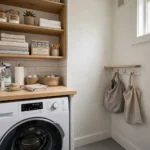
Living out of a suitcase on the floor is what separates ‘staying over’ from ‘being hosted’. Provide: a clear surface for a case (a folding luggage rack is inexpensive and pure hotel, but a cleared bench or chest works), empty hanging space with spare hangers in the wardrobe, one clear drawer, and a hook or two on the door. Clear the room’s day-job clutter before guests arrive — if the room doubles as an office or ironing depot, a screen, a lidded basket and twenty honest minutes of tidying will restore it to a bedroom. A mirror, a bin, and a box of tissues are the quiet infrastructure nobody notices until they are missing.
The Small Touches Guests Remember
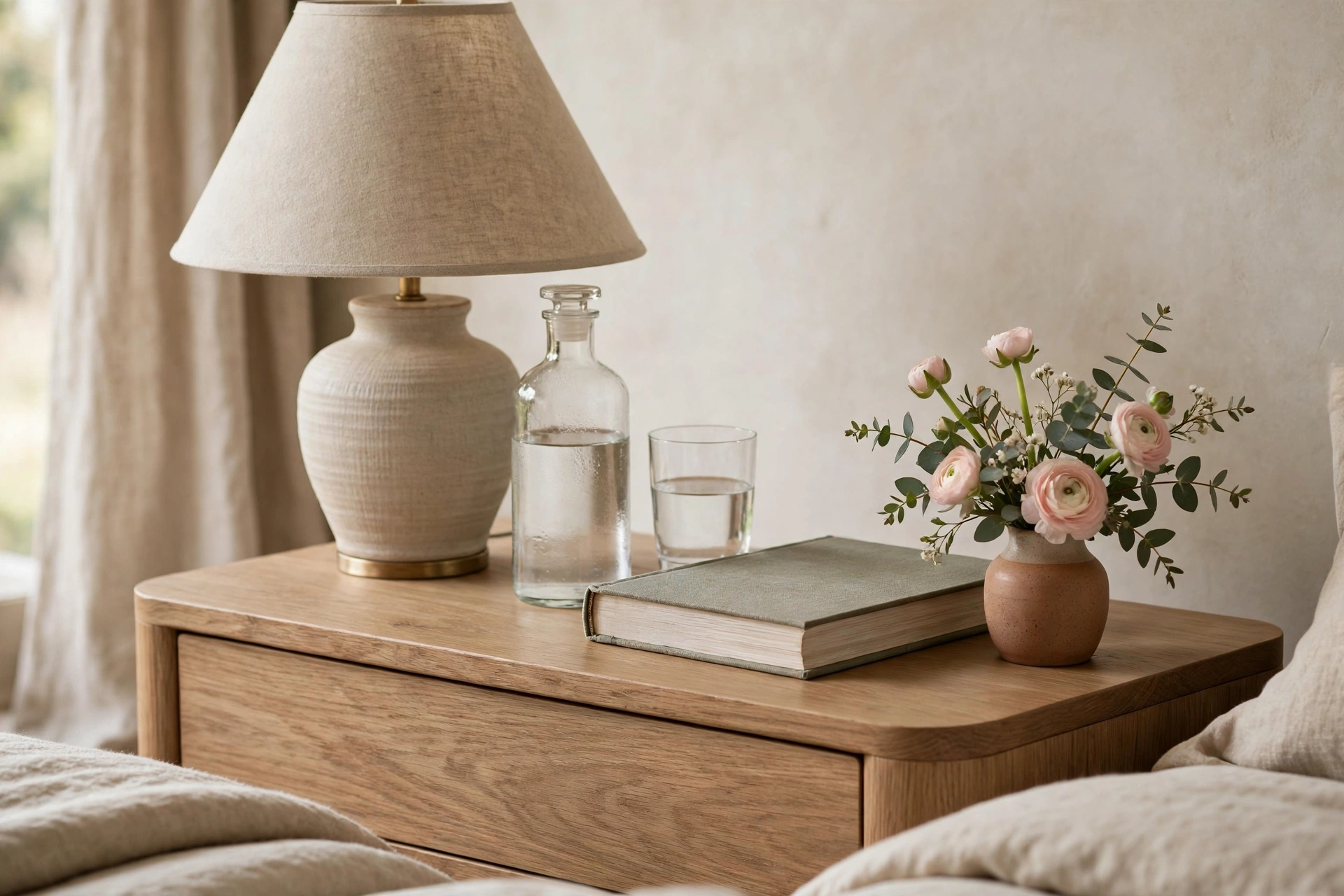
Hotels earn their stars in the margins, and so can you, almost free: a carafe or bottle of water and a glass on the bedside table; a phone charger (or at least a free socket near the bed — check it is not behind the furniture); the Wi-Fi password on a small card; a couple of books or magazines; a spare phone-charging cable in the drawer. Add a note of the practicalities if you will be out — how the shower works, where the tea lives, what time breakfast-ish things happen. In winter, a hot water bottle or an extra blanket where they can find it; in summer, a small fan. Fresh flowers or a plant are the flourish on top of the substance, not a substitute for it.
Warmth, Quiet and the Bathroom Run
Finally, comfort’s background conditions. Air the room before guests arrive and set its heating like a room in use, not a store cupboard — nobody sleeps well in a cold, fusty room. If the room faces the road, lined curtains earn their keep twice over, softening early traffic noise as well as light. And clear the path to the bathroom: a night-light on the landing, towels that are theirs (a distinct colour ends all doubt), and the bathroom basics stocked — hand soap, a spare loo roll where it can be found without an expedition, and a small basket with the forgotten essentials: toothbrush, toothpaste, painkillers, plasters.
The Bottom Line
Make visitors feel at home by passing the sleep-in-it test: a bed you would choose yourself, layered and freshly dressed; blackout when they want dark and lamps within reach when they do not; empty space for a suitcase, clothes and the small archaeology of a stay; water, light, a charger and the Wi-Fi code by the bed. Do those things and your guest room stops being the spare room — it becomes the room people hope to be invited back to.
Frequently Asked Questions
What is the most important thing in a guest bedroom?
The bed. A sound, comfortable mattress with clean, layered bedding and two pillows per guest matters more than all other touches combined. Sleep in the room yourself for a night to audit it honestly.
How can I make a guest room work in a small space?
Use a good-quality sofa bed or daybed with a mattress topper, wall hooks and a folding luggage rack instead of furniture, blackout blinds to save curtain bulk, and a lidded basket to clear the room’s day-to-day clutter in minutes.
What should be on a guest bedside table?
Water and a glass, a lamp that switches from the bed, a phone charger or free socket, and something to read. The Wi-Fi password on a card and a small clock or notepad are thoughtful extras.
What towels and extras should I provide for guests?
A bath towel and hand towel per guest, in a colour distinct from the family’s, laid on the bed. Stock the bathroom with hand soap, a findable spare loo roll, and a small basket of forgotten essentials — toothbrush, toothpaste, plasters, painkillers.