Every winter, households that qualify for home energy grants leave money on the table because nobody told them the schemes exist. The help is real and often fully funded for insulation: free loft and cavity wall insulation, subsidised heating upgrades and sometimes a heat pump with most of the cost covered. But there is no single grant to apply for — several schemes run side by side, and the route in is usually through an energy supplier, a council or an approved installer. This guide explains the main routes, who they are aimed at, how an application works, and how to avoid the scammers who cluster around every scheme.
The Main Schemes, Explained Simply
The biggest route is the Energy Company Obligation, usually shortened to ECO. It is not a grant you claim directly, but a legal obligation on larger energy suppliers to fund improvements in lower-income and vulnerable households. In practice you contact your supplier — or an installer working on their behalf — they assess your home, and the work is carried out free or heavily subsidised if your property and circumstances fit. Typical ECO-funded measures include loft insulation, cavity wall insulation, boiler replacements in some cases, and heating controls. Priority goes to homes with poor energy ratings, where the savings per pound are largest.
Alongside ECO sits the Great British Insulation Scheme, which focuses only on insulation and reaches a wider group, including some in lower council tax bands who do not receive benefits. Then there is the Boiler Upgrade Scheme, which offers a grant towards replacing a fossil fuel boiler with a heat pump or, in limited rural cases, a biomass boiler. An MCS-certified installer applies on your behalf and deducts the grant from your quote. Finally, many councils run their own local schemes, often aimed at homes that are off the gas grid, in the worst EPC bands, or in specific postcodes. Check your council’s website for the current local offer, as names and funding pots change.
Who Typically Qualifies
Eligibility varies by scheme, but the same themes repeat. Income matters: households receiving means-tested benefits such as Universal Credit, Pension Credit or income-related support are usually first in line. Your home’s efficiency matters just as much — most schemes target properties rated EPC D, E, F or G, because an A-rated home has little left to save. Council tax band is used as a rough income proxy in some schemes, with bands A to D in England qualifying most often. Homes off the gas grid, heated by oil, LPG or electric storage heaters, are frequently prioritised because their running costs are highest. Private renters can qualify too, but the landlord’s permission is needed, and landlords may be asked to contribute where rules require it. Whether you qualify depends on your benefits status, your property type, its current rating and the schemes open in your area — which is what the assessment decides.
How Applying Actually Works
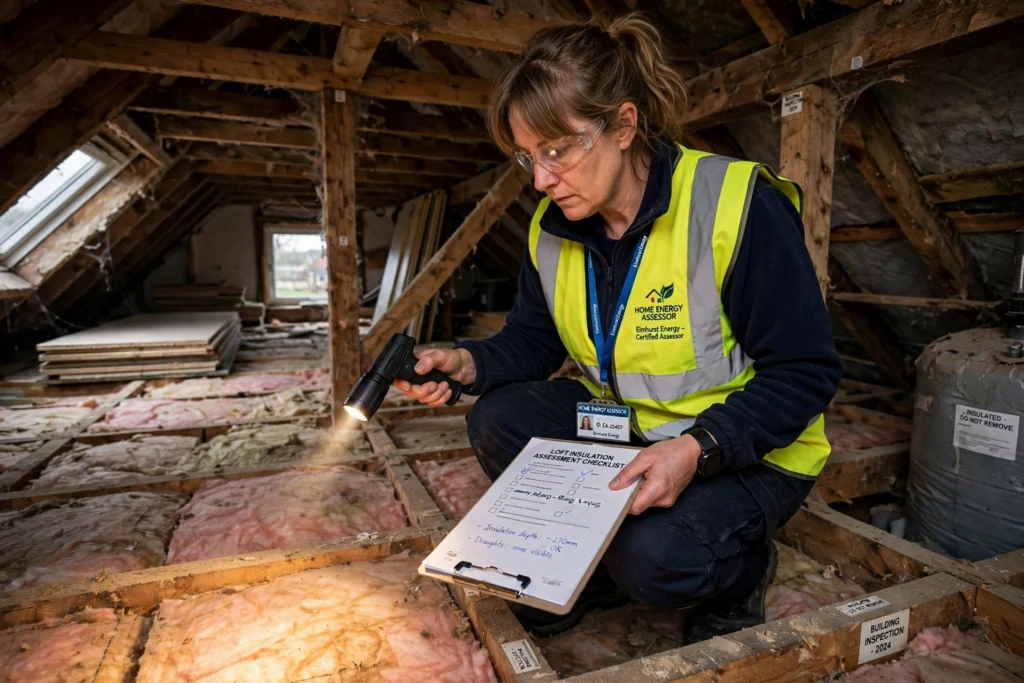
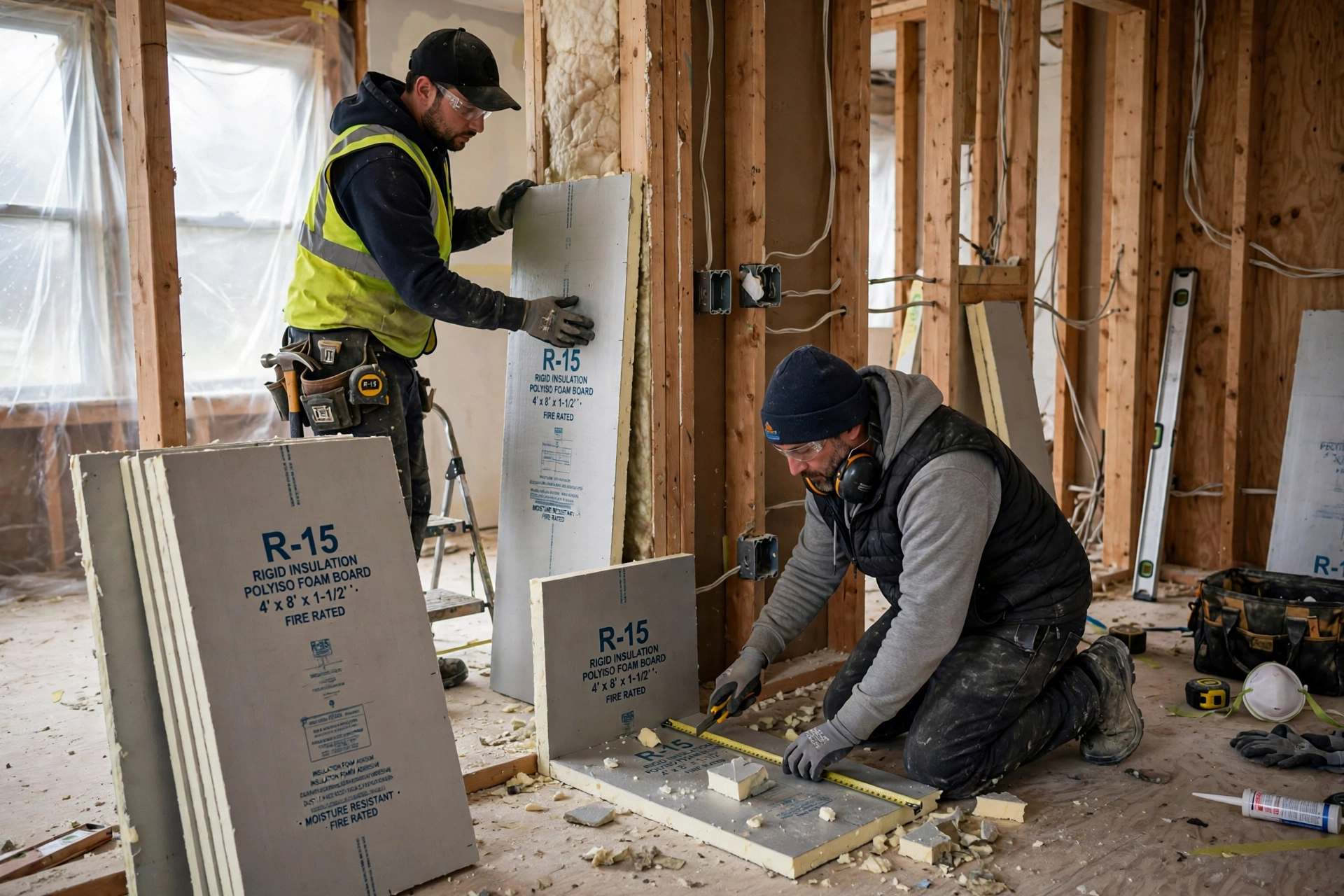
Start with one of three doors: your energy supplier’s website or phone line, your local council, or an approved installer on the official registers. You will be asked about your household, benefits, property type and current heating. If you look eligible, a surveyor visits to assess the property — checking insulation, heating, ventilation and the EPC position — and the scheme decides which measures it will fund. Then an installation date is agreed. The process typically takes a few weeks to a few months from first contact to finished work; heat pump grants take longer because the design work is more involved. You do not usually choose the installer, and you should never be asked to pay money upfront to “release” a grant — the paperwork flows between supplier, installer and scheme administrator, not through your bank account.
If You Do Not Qualify
Falling outside the criteria is common, especially for working households just above benefit thresholds in reasonably rated homes. All is not lost. First, the order of measures matters more than any single product: our home insulation guide explains which improvements save the most for the least money, and most of the top measures — topping up loft insulation, draught-proofing, heating controls — are affordable without a grant. Second, remember that energy-saving installations such as insulation and heat pumps currently benefit from zero-rated VAT, cutting the cost of any work you fund yourself. Third, revisit the schemes each year: budgets are refreshed, criteria shift, and a council scheme that was closed in October may reopen in spring. In the meantime, the cheapest wins are behavioural, and our round-up of energy saving tips covers the habits that reduce bills in any home, grant or no grant.
Avoiding Grant Scams
Every genuine scheme attracts imitators. Treat any cold caller, doorstep seller or social media advert that pressures you to sign today as a warning sign. Genuine routes will not ask for bank details to “check your grant”, charge an application fee, or demand a deposit before a survey. Check that any installer is properly registered — look for TrustMark registration for insulation and general retrofit work, MCS certification for heat pumps, and confirm the company’s details independently, not through a link in their own message. Ofgem publishes guidance on the official schemes, and your energy supplier can confirm whether an installer is genuinely working under its obligation. If in doubt, stop, hang up, and re-enter the process through your supplier or council website. A real grant will still be there tomorrow.
Frequently Asked Questions
Are home energy grants really free?
For insulation under ECO and similar schemes, yes — qualifying households usually pay nothing, because suppliers fund the work under a legal obligation. The Boiler Upgrade Scheme covers a large share of a heat pump’s cost rather than all of it, so most households still pay a balance.
Do I need to be on benefits to qualify?
Not always. Benefits are the main route into ECO, but the Great British Insulation Scheme and many council schemes also use council tax band, EPC rating and property type, which brings some working households into scope. The only way to know is to be assessed.
Can private tenants get grant-funded work?
Often, yes, provided the landlord agrees. The home is assessed on the household’s circumstances, but the landlord’s written permission is required and they may need to contribute.
How long does the process take?
Surveys usually happen within days to weeks of first contact; installation follows a few weeks to a few months later, depending on local demand. Heat pumps take longer than insulation because the design work is more detailed.