Home lighting ideas usually fail for one simple reason: most rooms rely on a single ceiling light to do three different jobs. The result is a room that is technically lit but feels flat, harsh and somehow unfinished — bright enough to see, never pleasant to be in. Interior designers fix this with layering, and once you understand it, you can transform any room without moving a single wall.
This guide explains the three layers of light, how to use them room by room, the bulb numbers that actually matter, and the common mistakes that make homes feel colder than they are.
The Three Layers of Light
Every well-lit room combines three layers, each with its own job:
- Ambient light — the general background light that lets you move around safely: ceiling pendants, downlights, wall washers. This is your base, not your whole scheme.
- Task light — focused light where you do things: reading lamps, desk lamps, under-cabinet kitchen strips, a good mirror light in the bathroom. Task light should be noticeably brighter than the ambient layer around it.
- Accent light — the layer that creates atmosphere and draws the eye: picture lights, shelf lighting, a small lamp in a dark corner, uplighters behind plants. Accent light is about mood, not brightness.
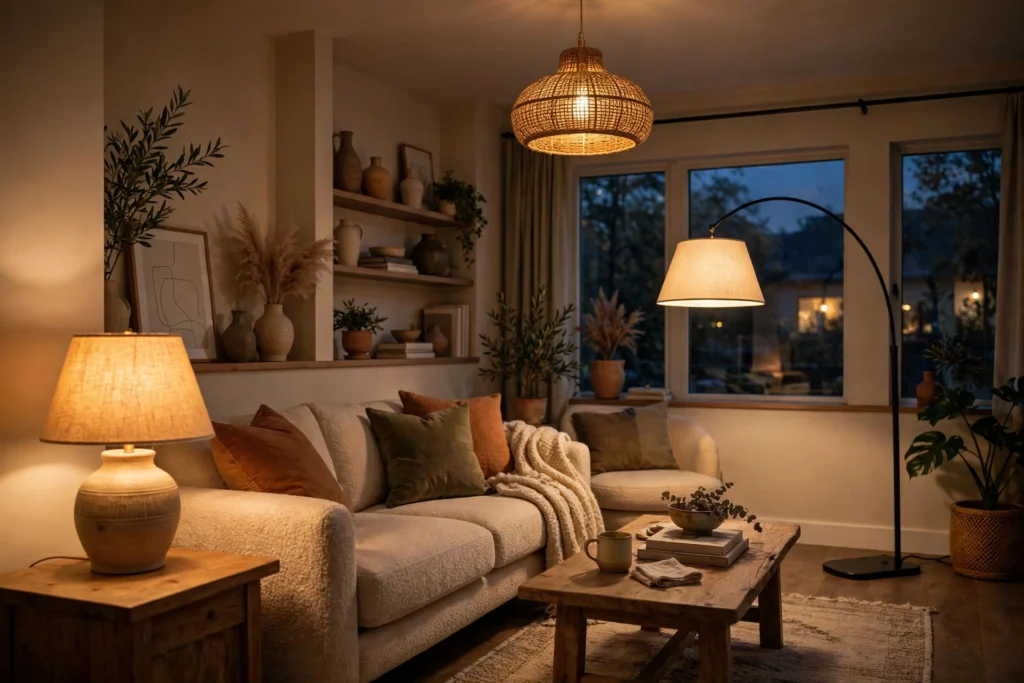
A useful rule of thumb: aim for at least three light sources in a living room or bedroom, at different heights, and never rely on the ceiling alone after dark.
Room by Room: Where Each Layer Goes
Living room. Keep the ceiling pendant on a dimmer for ambient light, add a floor or table lamp beside the sofa for reading, and use a small accent lamp or picture light to give the far side of the room a glow. The goal at night is pools of warm light, not a floodlit stage.
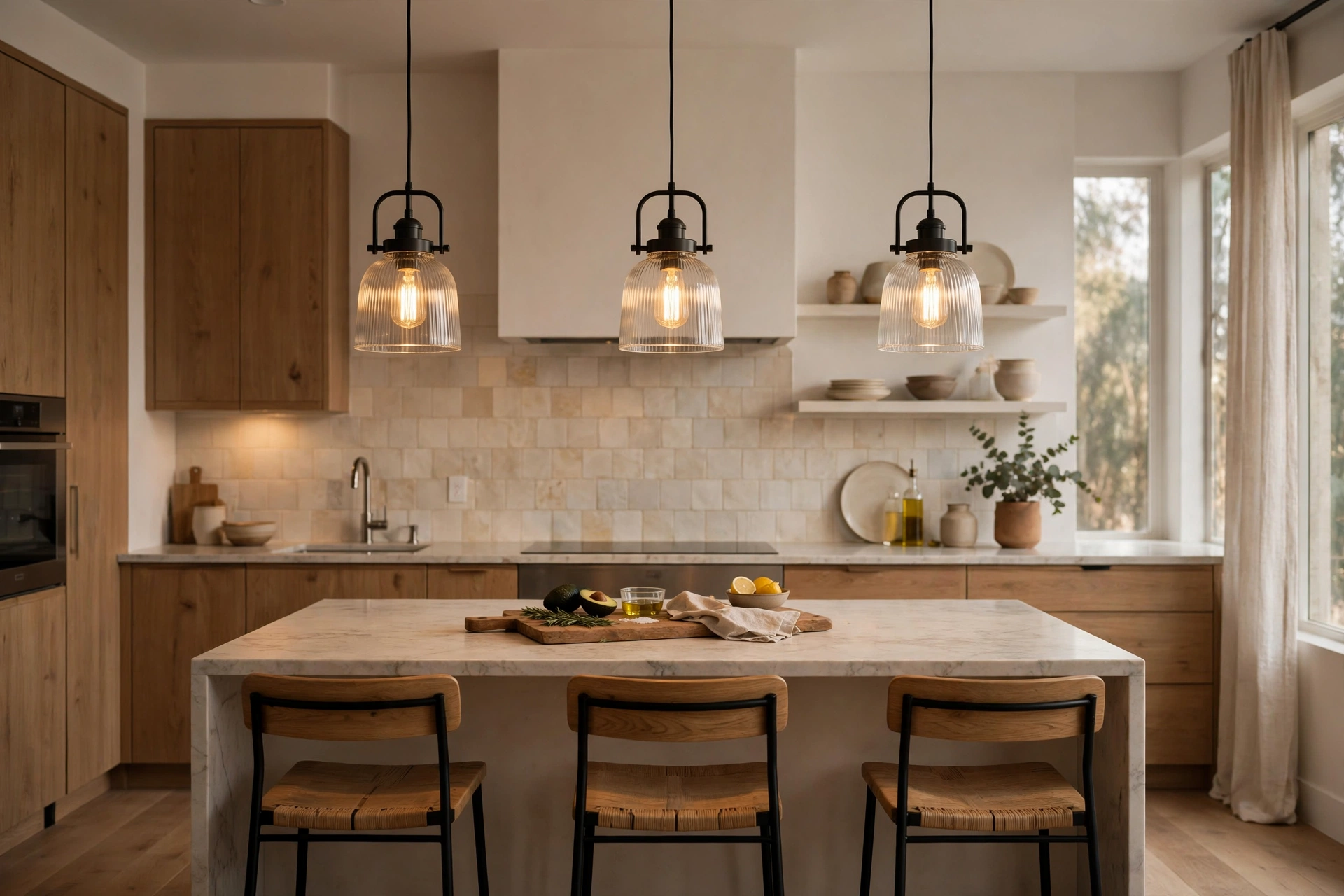
Kitchen. Kitchens are task rooms first: you need clear, shadow-free light on worktops, which is why under-cabinet lighting is the single best upgrade most kitchens can get. Add pendants over an island or table for atmosphere, and keep the ceiling lights bright and even.
Bedroom. Soft ambient light, warm bedside lamps you can read by without lighting the whole room, and nothing harsh overhead at night. Blackout is a feature here, not a problem — dimmers earn their keep.
Bathroom. The mistake is one ceiling light that shadows your face at the mirror. Light the mirror itself — a fitting above or, better, at both sides of the glass — and use fittings rated for bathroom zones.
Hallway. Often the darkest and most forgotten space. A row of warm wall lights or a bright pendant makes the whole home feel more welcoming, and it is the first light guests ever see.
Choosing Bulbs: The Numbers That Matter
Two numbers decide how a bulb feels. Colour temperature, measured in kelvins (K): 2700K is warm and cosy — right for living rooms and bedrooms; 3000–4000K is neutral and clearer — better for kitchens, bathrooms and home offices. Mixing temperatures in one room looks like a mistake, so keep a room consistent. Brightness is measured in lumens, not watts, with LEDs: roughly 400–800 lumens for a main room bulb, 200–400 for lamps and accent lights. And choose bulbs with a high colour rendering index (CRI 90+) where colour matters — kitchens, mirrors, wardrobes — so food, faces and clothes look true.
Dimmers and Controls: The Cheap Transformation
If you change only one thing, fit dimmers. A dimmer turns one fixed ceiling light into ambient light at full power and atmosphere at half, for the price of a takeaway. Smart bulbs go further — schedules, warmer evening tones, and lights that greet you at the door — but the principle is the same: control matters as much as the fittings. Put lamps on separate switches or smart plugs so you can light the corner you are using rather than the whole room.
Mistakes That Make Rooms Feel Wrong
- One cold bulb in the middle of the ceiling — the classic. Add lamps and warm the temperature.
- Downlights everywhere — a grid of spotlights lights the floor beautifully and the people terribly, casting shadows down faces.
- Light at one height only — layer high, middle and low sources for depth.
- Forgetting the corners — one small lamp in the darkest corner makes a small room feel bigger, because the eye reads lit boundaries as space.
The Bottom Line
Layer ambient, task and accent light in every room; keep bulbs warm and consistent; give yourself dimmers or separate switches; and light corners as well as centres. Do that, and the same furniture in the same rooms will look noticeably better every single evening — lighting is the highest-impact, lowest-cost interior upgrade there is.
Frequently Asked Questions
How many light sources should a living room have?
At least three, at different heights: one ambient source (ceiling or wall), one task source (a reading lamp by the sofa), and one accent source (a small lamp, picture light or shelf light). Five is not too many in a larger room.
What colour temperature is best for home lighting?
2700K warm white suits living rooms and bedrooms; 3000–4000K neutral white suits kitchens, bathrooms and workspaces. The key is consistency within a room — mixing warm and cool bulbs in the same space looks accidental.
Are LED bulbs worth it for home lighting?
Yes. Modern LEDs use a fraction of the energy of old bulbs, last for many years, and are available in warm, dimmable versions with excellent colour rendering. They are now the default choice for every layer.
How can I improve my home lighting without rewiring?
Add plug-in floor and table lamps, swap bulbs for warm dimmable LEDs, use battery or plug-in under-cabinet strips in the kitchen, and put lamps on smart plugs for control. None of it needs an electrician.