How to insulate a loft is the first energy-saving job most experts recommend, for a simple reason: around a quarter of a home’s heat escapes through the roof, and loft insulation is cheaper, faster and easier than almost any other fix. For a typical semi-detached house it can pay for itself in a few years through lower heating bills — and it makes the house noticeably warmer from the first cold night. Here is how to do it properly, and the mistakes that turn a good job into a damp problem.
How Much Insulation Do You Need?
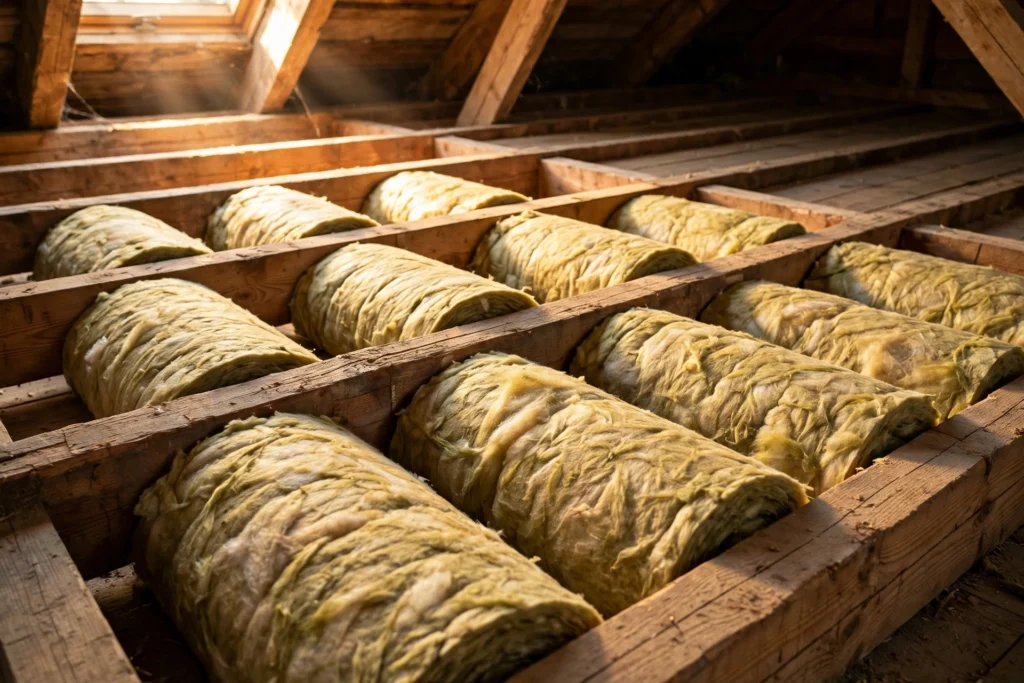
The current recommendation for mineral wool in the UK is 270mm total depth. Most older homes have 100mm or less, sometimes nothing at all, so the usual job is a top-up rather than a start from scratch. Measure what you have before you buy: poke a ruler through the existing layer in a few places, because depth varies. If you have 100mm between the joists, you need another 170mm laid across the joists to reach 270mm. Do not compress insulation to fit — squashed insulation insulates far less than its label claims, because it works by trapping air. And check the joist depth: standard joists are about 100mm deep, which is why the second layer goes across them rather than between them.
Which Type Should You Choose?
Mineral wool rolls are the standard choice: cheap, easy to cut with a bread knife or insulation saw, and widely available. They itch, so wear gloves, long sleeves, a mask and goggles. Rigid boards (PIR) insulate more per millimetre and suit lofts you want to board over for storage, but they cost more and must be cut precisely — gaps between boards leak heat. Loose-fill cellulose (recycled paper) is blown in by professionals and suits awkward lofts with lots of corners, but it is not a DIY job and it settles over time. For most beginners, mineral wool rolls are the right answer: forgiving, cheap, and effective. Whichever type you choose, never insulate over downlights unless they are fire-rated and covered correctly — trapped heat around old downlights is a fire risk, and covers or LED replacements solve it.
Do the Job Step by Step
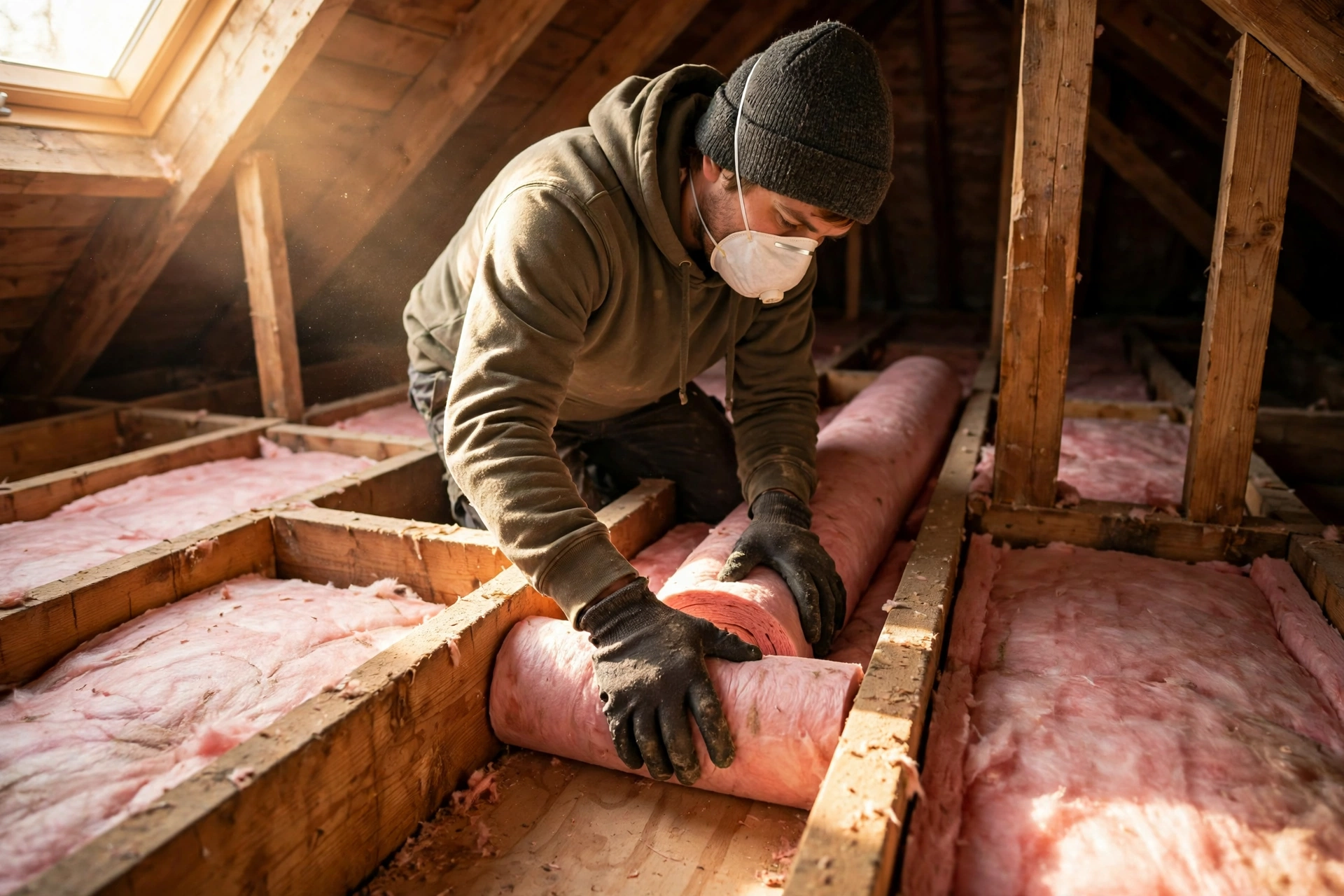
Start by clearing the loft and laying boards across the joists to move and kneel on — never stand on plasterboard ceilings, which will not hold you. Take up any old, damp or damaged insulation and dispose of it. Lay the first layer between the joists, snug but not compressed, cutting around pipes and cables rather than burying them: cables buried in insulation can overheat, and pipes need to stay accessible. Then lay the second layer across the joists, joints staggered like brickwork, so there are no continuous gaps. Keep insulation away from the eaves by about 50mm so air can flow under the roof — blocking eaves ventilation is the classic beginner error and causes condensation. Insulate the loft hatch too (a piece of board insulation glued to the hatch, plus draught strip around it), because an uninsulated hatch is a hole in your new blanket. Finally, insulate any cold-water tanks and pipes in the loft, so the warmer house does not lead to frozen pipes in a cold snap.
The Mistakes That Cause Damp
Loft insulation fails when ventilation is ignored. A warm house pushes moist air upward; if the loft cannot breathe, that moisture condenses on cold roof timbers and grows mould. Keep eaves vents clear, do not push insulation into the eaves gap, and do not seal every draught in the loft — it needs airflow. If your loft already shows mould or damp patches, find the cause before insulating: a roof leak, a bathroom extractor venting into the loft (it must vent outside), or rising moisture from below. Our guide to damp and mould helps you tell the difference. And pair the job with the rest of the winter package: draught-proof your home and the loft together, and the house will feel transformed for a few hundred pounds. If your roof is complex, your joists are shallow, or you want the loft boarded for storage, get a professional quote — boarding over insulation compresses it unless raised legs are used, and that is a job worth doing right.
Frequently Asked Questions
Can I insulate a loft myself?
Yes, for a standard loft with mineral wool rolls. It is awkward and dusty rather than skilled. Get help for complex roofs, very low headroom, or any signs of damp, rot or asbestos.
How much does loft insulation cost?
DIY mineral wool for a typical three-bedroom semi costs roughly £300–£600 in materials. Professional installation is typically £500–£1,000 depending on size and access.
Will loft insulation make my house too hot in summer?
No — insulation slows heat moving both ways, so it keeps summer heat out as well as winter heat in. A well-insulated loft is cooler in a heatwave, not hotter.
Do I need planning permission or building regulations?
Loft insulation itself does not need planning permission. If you board the loft for storage or convert it to a room, building regulations apply — take advice before you start.