
Rent increases rarely land at a convenient moment, and the letter often reads as if the new figure is final. It is not — at least, not automatically. In England, your landlord cannot simply name a higher rent and expect you to pay it. The increase must follow a set route, respect minimum notice periods, and stay in line with what similar homes let for. This guide explains the three lawful ways rent can rise, the section 13 notice rules, and how to challenge a rise that goes too far.
The Three Ways Rent Can Lawfully Rise
Most private tenants in England have an assured shorthold tenancy, and rent under one can rise in only three ways. First, a rent review clause in the agreement itself — if you signed a contract saying the rent rises by a set percentage or in line with an index on set dates, that clause governs. Second, by agreement: your landlord proposes a new rent and you accept, ideally in writing. Third, a formal notice under section 13 of the Housing Act 1988, the route used when you do not agree. If none of these has been followed, the rise is very unlikely to be enforceable.
During a fixed term, rent cannot rise at all unless the agreement allows it or you agree — a section 13 notice cannot be used mid-term. Once the tenancy turns periodic, rolling on past the fixed term, the section 13 route opens. Private renting is also in the middle of its biggest shake-up in decades, and our explainer on the renters’ rights reform sets out what is changing for tenants and landlords.
Section 13 Notices: The Rules That Matter
A section 13 increase must be served on the official form (Form 4) and can be used only once in any twelve-month period. The notice must give at least one month’s warning if you pay rent monthly or weekly, three months if you pay quarterly, and six months for a yearly tenancy. The new rent must start on the first day of a rent period, and the first increase cannot take effect until at least 52 weeks after the tenancy began. A notice that breaks these rules — wrong form, too little notice, a second rise inside a year — is defective, and you do not have to accept it.
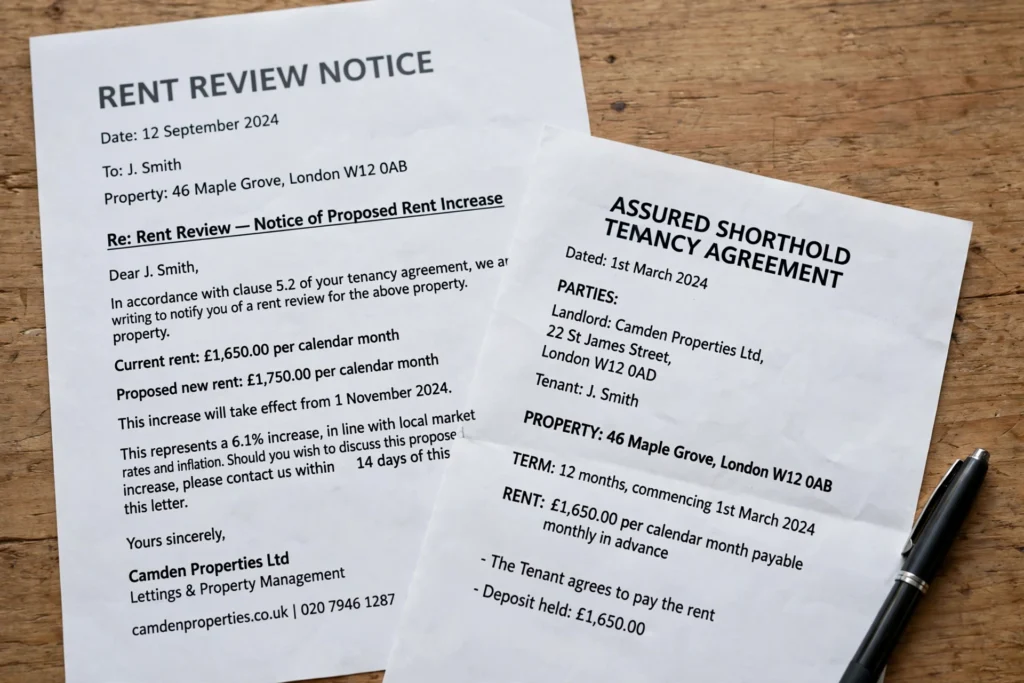
So check the paperwork before anything else. Does the form name the right property and tenancy? Does the proposed start date fall on the day your rent period begins, with minimum notice? Has your rent already risen this way within the last year? Keep the notice and your tenancy agreement together — between them, they decide whether the rise is valid and what you can challenge. Ignoring a valid notice does not stop it taking effect; your remedy is about the amount, not silence.
What Market Rent Actually Means
The legal test is the market rent: what the property would let for on the open market, on the same terms, if advertised today. It is not set by your landlord’s costs, nor by the highest asking rents on property portals. When the First-tier Tribunal judges a case, it weighs evidence of comparable homes — similar size, condition and location — and the rents they actually achieve. Condition counts: disrepair that is the landlord’s responsibility can pull the figure down, while genuine improvements can push it up.
Gather evidence early. Save listings and achieved rents for similar homes nearby, photograph condition problems with dates, and keep records of repair requests. Landlords’ rising costs form part of the background — many are leaving the sector, as our article on why more landlords are selling up explores — but costs are not the test. The question is always what this home, in this condition, would let for today.
Challenging at the First-tier Tribunal
If you believe a section 13 increase is above market rent, you can ask the First-tier Tribunal (Property Chamber) to decide. Applying is free, but the deadline is strict: your application must arrive before the date the new rent is due to start. Miss it, and the increase stands whatever its merits. Apply on the tribunal’s form, attach the section 13 notice, and set out your evidence — comparables, condition, repair history. Many cases are decided on the papers alone; others get a short, informal hearing.
Go in clear-eyed about the risk. The tribunal does not split the difference — it sets the rent at the market level it finds. If that matches your landlord’s proposal, you pay that figure from the original start date. The tribunal cannot set more than the landlord asked for in the notice, but it will not reduce a rent that genuinely matches the market either. Well-evidenced challenges to genuinely excessive rises do succeed, and the possibility of a challenge itself disciplines unreasonable demands.
Negotiating Before It Reaches a Tribunal
Most disputes settle before any hearing, because calm, evidenced negotiation works. Write to your landlord or agent before the new rent starts: accept the principle of a fair rise if you can, then counter with figures — the comparable rents you found, your record of paying on time, and anything you can offer in return, such as a longer fixed term. A reliable tenant has real value; void periods and re-letting fees are expensive, and it is legitimate to say so, politely, with numbers.
While you negotiate, watch for signs of an unlawful increase: a rise demanded by text with no proper notice, a second increase within twelve months, backdating to before the notice period, or pressure to sign a new agreement on worse terms as the only alternative. Never just stop paying the difference without advice — arrears can be used against you — but do not pay a rise that was never validly imposed either. Citizens Advice and Shelter offer free advice and can check a section 13 notice quickly.
Frequently Asked Questions
How often can my landlord put the rent up?
By the section 13 route, at most once every twelve months, and not during a fixed term unless your agreement contains a rent review clause. A rise you agree to voluntarily counts as that year’s increase too — keep any agreement in writing.
How much notice must I get for a rent increase?
Under section 13, at least one month if you pay rent monthly or weekly, three months if you pay quarterly, and six months if you pay yearly. The new rent must start on the first day of a rent period, never part-way through one.
What happens if I challenge the rise and lose?
The tribunal sets the rent at the market level it finds, which may be the figure your landlord proposed, payable from the date the increase was due to begin. It will not cut a rent that truly matches the market.
Can my landlord raise the rent because their costs went up?
Their costs explain the request but do not set the legal test. The increase still needs the correct route and notice, and the amount is judged against the market rent for comparable homes nearby — not against the landlord’s mortgage or bills.