Soundproofing a room is one of those jobs where the cheapest fixes do most of the work — because sound behaves like water. It finds the gaps: under the door, around the window frame, through the paper-thin wall you share with next door’s television. Block the leaks and add weight to the surfaces, and a room can change from echoing and exposed to calm and private, often for less than a weekend and a modest budget.
This guide explains how sound travels, then works through the practical fixes in the order you should do them: sealing gaps, softening the room, sorting doors and windows, and finally the heavier construction options for serious noise problems.
First, Understand What You Are Fighting
Noise comes in two types. Airborne sound — voices, television, music, traffic — travels through the air and slips through any gap or vibrates through thin surfaces. Impact sound — footsteps, doors slamming, bass thumps — travels through the structure itself. Most home misery is airborne sound, and airborne sound has a merciful weakness: it is stopped by airtightness and mass. A heavy, sealed surface blocks it; a light, leaky one lets it pour through. Keep that pair of principles in mind and every fix below makes sense. One honest limit: no treatment makes a room silent against a loud bass source or structural vibration — the goal is a big, livable reduction, not a recording studio in a semi.
Step 1: Seal Every Gap (The Highest-Value Hour You Will Spend)
Before buying anything expensive, walk the room like a detective looking for air paths. Run a bead of acoustic sealant (or quality flexible filler) around skirting boards, window frames, and anywhere pipes or cables pass through walls. Fit socket boxes on party walls with acoustic putty pads — back-to-back plug sockets are literal holes in the wall’s defences. Check for gaps around the loft hatch, along the tops of wardrobes built against the noisy wall, and under the door (see below). A useful test on a bright day: close the door and curtains and look for light leaks around doors and windows — where light gets through, sound is marching through at full volume.
Step 2: Soften the Room Itself
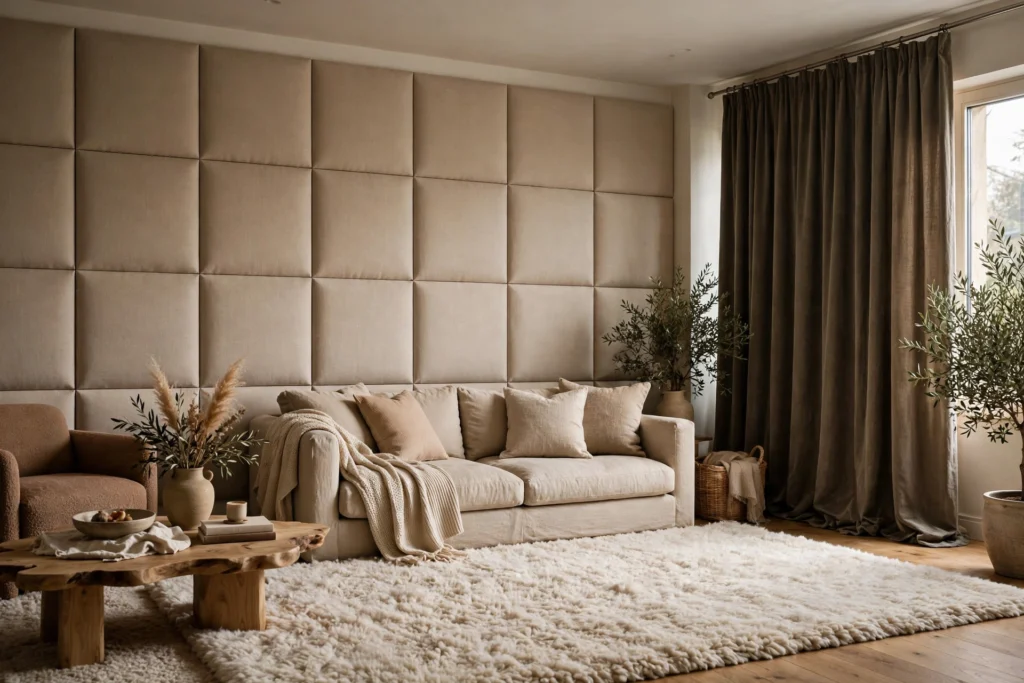
Hard, bare rooms amplify everything: sound bounces between plaster, glass and laminate, making noise seem louder and harsher than it is. Soft furnishings absorb that echo — a thick rug with proper underlay on a hard floor, heavy lined curtains (floor-length, wider than the window), upholstered furniture, cushions, and a bookcase filled with books against the party wall all genuinely help. Acoustic panels and foam have their place on walls in home offices and music rooms, but be clear-eyed: they mainly calm echo inside the room; they do little to stop sound arriving from next door. Treat the room’s acoustics for comfort, and treat gaps and mass for actual soundproofing.
Doors and Windows: The Weak Points
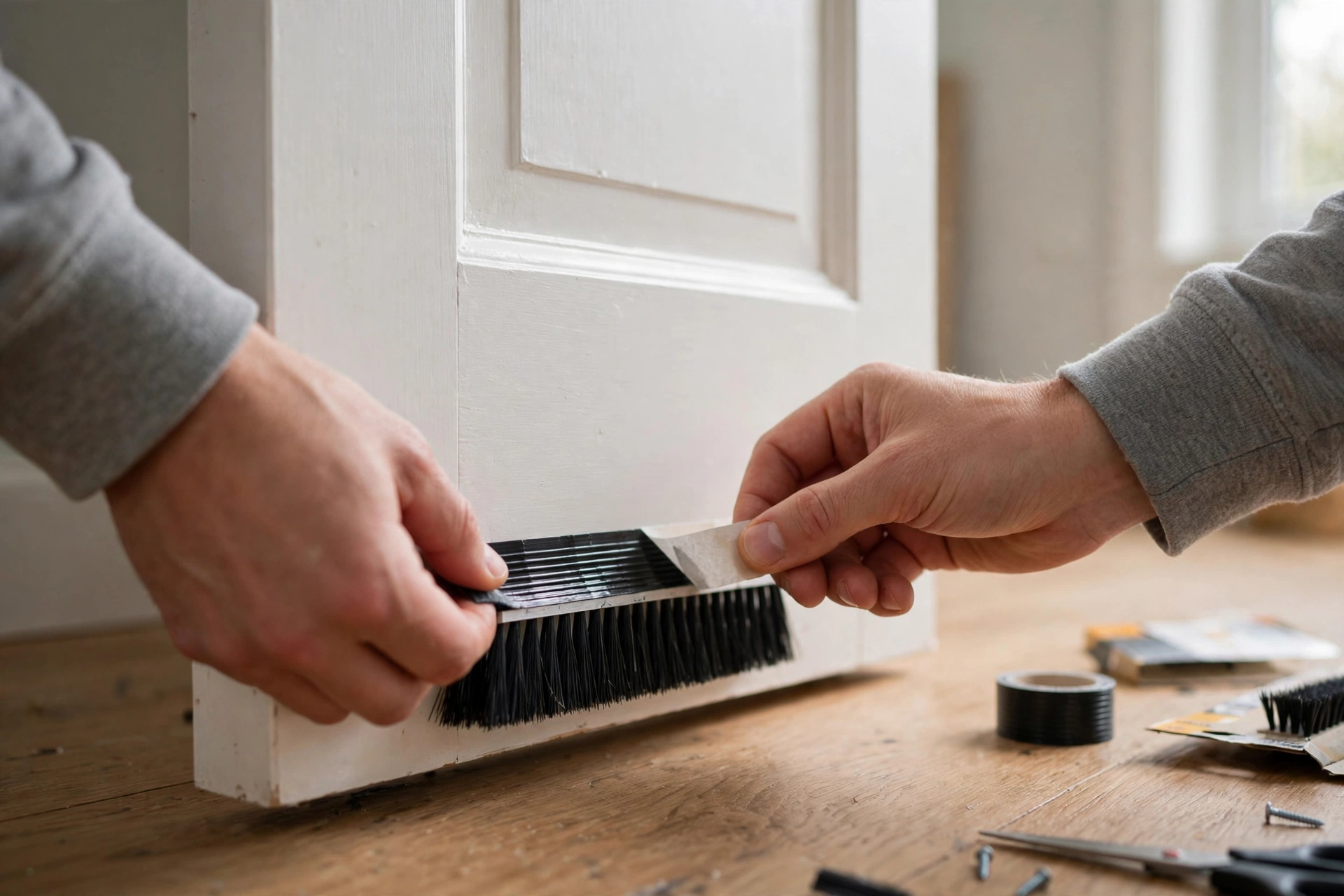
A standard hollow-core internal door is close to an open doorway acoustically, no matter how solid the wall around it. Upgrades that work: fit perimeter seals and a brush or drop-down seal at the bottom to close the gap; swap to a solid-core door if noise really matters (the weight difference is the point); and keep the door closed — obvious, but a sealed solid door only works shut. For windows, the hierarchy is: heavy curtains for a small gain; well-fitted secondary glazing for a surprisingly large one (an extra pane with an air gap is one of the best noise reducers per pound for traffic noise); and acoustic-rated double glazing when windows are due for replacement anyway.
Step 3: Adding Mass to Walls
When sealing and softening are not enough — typically with a thin party wall — the fix is mass and separation. The accessible DIY version is adding a layer of acoustic plasterboard (denser than standard board) directly to the wall on a bed of damping compound, sealed meticulously at every edge; expect to lose only a couple of centimetres of room and gain a clearly quieter wall. The heavyweight version is an independent stud wall: a new frame built a few centimetres off the existing wall, filled with acoustic mineral wool, and boarded with two layers of acoustic plasterboard with staggered joints. It costs more and eats 10cm or so of the room, but it is the closest thing to a complete answer for a problem party wall. Similar logic applies upwards and downwards: acoustic mineral wool between floor joists and a heavy carpet with quality underlay tame the ceiling and floor routes.
The Bottom Line
Soundproofing a room works when you follow the physics: seal every air gap first (cheap, fast, transformative), soften hard surfaces to kill echo, upgrade the door and windows that leak the most, and only then add mass to walls with acoustic board or an independent stud. Work in that order and most home noise problems shrink to a level you can live with — often long before you reach the expensive steps.
Frequently Asked Questions
Do acoustic foam panels stop neighbour noise?
Mostly no. Foam panels absorb echo inside your room, which makes it feel calmer, but they are too light to block sound coming through a wall. For incoming noise you need airtight sealing plus mass — acoustic plasterboard, not foam.
What is the cheapest effective soundproofing?
Sealing gaps: acoustic sealant around skirting, frames and socket boxes, plus door seals. It commonly costs under £50 in materials and an hour or two of work, and delivers a disproportionate share of the total improvement.
Does secondary glazing really help with traffic noise?
Yes — it is one of the best-value measures for road noise. A second pane set apart from the existing window creates a wide air gap that outperforms standard double glazing for sound, and it keeps the character (and windows) of older homes.
How much room does a soundproof stud wall take?
Plan on roughly 10–12cm including the frame, insulation, air gap and double boarding. On a long party wall in a small room that is a real sacrifice, which is why it is the last step, after sealing and single-board options.