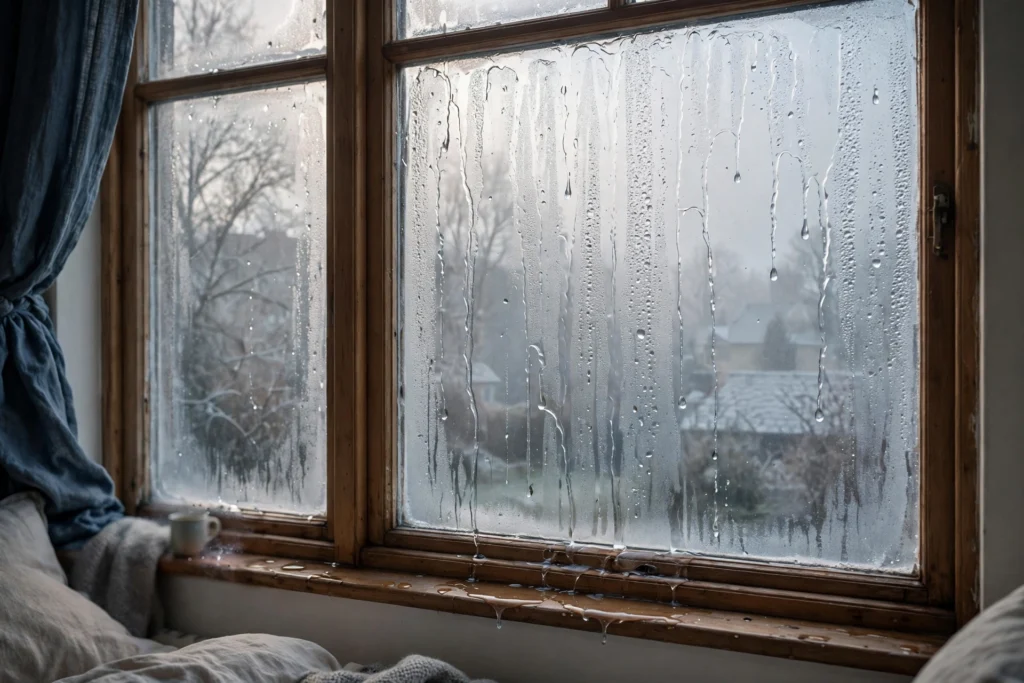
If your windows stream with water every autumn morning, you are not alone — and learning how to stop condensation on windows starts with realising the water is not coming through the window. It is your own household moisture, made visible: condensation forms when warm, moist air meets a cold surface and can no longer hold its water. Light morning misting is normal, but daily streaming windows, wet sills and black spots in the corners are a warning worth acting on.
Where All That Moisture Comes From
A typical household produces roughly 7 to 14 litres a day. A shower releases around a litre and a half into the bathroom air if the steam is not extracted. Cooking, boiling kettles and simmering pans without lids pour moisture into the kitchen, and each person breathes out about half a litre of water in sleep overnight, which is why bedrooms are often worst for morning condensation. The biggest single source in many homes is drying laundry indoors — a full load can release two litres or more as it dries. This moisture stays in the air until it either leaves through ventilation or lands on a cold surface: a window, an external wall, the corner behind a wardrobe. Every fix works on one of three levers: the moisture you produce, your ventilation, or how warm your surfaces are.
The Dew Point, Explained Simply
Warm air can hold more water than cold air: air at 20°C can carry roughly twice the moisture of air at 10°C before it saturates. The dew point is the temperature at which room air, with its current moisture, saturates — cool it further and the excess comes out as liquid. When moist air touches glass colder than the dew point, water appears on the glass. So condensation is worst in winter, worst after showers and cooking, and first forms on the coldest spots: the bottom of the pane, single glazing, metal frames. Heating harder can even worsen it — warmer air picks up more moisture, then dumps it on still-cold glass. The goal is not the hottest room but a steadily warm one with dry air and no very cold surfaces. A cheap hygrometer helps: aim for 40 to 60 per cent humidity, and act on persistent readings above 65 per cent.

Daily Habits That Make the Biggest Difference
The most effective measures are free and done daily. Put lids on pans and use the extractor or open the kitchen window while cooking. Run the bathroom extractor during a shower and for fifteen minutes afterwards; without one, open the window as soon as you finish. Keep bathroom and kitchen doors closed while steamy, then ventilate that room properly. Wipe streaming windows and sills each morning — two minutes with a cloth or window vacuum stops litres soaking into plaster. Use trickle vents if you have them — kept shut all winter, they are a common cause of trouble. Best of all is short, sharp cross-ventilation: open windows on opposite sides of the house for five to ten minutes once or twice a day. This purges moist air while walls and furniture stay warm, so rooms reheat quickly — far better than one window cracked all day. Dry clothes outdoors or in a vented tumble dryer where you can; indoors, use one room with the door shut and a window open or a dehumidifier running. And balance any draught-proofing your home with deliberate ventilation — sealing every draught traps moisture in, and an airtight house still needs controlled fresh air.
Heating Balance, Tools and Longer-Term Fixes
Steady, even heating beats bursts of high heat. A home heated for an hour morning and evening has cold walls and glass the rest of the day; a lower, constant background temperature keeps surfaces above the dew point more of the time. Check cold spots — uninsulated corners, walls behind furniture on external walls, rooms with the radiator off — and leave a gap behind wardrobes for air to circulate. Two tools earn their keep. A dehumidifier where laundry dries can pull several litres a day from the air — choose a desiccant model for cooler rooms. A handheld window vacuum makes the morning wipe-down quick enough to actually happen. Longer-term, secondary glazing or thermal blinds raise the inner surface temperature; open curtains by day so air dries the glass. Humidity-sensing extractor fans and positive input ventilation units suit homes where habits alone fail.
Condensation, Damp or a Leak — and When to Worry
Not all moisture on walls is condensation, and treating the wrong cause wastes money. Condensation wets cold surfaces, is worst in the morning and in winter, and improves in mild weather. Rising damp climbs from the ground to about a metre, leaving a tide mark and often damaged skirting; penetrating damp shows as a defined patch linked to rain — a leaking gutter, cracked render, failed pointing — and worsens after wet weather. A plumbing leak tends to be constant, localised and unaffected by the seasons. If you are unsure which you are dealing with, our guide to damp and mould — how to spot, treat and prevent it walks through the signs of each type. Condensation between the panes of a double-glazed unit means the sealed unit has failed; no habit will fix it, and the unit needs replacing. And black mould that returns quickly after cleaning, spreads beyond window corners, or brings a house-wide musty smell means habits alone will not control it — a damp surveyor can check the walls before you spend on the wrong remedy.
Frequently Asked Questions
Is some condensation on windows normal?
Yes. Light misting at the bottom of bedroom windows on cold mornings is normal in most homes. It becomes a problem when windows stream daily, sills stay wet, or mould starts to appear.
Will a dehumidifier on its own solve it?
It helps a great deal, especially where laundry dries indoors, but it works best alongside ventilation habits and steady heating. Otherwise you are bailing out a boat without plugging the leak.
Why is condensation worse in one room than the others?
Usually moisture plus cold: bedrooms gain moisture from breathing overnight, kitchens and bathrooms from steam, and rooms with cold external walls, radiators off or furniture blocking airflow collect more.
When should I call a professional?
Call a glazier if moisture appears between double-glazed panes — that is a failed sealed unit. Call a damp specialist if mould spreads beyond window corners or returns quickly, or if you suspect rising or penetrating damp or a hidden leak.