Tiny homes have moved from television novelty to a real answer to a real problem. When the average home costs many times the average salary, a well-designed home of 25–40 square metres — or a self-contained annexe in a family garden — offers something the mainstream market struggles to provide: a place of your own that does not consume your entire income. Search interest, specialist builders and a growing queue of buyers all say the same thing: small is no longer a compromise people apologise for.
This guide explains the trend properly: what tiny homes and garden annexes actually are, what they cost, the UK planning rules that catch people out, and the honest pros and cons of living small.
What Counts as a Tiny Home?
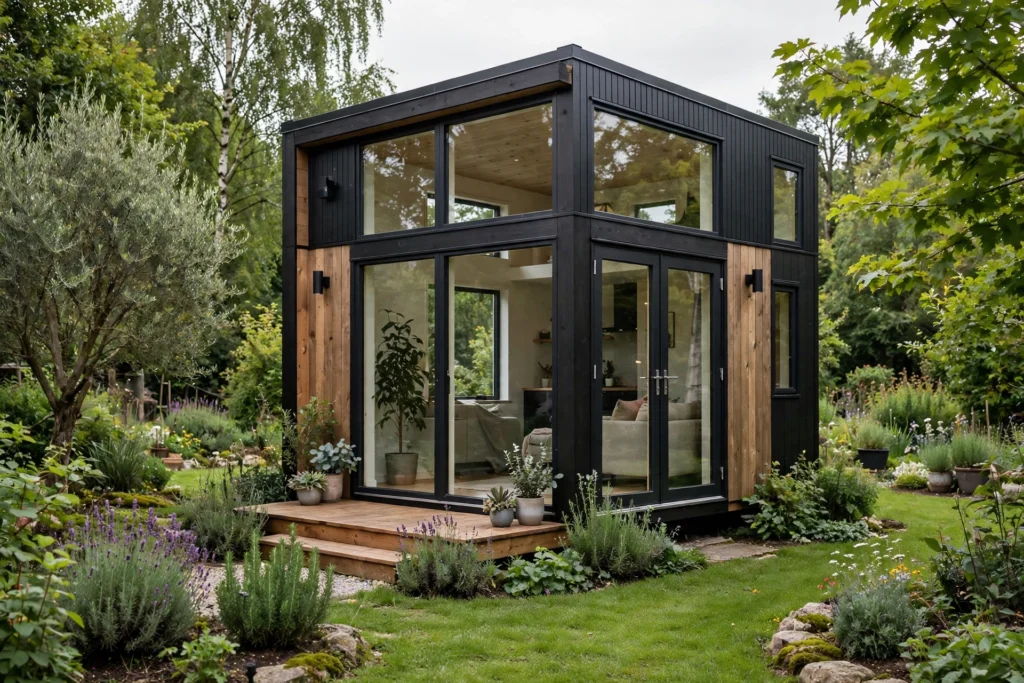
There is no legal definition, but the term covers three overlapping things. Tiny houses are small standalone homes, sometimes on wheels (built on a trailer chassis), sometimes on foundations, designed to squeeze a full life — kitchen, bathroom, sleeping space, storage — into under about 40 square metres. Garden annexes are self-contained units in the garden of an existing house, most often for a family member: an adult child saving for a deposit, or a parent who wants independence with family nearby. Micro-homes and studio pods are the commercial end: compact units built by developers and councils, sometimes converted from offices or built as small apartment blocks in cities.
Why People Are Choosing Small
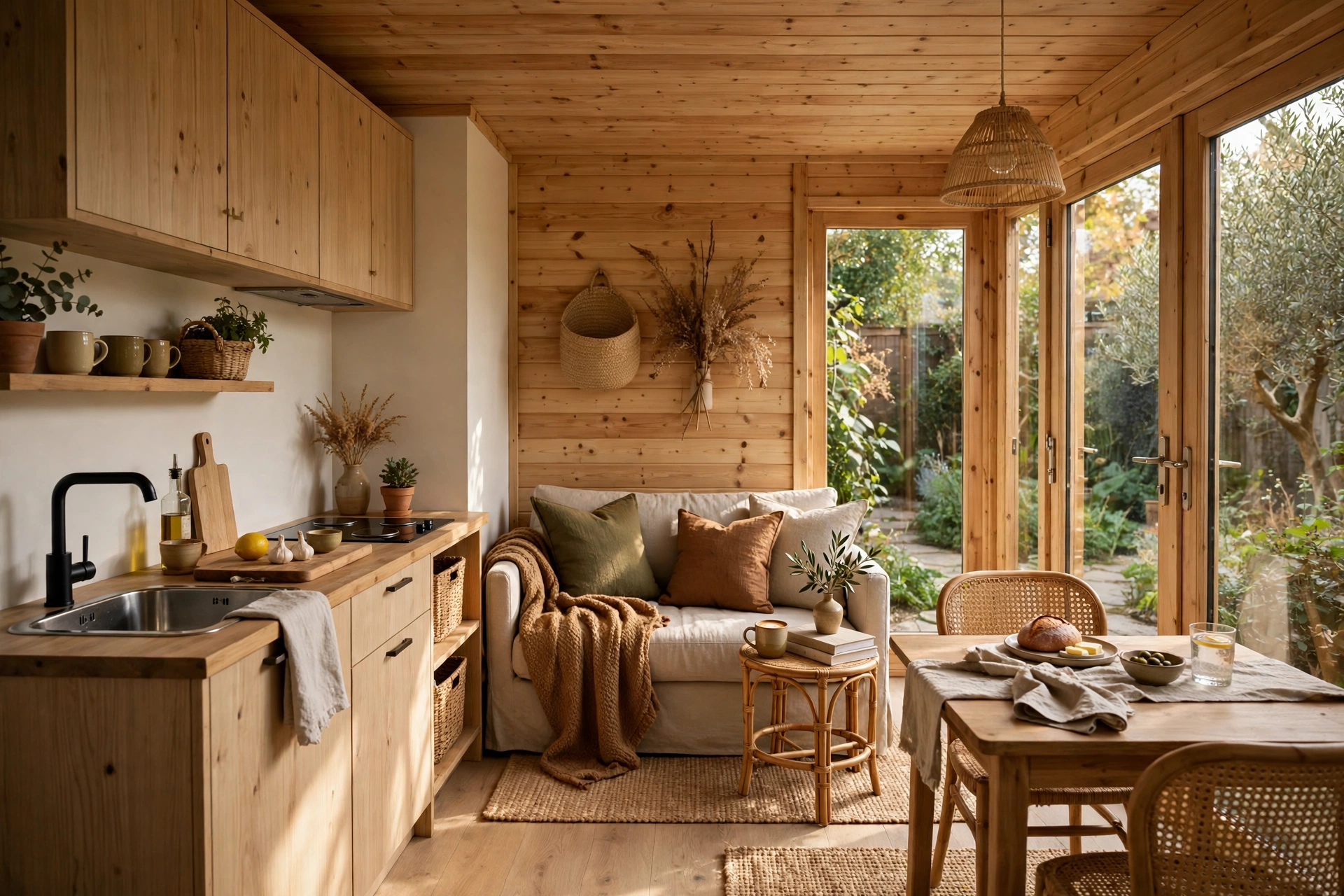
The motivations are strikingly practical. Cost: a quality tiny home or annexe typically costs a fraction of a conventional house in the same area, and the running costs — heating a small, well-insulated box is cheap — stay low for life. Family logic: annexes let generations help each other: grandparents near grandchildren, adult children saving real deposits instead of paying rent to a stranger. Simplicity: a significant minority of buyers are downsizers who actively want less — less cleaning, less maintenance, less stuff — and the freedom that comes with it. And for some, sustainability: small homes use fewer materials, less energy and less land.
What Do They Cost?
Prices vary enormously with specification. As a rough guide: a basic tiny house on wheels from a UK builder commonly starts around £30,000–£50,000, with high-specification models well above that. A good-quality garden annexe, built and connected to services, typically runs from about £60,000 to £120,000 depending on size and finish — still a fraction of local house prices, and often adding value to the main property when done properly. Site costs are the forgotten line item: foundations or a base, water, electricity and drainage connections can add thousands, so any quote needs to say exactly what is included.
The Rules: Planning Permission and Reality Checks
This is where enthusiasm meets the rulebook. In the UK, a garden building used for incidental purposes — a studio, gym or office — can often be built under permitted development. But a self-contained annexe where someone actually lives and sleeps is a different matter: in most cases it needs planning permission, and councils look carefully at whether it remains genuinely ancillary to the main house (for a family member) rather than a separate dwelling in disguise. Tiny houses on wheels sit in a grey area — if it is lived in as a home, planning rules generally apply regardless of the wheels. Building regulations, mortgage and insurance complications, and council tax (an annexe for a family member may qualify for discounts) all need checking for your specific situation. The safe sequence is: talk to your council’s planning department before spending serious money.
The Honest Cons of Living Small
Storage is a permanent discipline, not a one-off sort-out. Hosting more than a couple of guests is a logistical event. Resale is a real consideration: the market for tiny homes is growing but remains niche, and finance is harder — many tiny homes cannot be bought with a standard mortgage. And winter tests the concept: a small space shared by two people, a dog and everyone’s hobbies requires either good design or good humour, ideally both.
The Bottom Line
Tiny homes and garden annexes are booming because they solve the equation the mainstream market cannot: genuine independence at a survivable cost. They work best when chosen deliberately — for family closeness, financial freedom or a simpler life — with planning rules checked first and eyes open about storage, finance and resale. Chosen that way, 30 square metres can hold a surprisingly large life.
Frequently Asked Questions
Do I need planning permission for a garden annexe?
In most cases, yes, if someone will live and sleep in it as self-contained accommodation. Buildings used only for incidental purposes (a studio or gym) may fall under permitted development. Always check with your local planning department before building.
How much does a tiny home cost in the UK?
A tiny house on wheels from a specialist builder commonly starts around £30,000–£50,000, while a fully serviced garden annexe typically costs £60,000–£120,000 depending on size and finish, plus site and connection costs.
Can you live in a tiny home permanently in the UK?
Yes, if it sits on land with the right planning permission (or on a licensed residential site). Living in one on ordinary land without permission risks enforcement action, however mobile the structure is.
Can I get a mortgage on a tiny home?
Standard mortgages are difficult for tiny homes on wheels or non-standard structures; buyers usually use savings, specialist finance or loans. Annexes are normally funded by the main household, sometimes by remortgaging the main property.