Learning how to prune roses is the job that separates nervous beginners from confident gardeners — and the secret is that roses are remarkably hard to kill with secateurs. What pruning actually does is simple: it removes wood that is dead, weak or in the way, and redirects the plant’s energy into strong new stems that carry the best flowers. An unpruned rose does not die; it just becomes a tangle of old wood with smaller blooms held ever higher and further away.
This simple guide covers when to prune each type of rose, the tools you need, exactly where to make your cuts, and the few mistakes that genuinely matter — so you can approach the job calmly and finish it in minutes per bush.
When to Prune: It Depends on the Rose
Bush roses (hybrid teas and floribundas) — the classic border roses — get their main prune in late winter to early spring (February to March in most of the UK), just as growth buds start to swell but before leaves open. Through summer, deadhead spent flowers regularly to keep new blooms coming.
Shrub and English roses are pruned at the same time of year but more lightly — shape and tidy rather than a hard cut back, because they flower on a framework of older wood.
Climbing roses are pruned in autumn to late winter: train and tie in strong new stems, and shorten the side shoots they flowered on. Ramblers are the exception — prune them straight after flowering in summer, because they bloom next year on this year’s stems; a hard spring prune of a rambler removes its entire flower show.
One rule for all of them: never prune hard during a severe frost, and if you prune a little late or a little early, the rose will forgive you. Timing matters far less than gardening folklore suggests.
Tools You Actually Need
Sharp bypass secateurs for stems up to about 1.5cm (bypass, not anvil — they cut cleanly instead of crushing), loppers for thicker old stems, a small pruning saw for the occasional ancient trunk of a stem, and decent gloves — rose thorns are not a personality flaw to test yourself against. Clean your blades with a disinfectant wipe between plants if you have been cutting diseased wood; it takes seconds and stops you carrying black spot and canker from bush to bush.
The Cuts, Step by Step
- Start with the three Ds: remove everything dead (brown, dry, no green under the bark), damaged (broken, split, rubbing) and diseased (black-spotted, cankered, discoloured). Cut back to healthy white-green wood.
- Open the centre: remove any stems crossing through the middle of the bush. You are aiming for a goblet shape — open in the centre, with air and light reaching in. This single step prevents most fungal disease.
- Remove weak growth: anything thinner than a pencil rarely carries a good flower; cut it out at the base.
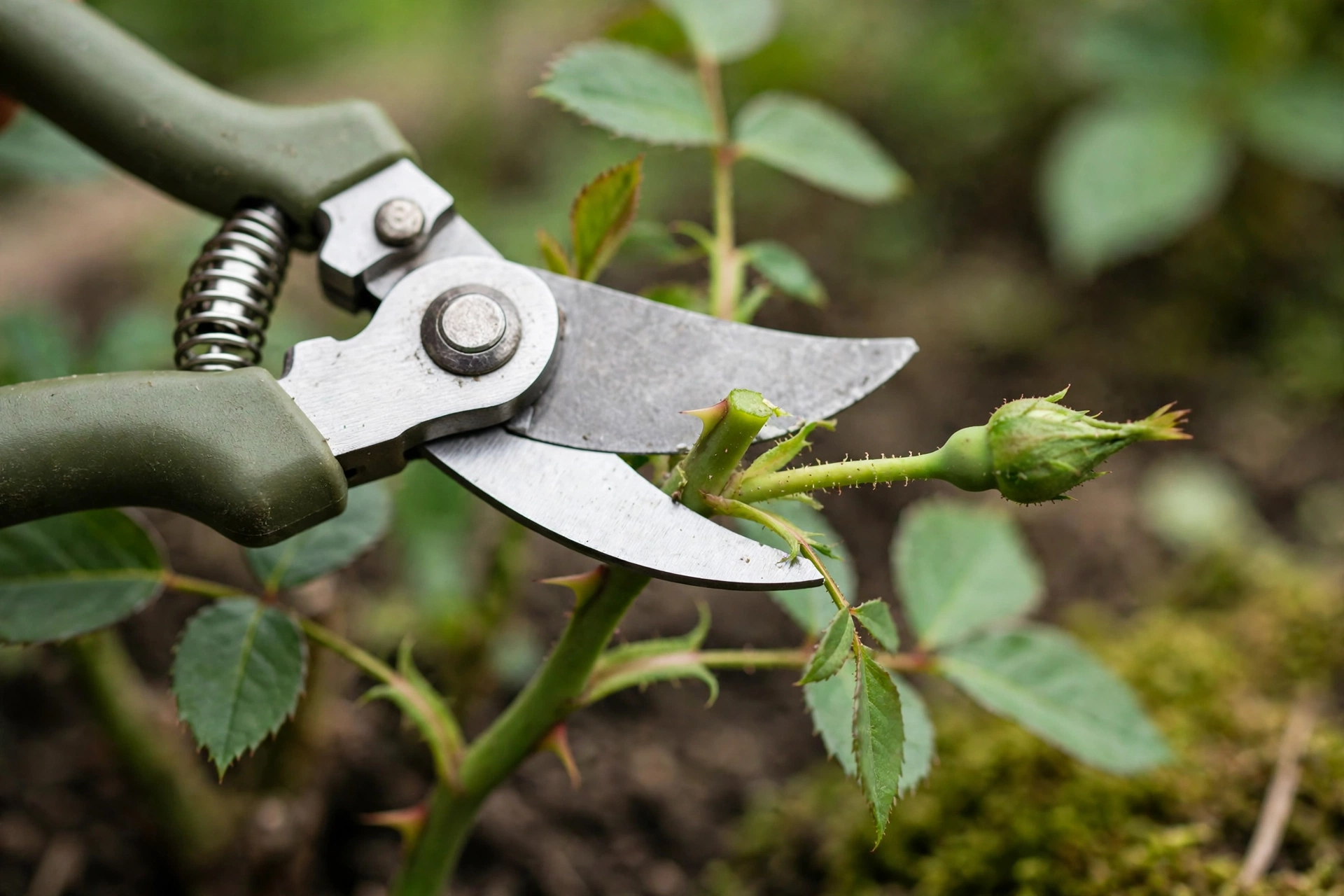
- Shorten the remaining strong stems: for bush roses, cut them back by about half (to roughly 15–25cm from the ground in a hard-pruned border rose). Always cut about 5mm above a bud that faces outward, with the cut sloping down away from the bud so rain runs off rather than into it.
- Clear the ground: pick up every clipping and fallen leaf from around the plant. Rose diseases overwinter in that debris; your tidy-up is next year’s disease control.
After Pruning: Feed, Mulch, Watch
Pruning tells the rose to grow; feeding gives it the means. After the main prune, give each bush a handful of rose fertiliser (or balanced general fertiliser), then mulch generously with well-rotted manure or garden compost, keeping it a few centimetres clear of the stems. Water in a dry spring. Then, through the season, deadhead weekly — snipping spent blooms back to the first strong five-leaflet leaf — and the plant will respond with wave after wave of flowers instead of putting its energy into hips.
Mistakes That Actually Cost You Flowers
- Pruning a rambler in spring — the one genuinely costly timing error, because you remove the wood that was about to flower.
- Blunt or crushing cuts — torn tissue invites dieback and disease; sharp bypass secateurs are the whole fix.
- Leaving a crowded centre — stagnant, damp air in a thicket is an open invitation to black spot and mildew.
- Being too timid with bush roses — a light trim of a hybrid tea gives you a tall, leggy plant with flowers at head height and bare knees. They genuinely flower best on strong new wood grown from a firm prune.
The Bottom Line
To prune roses well: work in late winter for most types (straight after flowering for ramblers), take out the dead, damaged and diseased wood first, open the centre to the light, shorten strong stems to an outward-facing bud, then feed and mulch. Ten minutes per bush, once a year — and the rose will repay you in the only currency it has: armfuls of healthy blooms.
Frequently Asked Questions
When is the best time to prune roses in the UK?
For bush, shrub and climbing roses, late winter to early spring (February–March), just as the buds begin to swell. Rambling roses are the exception — prune those right after flowering in summer.
How hard should I prune a rose bush?
Bush roses (hybrid teas and floribundas) can be cut back by about half, to 15–25cm of strong stem. Shrub roses need only a light tidy and shape. When in doubt, remove weak wood entirely and shorten strong wood moderately.
Can I kill a rose by pruning it wrong?
It is surprisingly difficult. Bad cuts may cost you some flowers or invite a little dieback, but an established rose almost always regrows strongly. The mistakes that matter most are pruning ramblers in spring and using blunt tools.
Should I deadhead roses?
Yes for repeat-flowering roses — removing spent blooms back to a strong leaf encourages more flowers. Leave the hips only on roses grown for their autumn display, such as many rugosas and species roses.