How to fix a leaking shower starts with one unglamorous truth: the water you can see is rarely the whole story. A drip from the shower head, a puddle by the tray, a damp patch on the ceiling below — each points to a different cause, and fixing the wrong one wastes a weekend. Most shower leaks, though, come from a short list of suspects: worn seals, tired washers, a cracked shower head or hose, and failed grout or sealant. Here is how to find your leak and fix it, and when to stop and call a plumber.
Find the Source Before You Fix Anything
Dry the whole area, then run the shower for five minutes while you watch. A drip that continues after you turn the shower off points to the valve or the head: water trapped in the head drips for a few minutes, but a drip that goes on for an hour means a worn washer or cartridge in the mixer valve. Water pooling at the tray edge or running onto the floor usually means failed sealant or grout, or a tray that has moved. A damp patch on the ceiling below, or a musty smell in the room next door, suggests a pipe joint or a waste leak under the tray — the most serious kind, because it stays hidden. Note exactly where water appears and when; that note is what a plumber will ask for if you end up calling one.
Seals and Sealant: The Commonest Fix
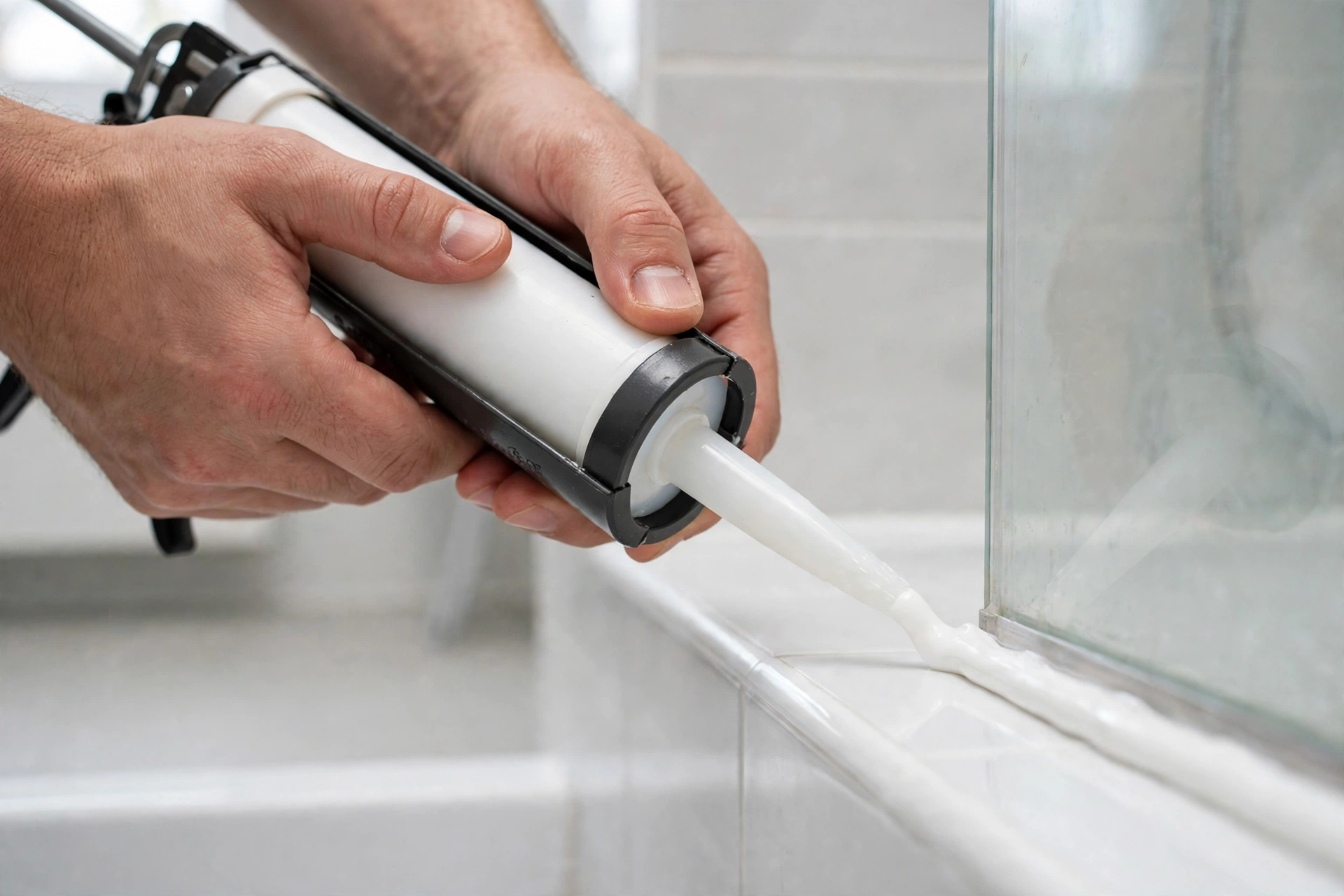
Silicone sealant around a shower tray lasts roughly five years, and when it fails, water creeps behind the tray and into the floor. To replace it, cut out the old sealant fully with a craft knife or sealant remover — never just smear new sealant over old, because it will not bond. Clean the joint with methylated spirit, dry it completely, and apply a smooth new bead of bathroom silicone, tooling it with a wet finger or a sealant tool. Leave it to cure for 24 hours before using the shower. Check the door seals too: magnetic and rubber strips harden and shrink with age, and replacements are usually clipped or screwed on in minutes. If the tray rocks when you stand in it, the problem is underneath — a poorly supported tray flexes and breaks every seal you put on it, and that needs a professional refit, not more silicone.
Shower Heads, Hoses and Valves
A dripping head is often just limescale: unscrew the head, soak it overnight in white vinegar, and poke the nozzles clear with a pin. If the hose leaks at either end, replace the rubber washers first — a pack costs pennies — and replace the whole hose if it is cracked or kinked. A mixer valve that drips constantly, or that runs hot and cold on its own, usually needs a new cartridge: turn off the water, note the valve make and model (a photo helps at the plumbers’ merchant), and swap the cartridge following the maker’s instructions. If you cannot identify the valve, or the valve is concealed in the wall with no access panel, that is plumber territory — forcing a concealed valve can flood a wall cavity. For simpler blockages elsewhere in the bathroom, the same diagnostic approach works: our guide to unblock a sink follows the same find-it-first logic.
Grout, Tiles and When to Call a Plumber
Cracked or missing grout lets water behind tiles, where it rots plasterboard and feeds mould. Rake out loose grout, re-grout, and seal it; if tiles are loose or the wall behind them is soft, the damage is already serious and re-tiling is on the cards — our beginner’s guide to tile a bathroom wall covers what that job involves. Call a plumber when: the leak is under the tray or inside a wall, the ceiling below is stained or sagging, the valve is concealed and unidentified, or you have fixed the obvious causes and water still appears. A hidden leak left running can rot joists and breed mould for months, and the repair bill then dwarfs the call-out fee. Turn off the water to the shower if you are unsure, and do not use it until the source is found.
Frequently Asked Questions
How much water does a dripping shower waste?
A drip a second wastes roughly 10,000 litres a year — enough to fill a small paddling pool many times over — and on a meter it shows up on your bill. Fix drips promptly even if they seem small.
Can I use the shower while the new sealant cures?
No. Most bathroom silicones need 24 hours to cure fully. Using the shower early washes the sealant out of the joint and you will be redoing the job within weeks.
Why does my shower run hot then cold?
Usually a worn thermostatic cartridge, or pressure changes when another tap runs. A new cartridge fixes the first; a pressure-balancing valve or a plumber’s advice fixes the second.
Is a leaking shower covered by home insurance?
Sudden pipe bursts usually are; slow leaks from worn seals usually are not, because insurers treat them as maintenance. Fix leaks early and keep receipts for any professional repair.