Unblock a sink yourself and you save a plumber’s call-out fee — but only if you work in the right order and know when to stop. Most household blockages are simple: a plug of grease and food in a kitchen sink, or hair and soap scum in a bathroom basin. Both clear with basic tools in under half an hour. The expensive mistakes come from reaching for chemical drain cleaners first, or forcing a blockage deeper with the wrong tool. Here is the safe sequence, step by step.
Step 1: The Plunger, Done Properly
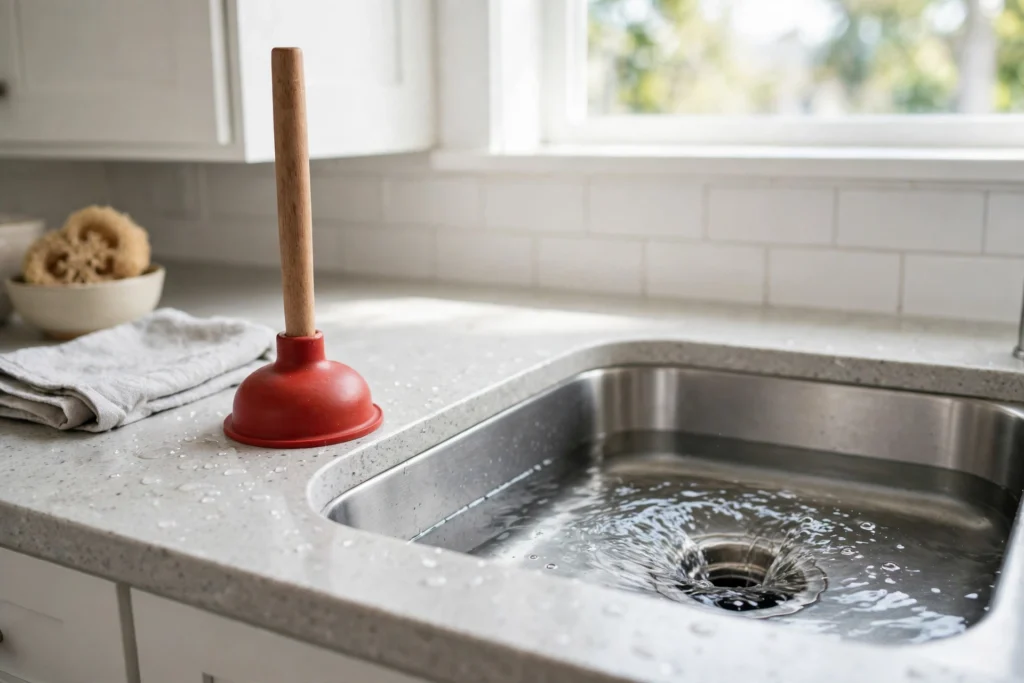
Start with a cup plunger (the simple rubber cup, not a flange plunger, which is for toilets). Block the overflow with a damp cloth — without that, your plunging force just escapes through the overflow. Make sure there is enough water in the sink to cover the cup, then plunge firmly up and down for 15–20 seconds, keeping the seal. Repeat a few times, then lift the plunger sharply: the sudden release often pulls the blockage free. If the water starts draining, run the hot tap for a minute to flush the loosened debris through. This alone clears most minor blockages, and it is one of the most satisfying beginner-friendly jobs in the house.
Step 2: Clean the Trap
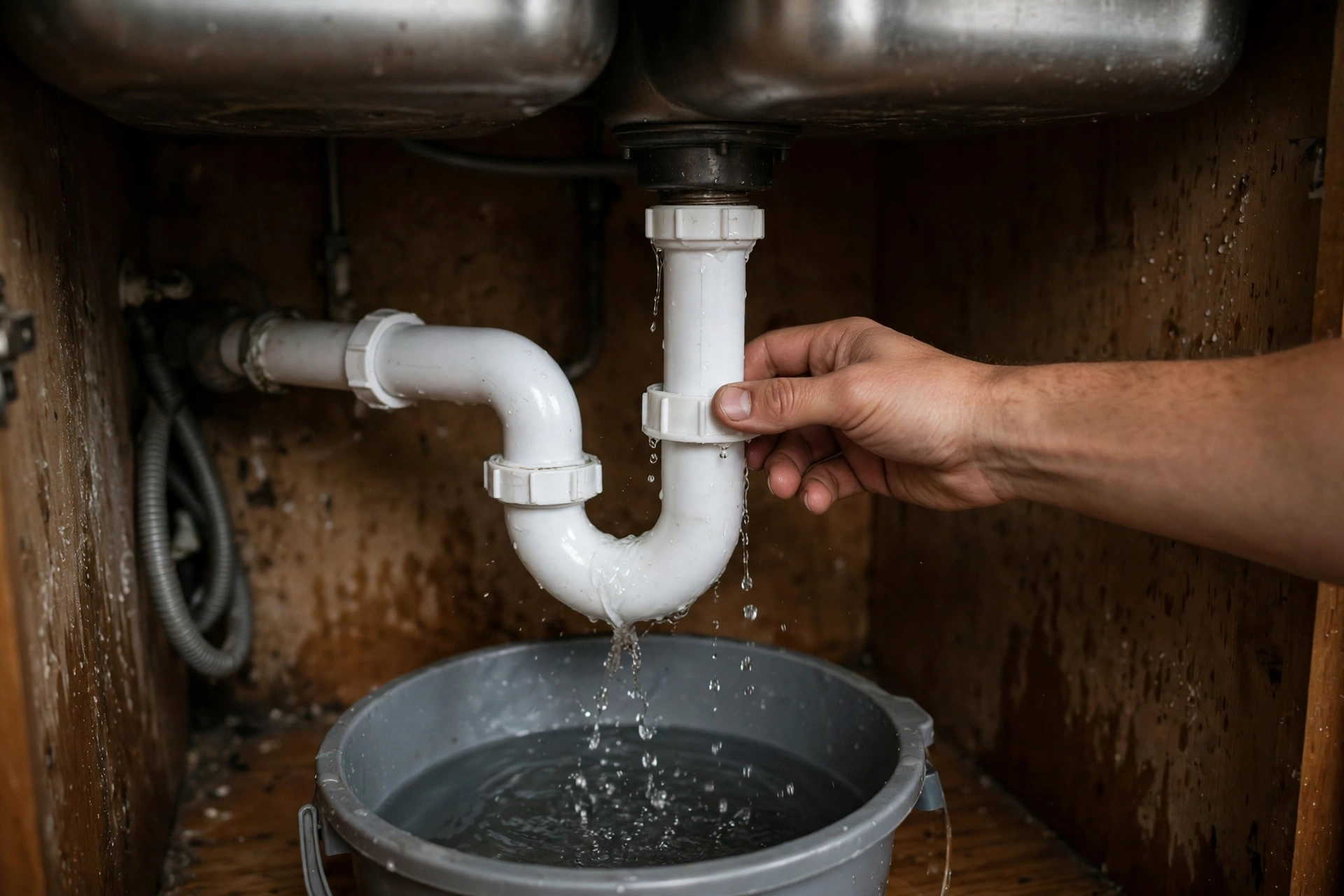
If plunging fails, the blockage is probably in the trap — the U-shaped bend under the sink, designed to hold water and catch debris. Put a bucket underneath, then unscrew the trap by hand (most modern traps are hand-tight; keep a cloth ready for the water inside). Empty it, clean out the gunk, rinse it, and refit it firmly. Run the tap and check for drips before you put everything back. While you are under there, check the washers: a worn washer is often why a trap leaks after refitting, and washers cost pennies. This is also the moment to notice other small jobs — a dripping tap, for example, is often fixed in the same visit with a new washer.
Step 3: A Drain Snake for Deeper Blockages
If the trap is clear and the sink still drains slowly, the blockage is further down the pipe. A hand drain snake (a flexible coil you feed into the pipe and turn) can reach it. Feed it gently — forcing it can damage pipes, especially older plastic push-fit joints — and turn the handle as you go so the coil works through the blockage rather than pushing it into a solid plug. When you feel resistance ease, withdraw the snake slowly, then flush with hot water. Never use a snake in a toilet or in a drain you suspect has a collapsed section; that is professional territory.
What Not to Do
Avoid chemical drain cleaners as a first resort. Caustic cleaners can damage older pipes, burn skin and eyes, and — worst of all — if they fail, they leave a sink full of caustic water that a plumber then has to deal with (and will charge more for). They also do nothing for solid blockages like a lost object or a build-up of scale. Similarly, do not pour boiling water into a porcelain sink that is already full of cold water — thermal shock can crack it. Hot (not boiling) water is fine. And never mix cleaning chemicals: bleach plus an acid-based cleaner produces chlorine gas.
When to Call a Plumber
Stop and call a professional if: more than one drain is blocked at once (that suggests a main drain problem), water is coming up in another fixture when you plunge, the blockage keeps returning within days, or you smell sewage. These point to problems beyond a single sink — a blocked soil pipe, tree roots, or a collapsed drain — and DIY attempts can make them worse and more expensive. A good plumber will also tell you the cause, not just clear the symptom: recurring kitchen blockages usually mean grease going down the sink, which is fixed by a sink strainer and wiping pans before washing, not by stronger chemicals.
Frequently Asked Questions
Why does my sink keep blocking?
Usually grease (kitchen) or hair and soap scum (bathroom). A strainer over the plughole prevents most of it, and never pour cooking fat down the sink — it solidifies in the pipes.
Are chemical drain cleaners safe for pipes?
Occasional use in modern plastic pipes is usually fine, but they damage older metal pipes and rubber seals, and they fail on solid blockages. Mechanical methods (plunger, trap, snake) are safer and more effective.
Can I use a plunger on a double sink?
Yes — block the second basin’s plughole and the overflow with damp cloths first, or the pressure escapes and nothing moves.
How do I know if it is a main drain problem?
If several fixtures drain slowly or water backs up in one place when another is used, the blockage is beyond a single sink. Call a plumber — it may need professional jetting or a camera inspection.