A children’s bedroom has the hardest job in the house: it must be a nursery, a playroom, a homework station and, eventually, a teenager’s retreat — often in the same small room, without a full refit at every stage. The rooms that cope best are built around one idea: everything in the room should be able to change its job. An extendable bed, storage a child can reach, a desk that appears when school starts — these choices save money and arguments for a decade. Here is how to plan a room that grows with your child instead of against them.
Furniture That Adapts
Start with the big pieces, because they are the expensive ones to replace. An extendable bed — one that lengthens from toddler size to a full single — can serve from age three into the teenage years, avoiding the familiar cycle of cot, toddler bed and single bed, each outgrown in two years. Choose a plain frame over a novelty shape: a racing car bed delights at five and embarrasses at nine, while simple wood suits every age. The same applies to wardrobes and drawers: buy plain and well-made, and let bedding, wall art and accessories carry the personality — those are cheap to change, furniture is not. Buy a desk earlier than you expect: even a small table and chair tells a child homework has a place, so you are not carving a study corner out of a playroom when schoolwork suddenly matters. If space is tight, a fold-down wall desk buys a work surface without losing floor space. Finally, buy durable: solid wood and wipeable finishes survive climbing, drawing and den-building; pretty, fragile pieces do not.
Storage a Child Can Actually Use
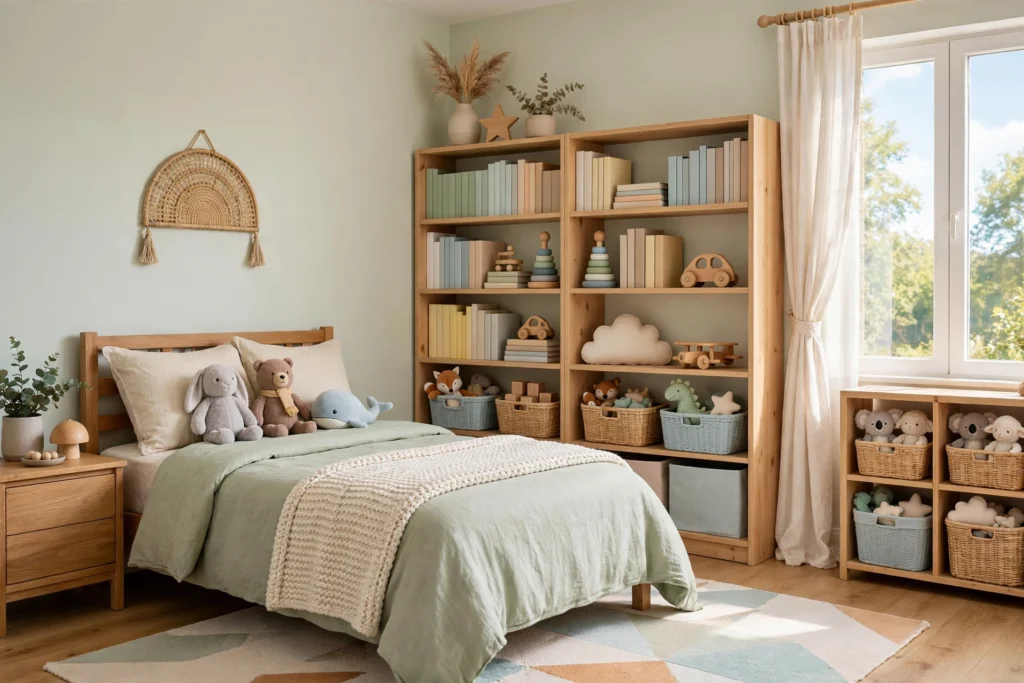
The best storage is the kind a child uses without being asked — built around their height and habits. Open baskets and low open shelves beat deep cupboards with doors, because a child can see what goes where and put things away in seconds. Label boxes with pictures for younger children and words for older ones, and keep labels honest: a “Lego” box that also holds cars will never stay tidy. Keep everyday items at the child’s height, and reserve high shelves for out-of-season clothes and outgrown toys. Rotate toys rather than displaying them all at once: keep half in a cupboard and swap every few weeks, and the room feels fresh without buying anything new. Rotation also makes cleaning quicker — a twenty-minute tidy gets done, an hour-long one gets avoided. Build in one rule that keeps the system working: everything needs a named home, and if a new toy arrives with no home, something old leaves. That one rule stops a well-planned room sliding back into chaos within a month.
Sleep, Study and Play Zones
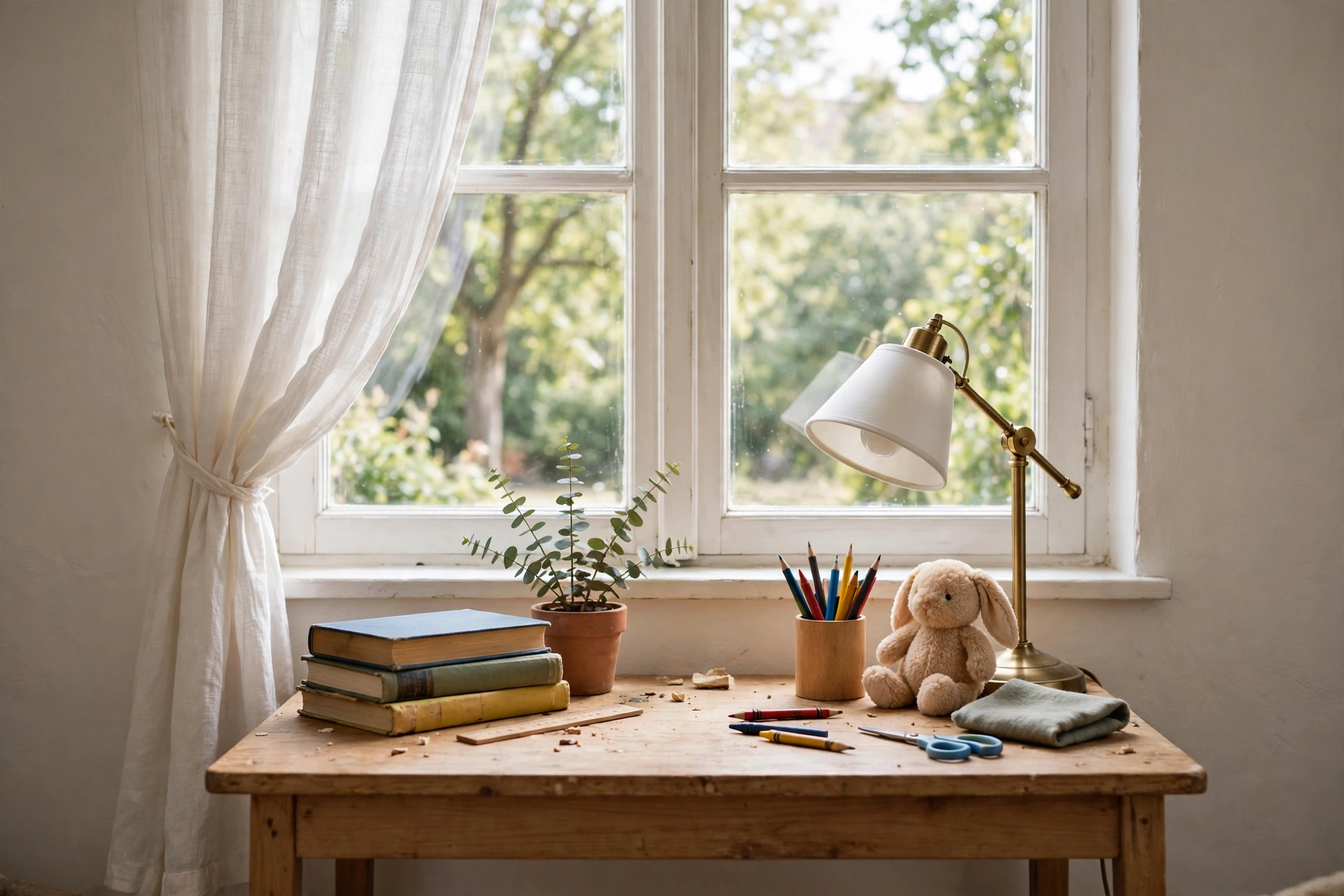
Even a small bedroom works better divided, however loosely, into zones: a rug marks play, a desk by the window marks study, the bed anchors sleep. No walls or screens are needed. The point of zoning is that each activity has its own cues: a child who works at the same desk each day builds a habit faster than one who works wherever there is space, and a bed used only for sleeping helps sleep come more easily at night. Light matters in every zone: the study corner needs daylight and a proper lamp — eye strain starts with bad lighting, not bad chairs — and the sleep zone needs blackout for summer mornings and naps. The play zone simply needs clear floor space — the one thing you cannot buy, only protect. As children grow, the zones shift rather than disappear: the play rug shrinks, the desk grows, the bed gets bigger — but the familiar structure stays reassuring, and a teenager who has always had a desk by the window does not need persuading to use it.
Colour and Theme Without Repainting Every Year
The classic mistake is painting the walls in a theme — bright pink, racing green, a full mural — and then repainting when tastes change, which they do roughly every two years. The cheaper approach is neutral walls with personality in things you can change in an afternoon: bedding, curtains, wall stickers, framed prints, a rug. A pale, warm neutral suits a nursery, a ten-year-old’s room and a teenager’s room alike. If your child longs for colour, give it to them in one feature: a painted headboard wall in a colour they chose, or one wall of removable wallpaper, both changeable without repainting the whole room. Our guide to bedroom colour has calming shades that work across ages, and the same rule applies to a guest bedroom: neutral walls, changeable accessories. Let your child choose the bedding and art while you choose furniture and wall colour — they get ownership of their room without a repaint every birthday.
Frequently Asked Questions
What size bed should I buy for a growing child?
An extendable bed that grows from toddler to full single size is the best value. If buying fixed, go straight to a standard single: it lasts into the teenage years, while a toddler bed is outgrown fast.
How much storage does a child’s bedroom really need?
More than you think, and most of it low and open. Plan for clothes, books, toys, school things and hobby equipment — and add one extra set of boxes, since children accumulate faster than any plan predicts.
When should a child get a proper study desk?
When regular homework starts, usually around seven or eight — though a small table set up earlier builds the habit. The key is a dedicated, well-lit spot, not an expensive desk.
How do I keep a children’s bedroom tidy without constant nagging?
Make tidying fast: open baskets at child height, a named home for everything, and a toy rotation. A five-minute tidy gets done; an hour-long one gets avoided by everyone.