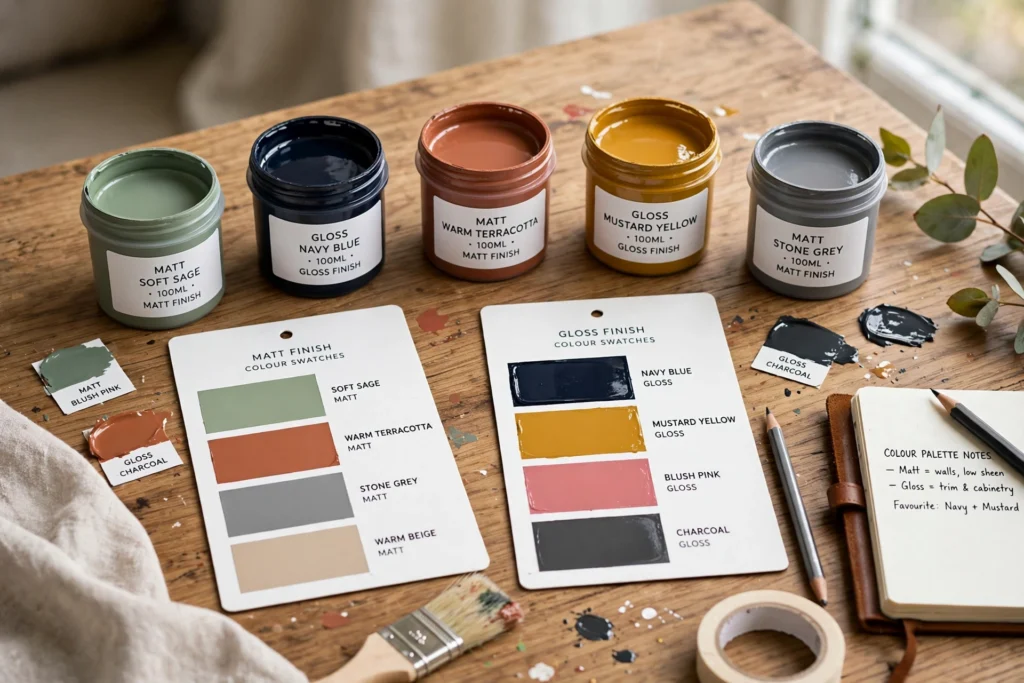
Paint finishes are the half of a colour decision most people make by habit — matt on the walls, gloss on the skirting, whatever the last owner used. Yet the same colour in a different sheen can look richer or flatter, hide every bump in the plaster or display all of them, and survive a hallway of school bags or scuff within a month. Sheen is a practical specification, not decoration trivia. Learn the ladder once, and you will know which finish belongs on every surface in the house.
The Sheen Ladder, From Flattest to Shiniest
Finishes are ranked by how much light they reflect, and that one property explains almost everything they do. Flat or dead matt reflects almost nothing: it gives colour a soft, chalky depth, hides minor bumps, cracks and roller marks better than anything else, and washes worst — scrubbed marks tend to burnish into shiny patches. Ordinary matt emulsion reflects a little more and is the everyday wall finish: still forgiving, slightly easier to wipe. Eggshell has a gentle, low glow, like its namesake shell, and suits busy walls and woodwork where you want durability without shine. Satin — sold as silk for wall emulsions — reflects noticeably more light, feels harder, scrubs well, and shows every imperfection and roller mark it passes over. Gloss tops the ladder: a bright, almost mirror-like coat that shrugs off knocks and moisture and announces every dent beneath it. The trade-off runs throughout: higher sheen means a tougher, more washable surface that displays the wall, the prep and the painter far more honestly.
Match the Finish to the Surface
Ceilings want flat matt, almost without exception. A ceiling is seen in raking light from windows and lamps, which turns any sheen into a map of joints and roller passes; dead matt makes it disappear, which is exactly a ceiling’s job. Walls divide by traffic. Living rooms and bedrooms suit standard or flat matt — calm, modern, and forgiving of older plaster. Hallways, stairwells and family rooms need a step up: a durable washable matt keeps the flat look but is made to be scrubbed, while eggshell sheds marks and reads a touch smarter, including on the kind of surface in our guide to DIY wall panelling.
Woodwork is where habits are most dated. High gloss was once automatic on doors and skirting, but the modern default is satin or eggshell: hard enough for knocks and cleaning, soft enough not to glare, and kinder to less-than-perfect timber. Keep gloss for period detail you want to show off — a panelled Victorian door, turned banisters — and only where the wood is smooth enough to deserve it. Radiators take satin or specialist radiator paint. Furniture and cabinetry follow the same logic — a hard-wearing eggshell or satin, applied with the preparation set out in our guide to how to paint kitchen cabinets.
Room by Room: Steam, Splashes and Small Hands
Bathrooms and kitchens add moisture. Steam condenses on ordinary matt and can feed mould and leave tide marks, so use a dedicated bathroom or kitchen paint — matt or soft-sheen emulsions formulated to resist moisture and mould and to tolerate wiping around hobs and basins. A full silk on every bathroom wall is unnecessary and can look clinical. Children’s rooms call for durability above all: a washable matt or eggshell survives crayon removal and repeated wiping, where flat matt would end up patchy with scrub marks. North-facing rooms deserve a thought, too: their light is cool and flat, and a small lift in sheen — eggshell rather than dead matt — bounces what daylight there is around the room, while deep colours in flat matt can fall lifeless by afternoon.
The Colour Trap, and Why Prep Decides the Result
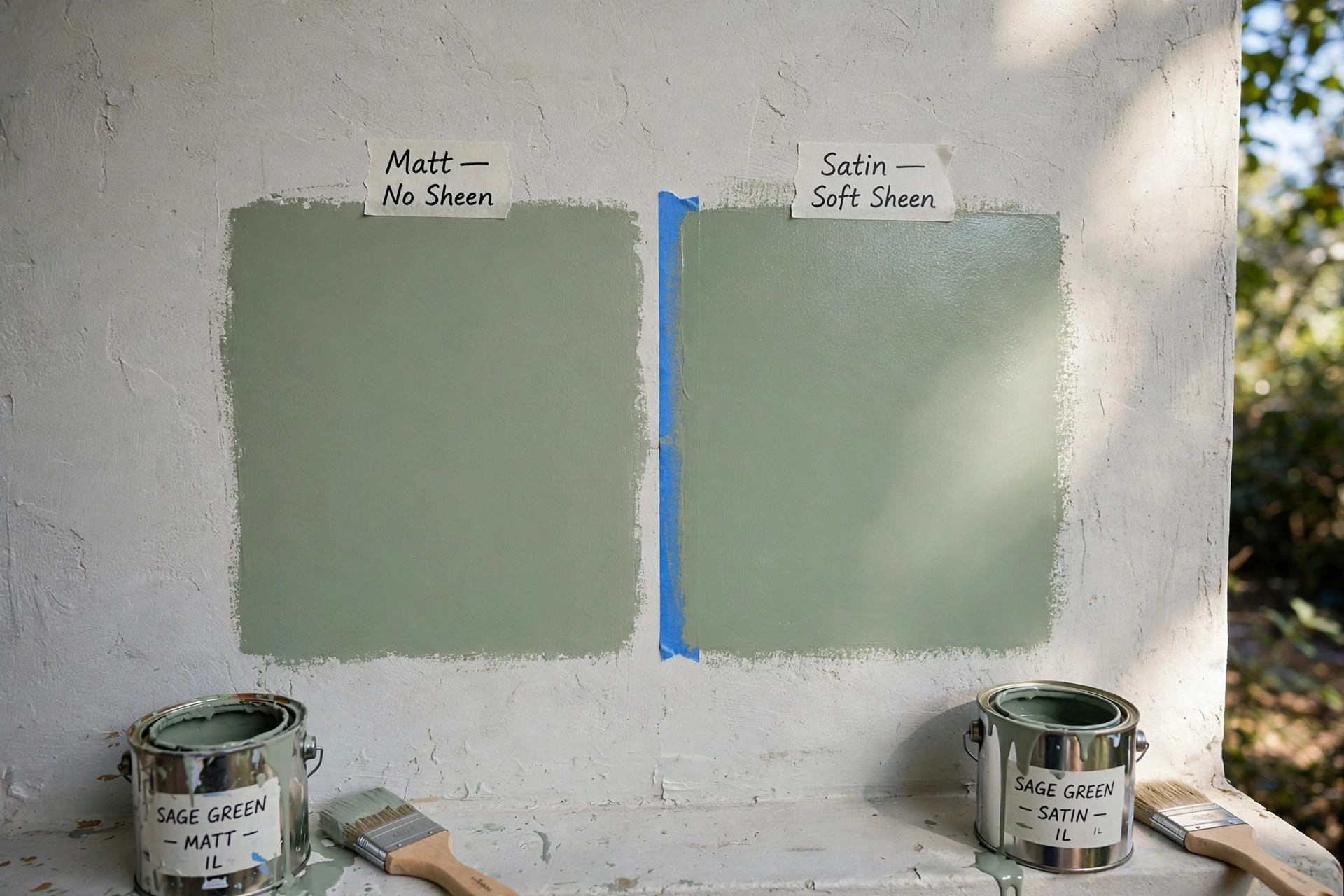
The mistake that catches careful decorators is assuming the chart colour is fixed. Higher sheens reflect more light back at your eye, so the same colour looks darker, stronger and cooler in satin or gloss, and softer and lighter in matt. A tester tried in matt and ordered in eggshell will not match your expectation. Always test in the actual finish, in a patch at least the size of a dinner plate — two coats, ideally — and live with it for a day, checking morning daylight, afternoon gloom and evening lamplight. Sheen also varies between brands, so one maker’s satin can sit closer to another’s eggshell; the ladder is a guide, not a standard.
And the finish is only as good as what sits under it. Filling, sanding and dusting matter more with every step up the ladder, because sheen is a spotlight. Prime bare wood and MDF properly — MDF edges drink paint and stay rough without primer — and never rush gloss over a dusty or greasy surface. The classic failures all follow the same logic: gloss over rough walls, dead matt in a splash zone behind a sink, silk emulsion on a ceiling showing every roller line, and two sheen levels of one colour meeting on a single wall, which reads as a mistake even when the colours match. Choose the finish for the surface and the life it will live, prepare honestly, and the colour you fell for is the colour you will get.
Frequently Asked Questions
What is the difference between eggshell and satin?
Eggshell has a softer, lower sheen and hides imperfections better; satin reflects more light, feels harder and smoother, and wipes cleaner. Both suit woodwork — the choice is forgiveness versus toughness.
Can I use matt paint in a bathroom?
Yes, if it is a bathroom-specific matt formulated for moisture and mould resistance. Ordinary matt emulsion can mark, absorb condensation and encourage mould in a steamy room.
Why does my colour look different from the tester pot?
Usually the finish changed. The same colour reads darker and stronger in higher sheens and softer in matt, and the room’s light shifts it further. Test in the exact finish, at a decent size, in daylight and lamplight.
Is gloss still the best finish for woodwork?
It is the hardest and most moisture-resistant, but it shows every flaw and can yellow indoors. Most decorators now default to satin or eggshell, keeping gloss for smooth period woodwork where the shine is the point.