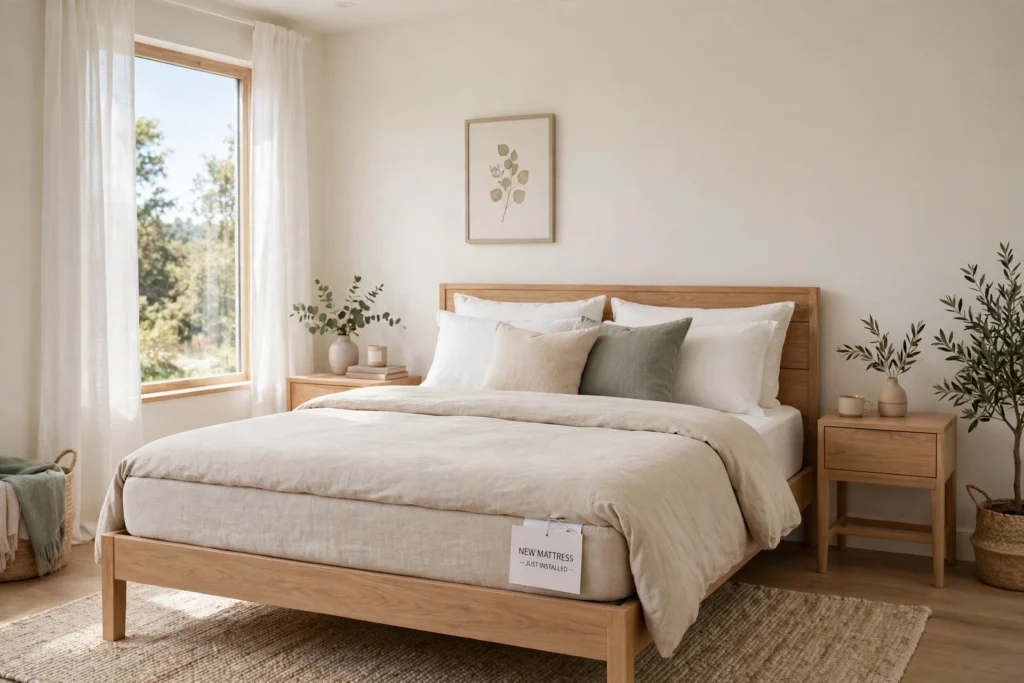
Learning how to choose a mattress starts with ignoring the showroom labels and thinking about your own body instead. The best mattress for you is the one that keeps your spine in a neutral line, cushions your pressure points and stays comfortable at your normal sleeping temperature. A £1,500 mattress in the wrong firmness will leave you aching, while a modest one matched to how you sleep can transform your mornings. This guide compares the main types honestly, matches firmness to position, lists the UK sizes with dimensions, and explains how to test properly before you commit.
The Main Types, Compared Honestly
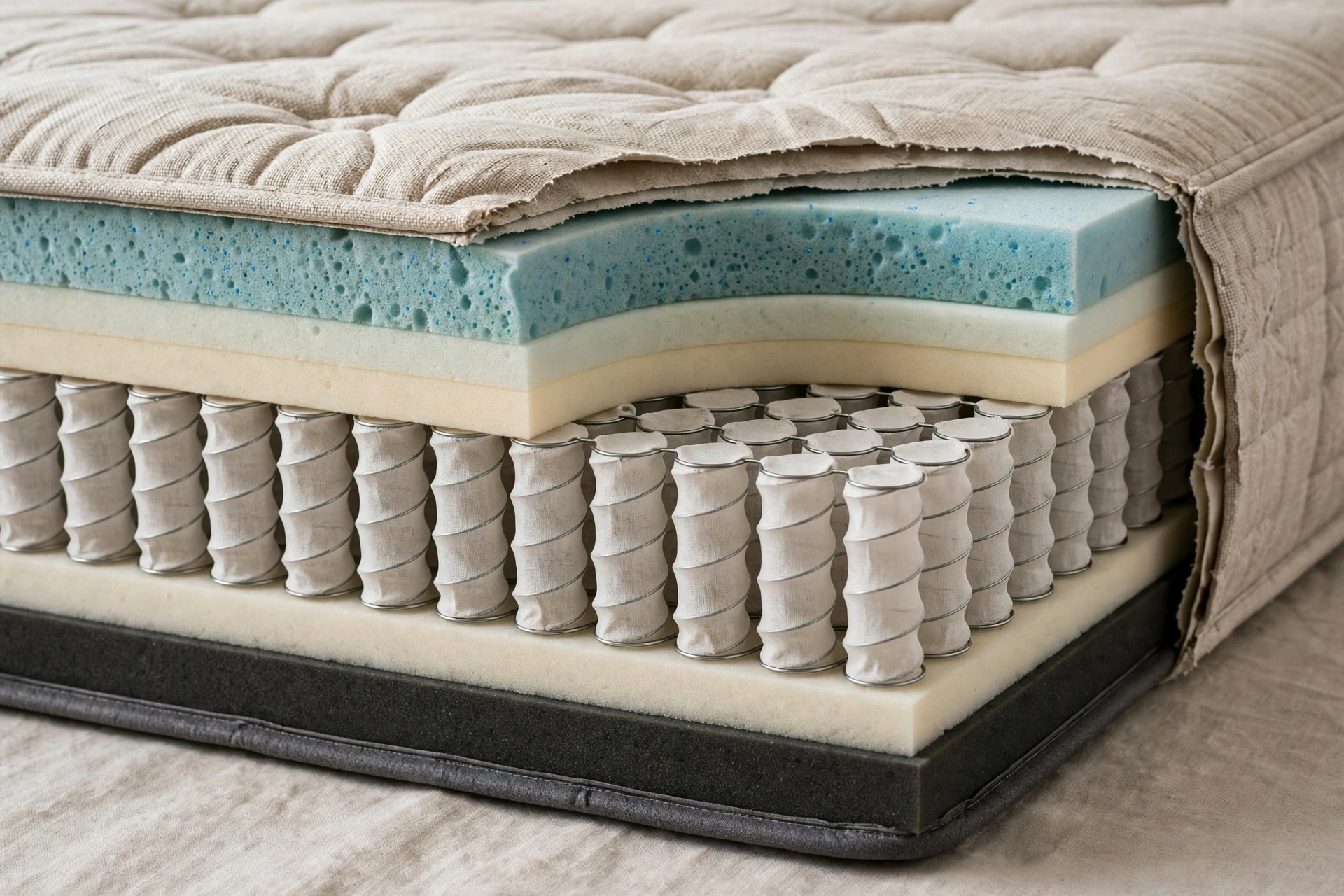
Open-coil mattresses are the cheapest traditional option: rows of springs joined into one unit. They are light and widely available, but the whole surface moves when a partner turns over, support is uneven, and they tend to sag sooner. Pocket-sprung mattresses put each spring in its own fabric pocket, so springs respond individually — better support and less roll-together. Do not be dazzled by spring count alone: very high counts often use layers of tiny springs; the wire gauge and the fillings above matter more. Memory foam moulds to your shape and is excellent at isolating movement, which suits couples and light sleepers, but it can sleep warm and some people dislike the slow, sinking feel when turning over. Latex — natural or synthetic — is springier and easier to move on, breathes better than memory foam and lasts well, but it is heavy and usually costs more. Hybrid mattresses combine a pocket-sprung base with foam or latex comfort layers; done well, they balance support, pressure relief and airflow, and they are now the most common mid-market choice.
Firmness: Match It to How You Sleep
Firmness ratings are not standardised — one brand’s medium is another’s firm — so treat them as a starting point and match the feel to your position. Side sleepers usually need a softer to medium surface: the shoulder and hip must sink in enough for the spine to stay straight, and a too-firm mattress leaves those joints bearing your weight all night. Back sleepers generally do best on medium to medium-firm, with enough support under the lower back and just enough give at the shoulders. Front sleepers need the firmest feel, because a soft surface lets the hips sink and arches the back uncomfortably. Body weight shifts the equation: lighter sleepers feel a mattress firmer than heavier sleepers do, because they compress the comfort layers less, so a lighter side sleeper may need a soft model while a heavier back sleeper needs firmer support to avoid hammocking. Ignore the word “orthopaedic” on labels — it has no regulated medical meaning in the UK; it simply signals a firmer product. For couples with different needs, look at motion isolation (foam and pocket springs score best), consider two single mattresses of different firmness zipped together on a king or super king frame.
Sizes: UK Dimensions That Actually Fit
Check the size against both your bed frame and your room before ordering, because UK and European sizes differ. A UK single is 90 x 190cm; a small double is 120 x 190cm; a standard double is 135 x 190cm; a king is 150 x 200cm; and a super king is 180 x 200cm. European sizes differ (and IKEA frames often follow them), so measure the inside of the frame rather than trusting your old mattress’s label. Couples sharing a standard double get only about 67cm of width each — less than a baby’s cot — so if the room allows it, a king is the single biggest comfort upgrade many couples can make. Check depth too: mattresses range from roughly 20cm to over 35cm, and very deep models can swallow fitted sheets. If the new mattress is for a spare room, our guest bedroom ideas will help you judge what occasional sleepers need — usually a medium pocket-sprung, not your cast-off.
Testing, Trials and When to Replace
Five minutes lying on a shop mattress in your coat tells you almost nothing. In store, lie in your normal sleeping position for at least ten to fifteen minutes, roll as you would at night, and sit on the edge. Better still, favour home trials: many brands offer 100 nights or more, but read the terms — whether collection is free, whether a protector must be used, and how long you must keep it before returning (most ask for about 30 nights first). Keep trials and guarantees separate in your mind: a 10-year guarantee covers manufacturing defects such as faulty springs or stitching, not gradual softening or comfort, and it often pays out on a sliding scale. Replace a mattress when it sags visibly, when you wake consistently with new aches, when springs or lumps can be felt, or when it is simply old — roughly every seven to ten years is a sensible guide, sooner for cheap open-coil models. A washable protector extends life and matters for allergy sufferers, since mattresses accumulate dust mites; choose breathable ones so you do not overheat. Round the bedroom out with the layering and warmth ideas in our guide to winter bedroom ideas, and arrange recycling or retailer take-back for the old mattress where schemes exist locally.
Frequently Asked Questions
Is a firmer mattress better for a bad back?
Not automatically. The right firmness keeps your spine neutral in your usual position: side sleepers often worsen back pain on very firm mattresses because the shoulder and hip cannot sink. Medium-firm suits most back sleepers, but persistent pain deserves medical advice, not just new furniture.
How many pocket springs should I look for?
Spring count is a weak guide on its own, since counts are often scaled up from a king-size equivalent and boosted by mini-springs. Judge the mattress by lying on it, the quality of the fillings above the springs, and the trial terms — not by the biggest number on the label.
Do I really need a home trial?
It is the most reliable way to judge comfort, because your body needs several weeks to adjust to a different feel. If you buy without one, spend proper time testing in store in your sleeping position, and keep the receipt and guarantee paperwork somewhere safe.
What size mattress do two adults need?
A UK double (135 x 190cm) gives each adult roughly 67cm of width, which many couples find cramped. A king (150 x 200cm) adds both width and length and is the most popular upgrade; a super king (180 x 200cm) suits larger rooms and restless sleepers.