A running toilet is the most wasteful small fault in a home. That faint hissing means water is flowing when nobody has flushed — often hundreds of litres a day, straight down the drain. The good news is that almost every running toilet has one of three causes, all visible inside the cistern, and most are fixed in minutes with no tools or with a single spanner. Before you call a plumber, work through these checks in order: diagnose where the water is going, then fix the fill valve, the flapper, or the water level.
Diagnose the Cause First
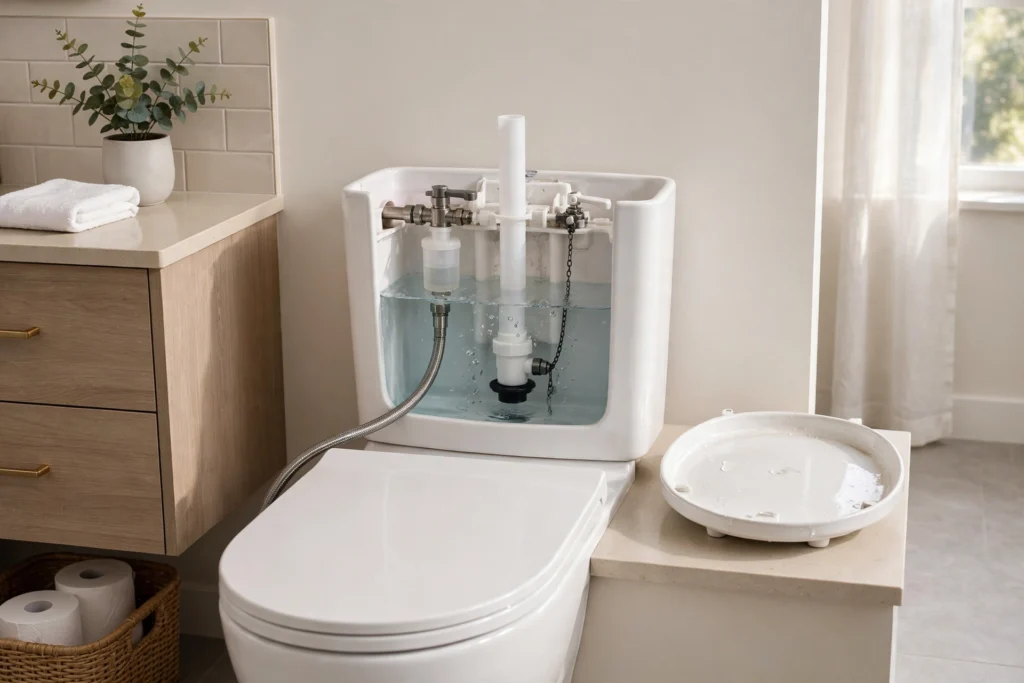
Start by lifting the cistern lid — it usually lifts straight off, though some are held by a button or screws, so check before forcing it. Look and listen. If water is trickling into the overflow tube, the water level is too high or the fill valve is not shutting off. If the water level looks normal but you can hear a faint flow, or the toilet refills by itself every few minutes (known as ghost flushing), water is probably leaking from the cistern into the bowl past a worn flapper. A simple test confirms it: put a few drops of food colouring in the cistern, wait 20 minutes without flushing, and check the bowl. If colour appears in the bowl, the flapper is leaking. Knowing which path the water takes tells you which fix to try first, and it stops you replacing parts that were never the problem.
Fix the Fill Valve
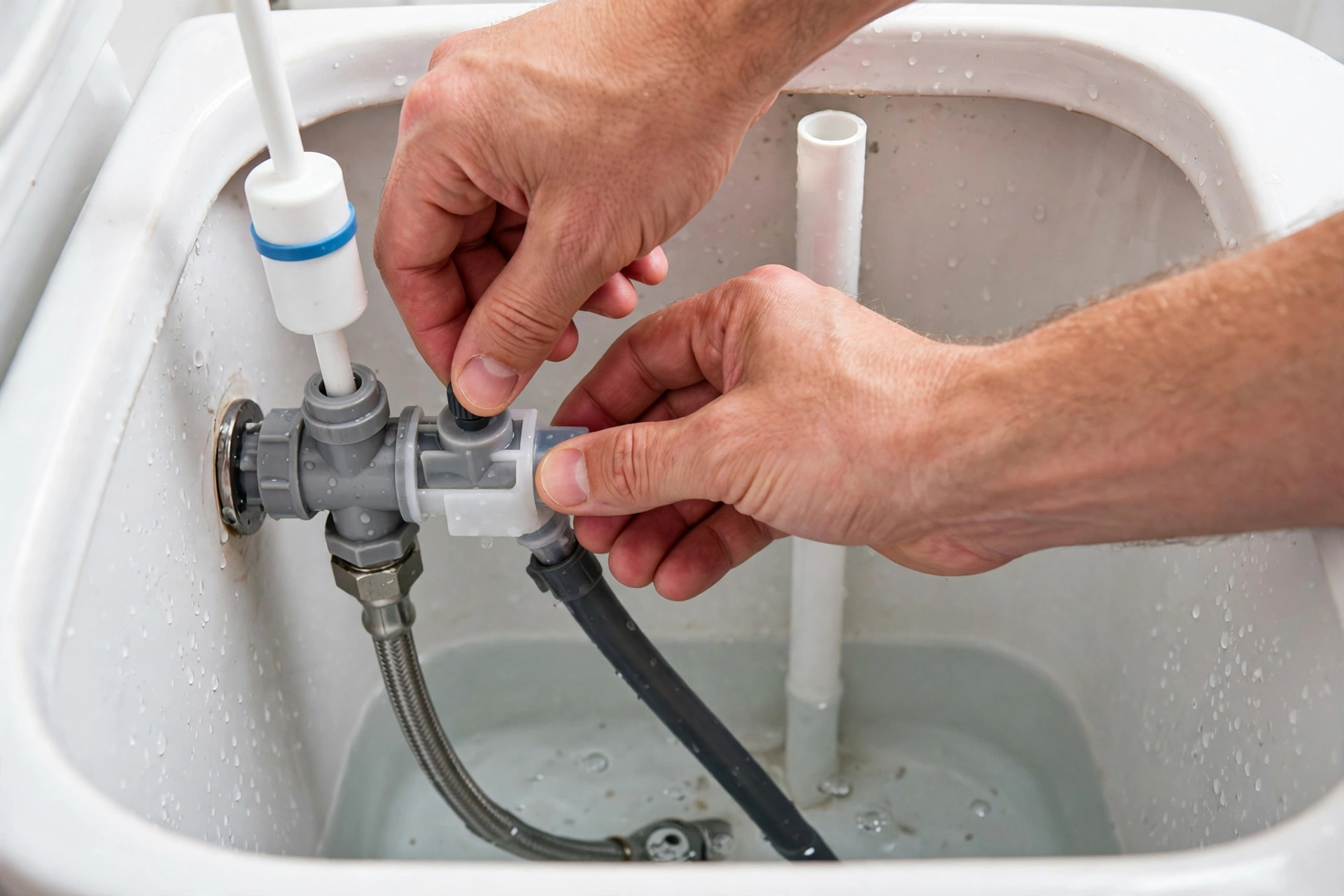
The fill valve is the tall valve on the side of the cistern that refills it after a flush, controlled by a float that rises with the water and shuts the valve off. If the valve is worn or the float is set wrong, water keeps flowing — you will hear it, and the level will creep up to the overflow. First, check the float moves freely and is not catching on the cistern wall; a float that has taken on water and sunk will keep the valve open. Many modern valves adjust with a screw or a clip on the float: lower the float a little and the valve shuts off sooner. If adjusting does not help, the valve’s washer may be worn; replacing the whole fill valve is straightforward — usually a single nut underneath the cistern — and universal replacements cost little. This is the same level of job as learning to fix a dripping tap — one valve, one connection, and a towel underneath for the water that escapes.
Fix the Flapper
The flapper (or flush valve seal) is the rubber disc or washer at the bottom of the cistern that lifts when you flush and drops back to seal the outlet. Rubber perishes over time, especially in hard-water areas and where cleaning chemicals sit in the cistern, and a warped or scaled flapper lets water leak steadily into the bowl. If the rubber feels rough, stiff or distorted, or the seat is coated in limescale, you have found the fault. Clean the seat gently, and if the flapper itself is worn, replace it — flappers are cheap, usually clip on without tools, and you should note the toilet model to get the right size. Also check the chain or rod that connects the flapper to the flush handle or button: if it is too short, it holds the flapper slightly open; if it is too long, it can tangle and stop the flapper seating. You want a little slack — about a centimetre — so the flapper drops fully shut after every flush. A new flapper and a correctly set chain fix the majority of ghost-flushing toilets outright.
Set the Water Level and Know When to Stop
Finally, set the water level correctly: it should sit about an inch (2–3 centimetres) below the top of the overflow tube. Adjust the float as described above until the level is right, then flush and watch a full refill cycle: the valve should shut off cleanly with no trickle, and the level should settle below the overflow and stay there. If you have worked through all three checks and the toilet still runs, or if you find a cracked cistern, a seized isolation valve that will not turn, or a flush mechanism that is broken rather than worn, that is the point to call a plumber — those are not five-minute fixes, and forcing a cracked cistern or a seized valve can turn a small leak into a flood. The same rule applies elsewhere: a slow drain is worth trying to unblock a sink yourself before calling for help. Most running toilets, though, are fixed by one of the checks above — and the silence afterwards is surprisingly satisfying.
Frequently Asked Questions
How much water does a running toilet waste?
A toilet that runs constantly can waste 200 litres or more a day — over 70,000 litres a year. Fix it the week you notice it, not the month after.
Can I use the toilet while it is running?
Yes, it still flushes normally. But do not ignore it: on a water meter it costs real money every day it runs.
Should I put cleaning blocks in the cistern?
Better not. Cistern blocks and bleach tablets degrade rubber flappers and seals faster, which is itself a common cause of running toilets. Clean the bowl instead, and keep chemicals out of the cistern.
How do I know whether to replace the fill valve or the flapper?
Water going into the overflow points to the fill valve or water level; colour reaching the bowl without flushing points to the flapper. If both tests are clear, the overflow tube itself may be cracked — a plumber’s job.