If you want to fix a sticking door, resist the urge to plane it straight away. Most doors stick for a simple reason — loose hinges, a dropped corner or seasonal swelling — and the cure takes minutes with a screwdriver, not hours with a plane. Planing too early removes timber you cannot put back, and the door will rattle in its frame come summer. Work through the checks in order instead: diagnose where it rubs, tighten the hinges, check the latch, allow for humidity, and only then sand or plane. You will need a screwdriver, longer screws, painter’s tape or chalk and, if it comes to it, sandpaper and a plane.
Start With Diagnosis: Find Where It Sticks
Open and close the door slowly and watch the gaps. A healthy door has an even gap of about 2–3mm around the top and sides. If the gap is wide at the hinge side and tight at the top corner opposite the hinges, the door has dropped — a hinge problem. If the gap looks even but the leading edge scrapes the frame in one place, the timber has probably swollen. Confirm the spot with a simple test: stick painter’s tape along the frame where you suspect contact, or rub chalk on its edge, then close the door firmly once or twice. The scuff or chalk transfers to the exact place that rubs. Check the bottom too: a door that drags after new flooring has been laid is not swollen — it simply needs its bottom edge trimmed. Also note whether the latch meets its strike plate cleanly. If the bolt hits low, the door has dropped on its hinges, which points to the next fix rather than to a plane.
The Quick Fixes: Hinges and the Strike Plate
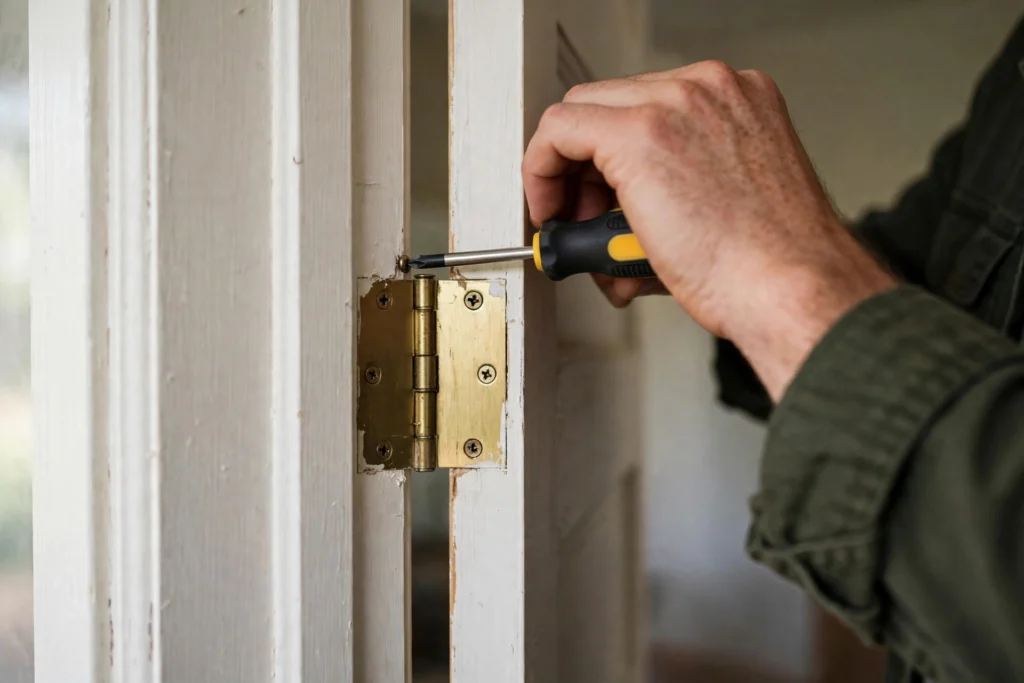
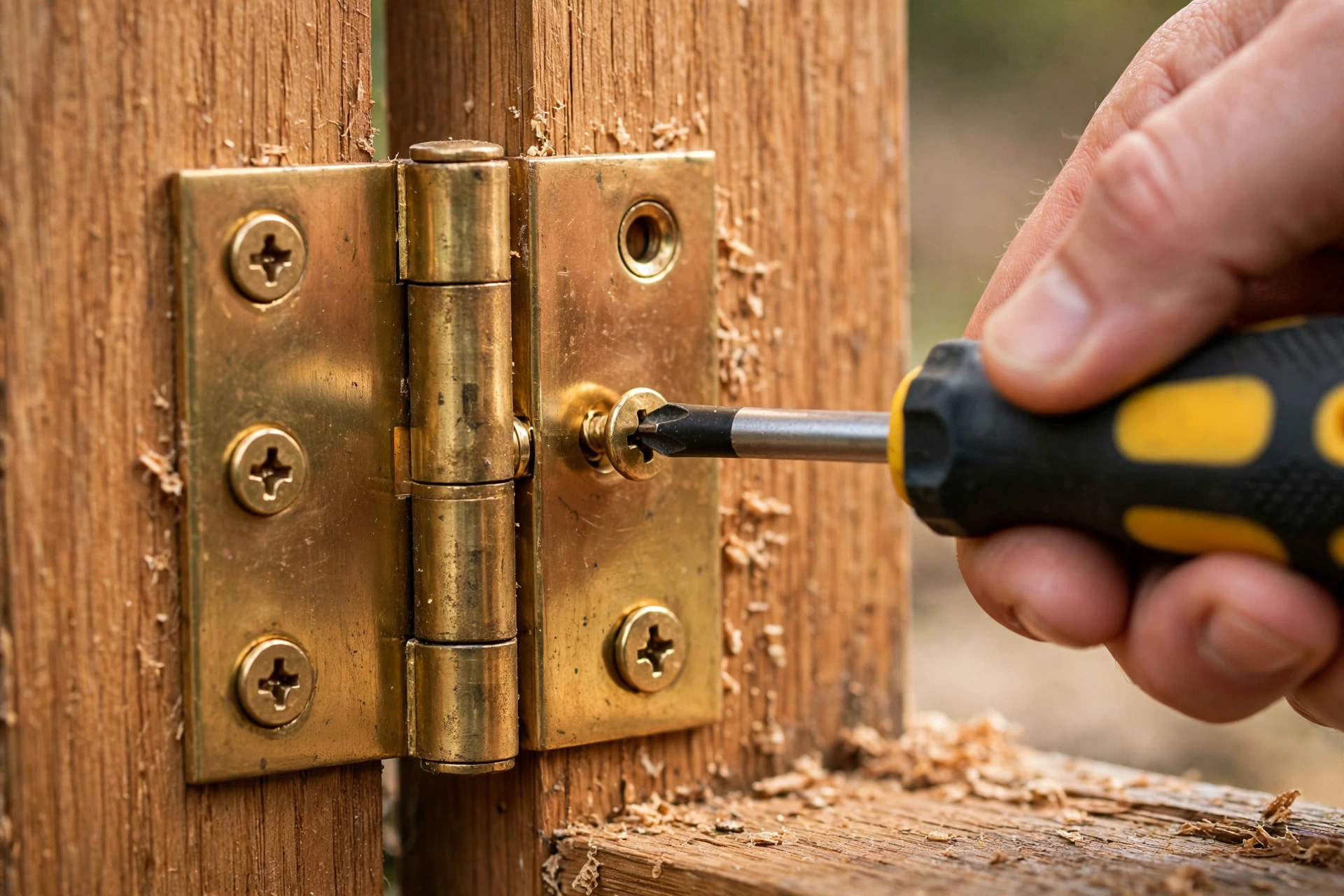
Loose hinges cause most sticking doors, especially heavy solid doors. Open the door wide, support its weight, and tighten every hinge screw on both door and frame. The top hinge screws often spin uselessly because their holes have worn oversized — the classic cause of a dropped top corner. Replace them one at a time with longer screws, typically 75mm instead of the short 25–30mm screws often fitted, so they bite through the frame into the stud or masonry behind. That single change pulls the door back into line. If a hole is too chewed up even for a longer screw, pack it with matchsticks and wood glue, let it set, then refit. Still dropping slightly? Loosen the bottom hinge on the frame side, slip a thin piece of card behind it, and retighten. Shimming the bottom hinge out pushes the top of the door back towards its frame; shimming the top hinge does the opposite. Test after each small step. Finally, if the door closes but the latch misses, file the strike plate opening a fraction or move the plate a few millimetres — far easier than moving the door.
These fixes reward the same test-as-you-go approach that works when you learn how to fix squeaky floorboards: small, reversible adjustments first, cutting last.
When Humidity Is the Culprit
If the door was fine in June and sticks in January, blame moisture, not the hinges. Timber absorbs water from wet, cold air — rain, condensation, steamy bathrooms and laundry dried indoors — and swells across its width. Exterior doors, bathroom doors and doors in poorly ventilated hallways suffer most, and the clue is seasonality: the sticking worsens in winter and eases in a dry spring. Do not plane aggressively to fit a swollen door. Take off only the bare minimum, ideally in the season when it sticks, and seal the bare wood immediately, as explained below. Reduce the cause too: run extractor fans, open trickle vents, and check that the top and bottom edges — often left unpainted, and the fastest to drink in moisture — are actually sealed. A coat of paint or varnish on those edges can prevent the problem returning next winter without any further trimming.
Sanding and Planing: The Last Resort, Done Properly
If the hinges are sound and the door still rubs in one marked place, remove a little timber — only from the spot your chalk test identified. For a light rub, sanding is enough: wrap 80-grit, then 120-grit paper around a block and work the high spot with the door still hanging, testing frequently. For a heavier rub, take the door off. Knock out the hinge pins from below, lift the door clear with help, and rest it on a protected surface. Mark a pencil line allowing a 2mm gap, and plane towards the centre of the edge from each end rather than in one pass off the end, which risks splintering the corner. Take thin shavings, work with the grain, and rehang and test more often than feels necessary — you can always take more off. Then seal every bit of bare wood with primer, paint or varnish. Skipping that seal is the commonest mistake in this job, and less forgiving than a slightly uneven finish on decorative work such as DIY wall panelling: unsealed timber will swell again at the first damp weather. Call in help when the problem is bigger than the door — several doors sticking at once, cracks above frames, a frame visibly out of square or rotten, or signs the lintel or wall has moved. Get a carpenter to assess the frame and, if movement is ongoing, a surveyor or structural engineer. No amount of planing fixes a moving building.
Frequently Asked Questions
Why does my door only stick in winter?
Timber swells as it absorbs moisture from damp winter air. Seal unpainted edges, especially top and bottom, improve ventilation, and trim only the minimum so the door is not loose in summer.
Should I sand or plane a sticking door?
Sand first for a light rub of a millimetre or so; it is slower but far harder to overdo. Plane only when sanding would take too long and hinge fixes have failed, and seal the bare wood afterwards.
What size screws fix a dropped door?
Replace short hinge screws with screws around 75mm long of the same gauge, fitted one at a time so the hinge stays aligned. The extra length reaches the stud or masonry and pulls a dropped door back up securely.
Can I fix a sticking door without taking it off?
Usually, yes. Tightening hinge screws, shimming a hinge and adjusting the strike plate are all done with the door hanging. Removal is only needed for planing the top or bottom edge.