Council tax bands were decided by a valuation exercise carried out more than three decades ago — in many cases from a car driving past the house. Thousands of homes were placed in the wrong band at the time and have been overpaying ever since, often by hundreds of pounds a year. Checking your band costs nothing and takes minutes, and if the evidence says your home was misvalued, you can ask for it to be corrected. This guide explains how the bands work, how to check yours, and how to challenge safely, since a challenge can move a band up as well as down.
Based on 1991: How the Bands Work
In England and Scotland, every home sits in one of eight bands, A to H, based on what the property would have sold for on 1 April 1991 — not what it is worth now. Band A covers homes worth up to £40,000 then; band H covers those worth more than £320,000. Wales did the exercise later, using values from 2003, and has nine bands, A to I. Because the valuation was done at speed, errors were baked in: new builds were often banded from estimates for neighbouring properties, and similar homes on the same street sometimes ended up in different bands.
Your band sets the ratio you pay — a band H household pays three times the band A charge in the same council area, with each step up adding a fixed share — so a one-band error costs real money every year. It is also worth knowing that your bill is not just the band: councils can add premiums on top for some properties, as our guide to second homes and empty homes council tax premiums explains, which can double or triple the charge.
How to Check Your Band in Minutes
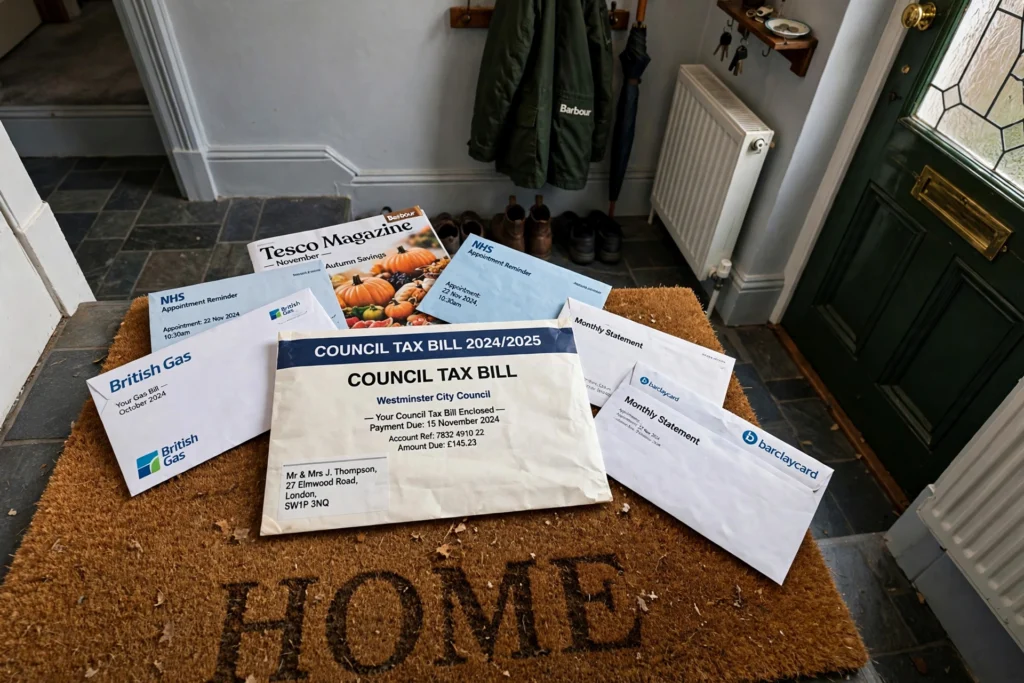
Checking is free, and no firm needs paying to do it for you. Go to the council tax pages on gov.uk, which link through to the Valuation Office Agency (VOA) listings for England and Wales, and enter your postcode. You will see your own band and the band of every other property on your street. In Scotland, the equivalent list is held by the Scottish Assessors Association. Have your latest bill to hand — later steps ask for your account reference.
Check the details held for your home too: the listing and your bill should agree on the basics. If your property has changed — an extension, a conversion, part of it demolished — its band may legitimately differ from the neighbours’, and the listing may already reflect a revaluation after those works. A mismatch between your bill and the listing is worth querying with your council’s billing team before any formal challenge.

The Neighbour Test: Gathering Your Evidence
The strongest sign of a wrong band is the neighbour test: are homes on your street that are the same type and size as yours, built at the same time by the same builder, sitting in a lower band? If near-identical houses either side of you pay less, you have the beginnings of a case. If your neighbours turn out to be in the same or higher bands, think very carefully before going any further.
Build the evidence before contacting anyone. List the addresses of comparable properties and their bands from the VOA site. Add anything that supports your case: original sale prices from around 1991 if you can find them, evidence that your home was banded higher than the standard house type it matches, or proof that works were counted twice. Evidence about today’s house prices does not help — the question is always what the property was worth at the valuation date, as it was then.
Making a Challenge to the VOA
A formal challenge is called making a proposal, and you submit it to the VOA — in Scotland, to the local assessor. You can do it online from the same listing pages where you checked the band. Explain why you believe the band is wrong, attach your comparable evidence, and say which band you think is correct and why. Straightforward cases can resolve within weeks; contested ones can take several months and may lead to an appeal at the Valuation Tribunal, which is free and informal.
Now the risk, stated plainly. When the VOA reviews your band it can leave it unchanged, lower it — or raise it, if the review shows the home was under-banded. A review can also prompt a fresh look at similar neighbouring properties. That is why the neighbour test comes first: challenge only when the street’s evidence is clearly on your side, not on a hunch. If you succeed, the lower band applies from when you became liable at the property, and overpayments are refunded or credited — for long-standing errors, that can mean several years of backdated refunds, plus lower bills from then on.
Discounts Are a Separate Saving
Do not confuse a band challenge with discounts and exemptions, applied separately by your council’s billing team. If you live alone, the single person discount takes 25 per cent off the bill whatever your band; students, carers, people with certain disabilities and homes undergoing major structural work can also qualify for reductions or exemptions. If your band is correct but the bill is a struggle, these are the first things to check — claimable whether or not you challenge the band.
A band correction is only one way to cut household bills. The other big lever is the home itself: insulation and heating improvements reduce energy costs for years, and our guide to home energy grants explains the help available this winter, including schemes that cover the full cost for qualifying households. Between the right band, the right discounts and a better-insulated home, many households can trim fixed bills usefully.
Frequently Asked Questions
How do I check my council tax band for free?
Use the council tax section on gov.uk, which links to the Valuation Office Agency listings. Enter your postcode to see your band and the band of every other property on your street. In Scotland, use the Scottish Assessors’ site. Never pay a company to check.
Can my band go up if I challenge it?
Yes. A review can raise your band if it shows the home was under-banded, and it can prompt reviews of similar neighbouring properties too. Only challenge when comparable homes on your street are clearly in a lower band than yours.
If I win, how far back does the refund go?
The corrected band applies from the date you became liable for council tax at the property, and overpayments are refunded or credited back to that date — so long-standing errors can mean refunds covering several years.
Is it worth paying a claims company to challenge for me?
Almost never. Checking your band and making a proposal are free to do yourself, and claims companies typically keep a large percentage of any refund for completing the same forms. Some charge upfront fees for hopeless challenges.